- Home
- News Releases
- Back Issues
- April FY2026
- New International Standards for Motorway Chauffeur System based on the proposal made by Japan has been published
New International Standards for Motorway Chauffeur System based on the proposal made by Japan has been published
Aiming to Realize a Transportation Society that Assures the Safe and Smooth Flow of Traffic (ISO 23792-1:2026 and ISO 23792-2:2026)
April 3, 2026
Automated driving system (ADS) technology is expected to help realize a safe transportation society, and international initiatives are making progress toward putting this technology into practical use. In this context, a set of two international standards specifying requirements for the basic functionalities of an ADS and requirements and test procedures for additional functionalities, such as lane changing (ISO 23792-1:2026 and ISO 23792-2:2026), have been developed based on efforts led by Japan. This standard series will standardize ADS requirements to popularize automated vehicles equipped to provide certain levels of safety performance, looking to reduce the occurrence of road traffic accidents while facilitating the smooth flow of traffic.
1. Background
Major factors causing traffic accidents on motorway including expressways, are human errors such as distracted or careless driving. Statistics on accidents occurring on expressways show nearly half the cases being caused by vehicles traveling at 50 km/h or below on congested roads.*1 Recognizing this situation and with the objective of realizing a safe transportation society, Japan developed and launched a Level 3 ADS (to perform the entire dynamic driving task, without human intervention, on a congested motor-vehicle-only road), becoming the world’s first in this field.
However, the market rollout of the ADS has been challenged by issues chiefly caused by differences in specifications and usage of manufacturers and a lack of standards for test procedures to verify basic functionality requirements. As a way to address this situation and for the purpose of expanding the global ADS market, the international standards for motorway chauffer systems (MCS)―ISO 23792-1:2026*2 and ISO 23792-2:2026*3―have been developed based on efforts led by Japan.
2. Outline of the standards
This ADS technology will achieve an environment that enables vehicle operation to perform the entire dynamic driving tasks under certain conditions and with the presence of a human driver as a fallback-ready user. In an environment where the system is running properly, the human driver can be freed from the need to keep hold of the steering wheel and keep a constant eye on the road ahead by leaving the driving task to the ADS operation.
1) ISO 23792-1:2026
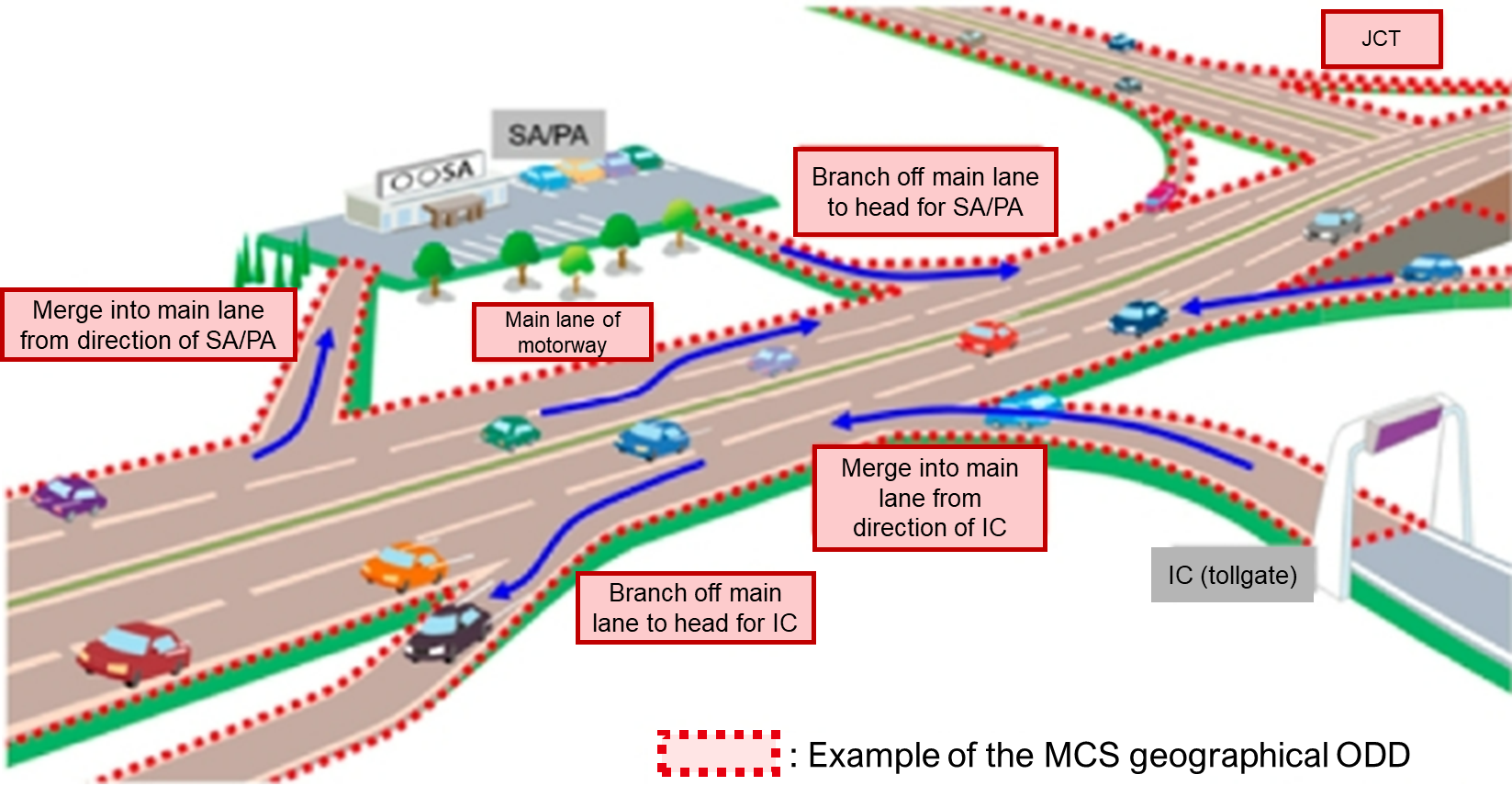
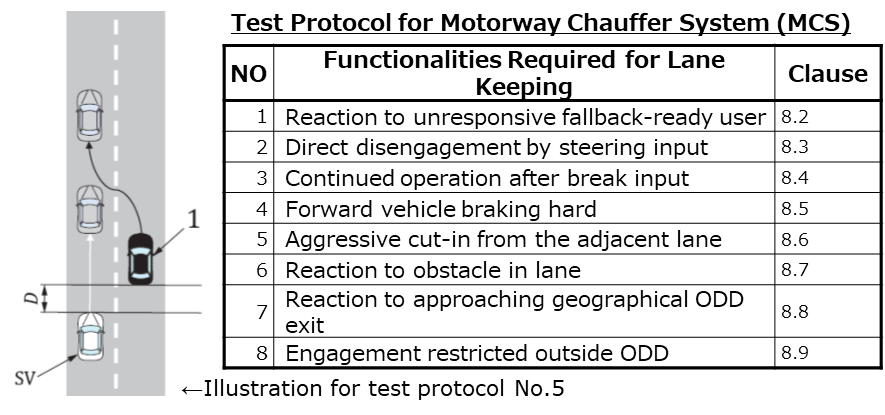
As it is necessary for the ADS to be designed with the capability to cope with multiple different driving scenarios (See Figure 1: Example of the MCS geographical ODD), this standard contains non-scenario-based descriptions of general system characteristics, provides the definition of system states, and specifies transition conditions and other system requirements. Also, the document describes requirements for the basic functionalities of automated driving within a single lane and test procedures to verify these requirements (See Figure 2).
2) ISO 23792-2:2026
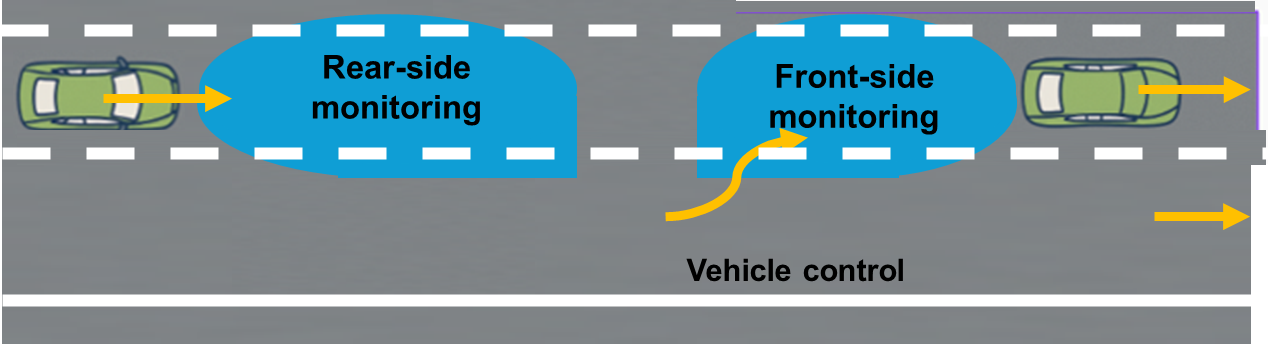
Lane changes involve the process of responding to changes in traffic conditions of the road ahead while at the same time looking behind for traffic in the adjacent lane, thus requiring higher-level techniques than those of driving within a single lane. This standard describes performance requirements of an MCS to change lanes automatically in response to a relevant request from the human driver or the ADS and test procedures to verify those requirements. Specific descriptions include processes for ensuring clearance between vehicles in the target lane before starting the lane change maneuver, conditions for automated vehicle control to change lanes, and procedures to perform in case of difficulty with continuing automated vehicle control (See Figure 3).
The set of two recently developed standards were published as international standards (ISO 23792-1:2026 on March 27, 2026; and ISO 23792-2:2026 on March 19, 2026) based on the proposal made by Japan to Working Group 14: Vehicle/Roadway Warming and Control Systems (WG14), for which Japan serves as the convenor, under the International Organization for Standardization (ISO)’s Technical Committee on Intelligent Transport Systems (TC204).*4
3. Expected effects
The publishement of the recent standard series is expected to standardize ADS specifications and functionalities and thus support the popularization of automated vehicles equipped to provide certain levels of safety performance, helping reduce the occurrence of road traffic accidents while facilitating the smooth flow of traffic.
Notes
*1 Data extracted from Traffic Accident Statistics 2018 published by the Institute for Traffic Accident Research and Data Analysis.
*2 Official designation of the standard: ISO 23792-1:2026 Intelligent transport systems -- Motorway Chauffeur Systems (MCS) -- Part 1: Framework and general requirements
*3 Official designation of the standard: ISO 23792-2:2026 Intelligent transport systems -- Motorway Chauffeur Systems (MCS) -- Part 2: Requirements and test procedures for discretionary lane change
*4 This successful standardization is partly due to the achievements under the Project for Promoting Cetrification and Standards for Sophisticated Methods of Energy Supply-Demand Structure (international standards development for energy conservation; international standardization category), which METI has commissioned to a private entity.
Related links (in Japanese)

Divisions in Charge
Information on international standards: International Standardization Division, Innovation and Environment Policy Bureau
Information on automobile policies: Mobility DX Office, Automobile Division, Manufacturing Industries Bureau