- Home
- Press Conferences and Statements
- Ministers Statements
- New Year Greetings 2026 - Minister of Economy, Trade and Industry (METI)
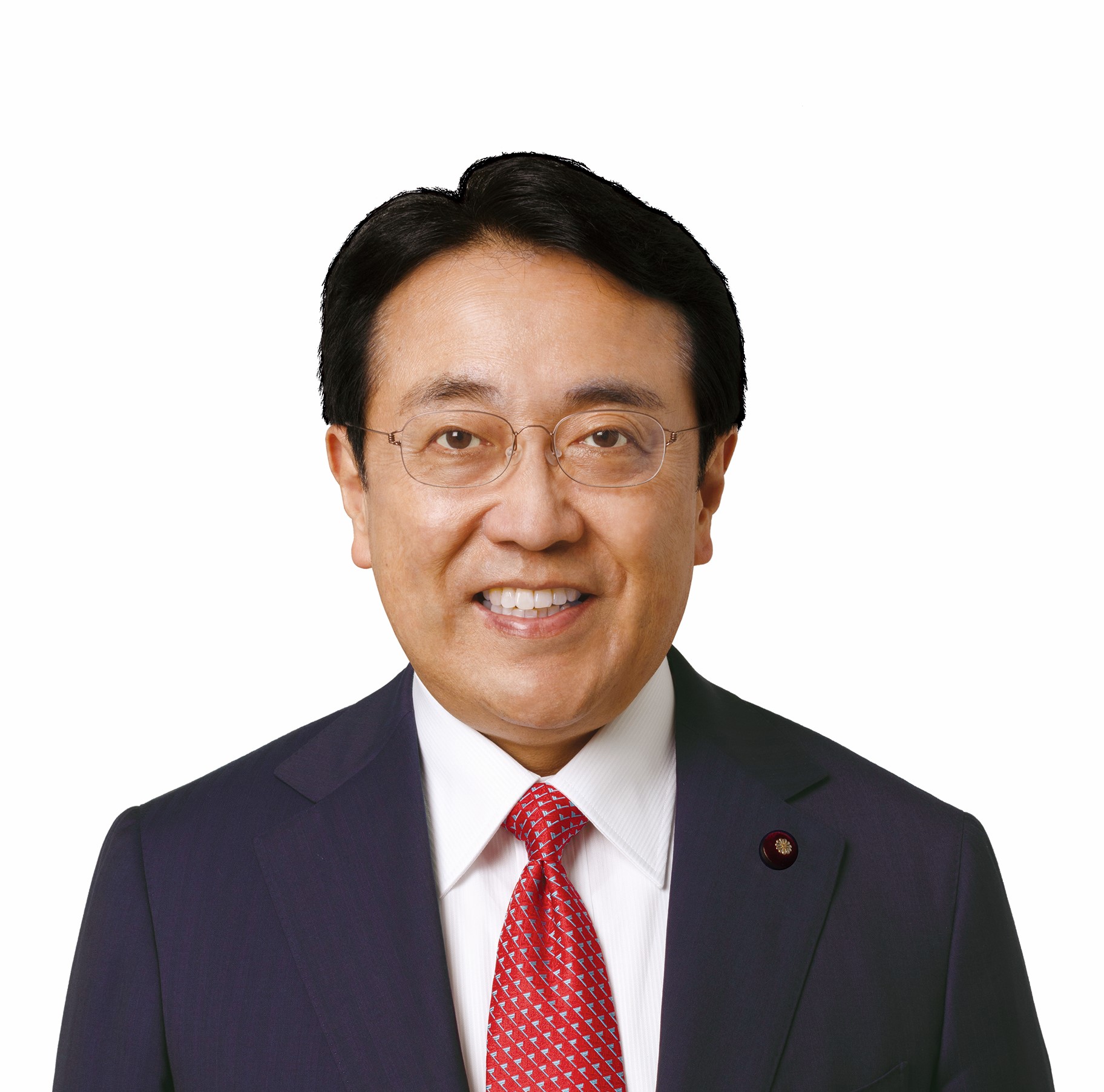
New Year Greetings 2026 - Minister of Economy, Trade and Industry (METI)
- Introduction
- The economic environment surrounding Japan
- Measures against inflationary pressures
- Strategic investments that enhance resilience against potential crises: Building a robust economy through growth-oriented investment
- External economic policy and economic security
- Reconstruction of Fukushima
- Closing remarks
Introduction
I would like to wish you all a Happy New Year. Last year, a range of natural disasters impacted Japan, including the forest fire in Ofunato City, Iwate Prefecture, a series of heavy rains and typhoons, and the earthquake that struck off the eastern coast of Aomori Prefecture. I would like to offer my heartfelt sympathy to all those who have been affected by the disasters. We will do anything to support the rebuilding of their livelihoods. I have a lifelong commitment to disaster risk reduction and have been working hard to increase Japan’s resilience against disasters, which pose risks to the lifeline of the nation. Recognizing that another natural disaster may strike before we forget the last one, we will lead efforts to strengthen preparedness.
The economic environment surrounding Japan
A new international order is being born to replace economic liberalism, as represented by the tariff measures implemented by the United States and the large-scale industrial policies being promoted by the United States, China, European countries and others by putting their own country first. In Japan, on the other hand, wage increases and domestic investments have reached the highest standards in about 30 years, with nominal GDP crossing the 600 trillion-yen mark, showing a promising sign for the Japanese economy.
On the other hand, Japan is facing structural factors, such as a decline in population, aging of society, and a decreasing birthrate. The shrinking workforce causes a drop in production capacity, which in turn imposes restrictions on supply. Moreover, external factors including fluctuations in global resource prices could impose additional inflationary pressure on the country.
Under these circumstances, enhancing Japan’s supply capacity through public and private investment will help stabilize the supply-demand balance and the cost of living. We need to realize a robust economy as aimed for by the Takaichi Cabinet based on the recognition of the current macroeconomic environment, while responding to changes made to the international order due to the U.S. tariff measures and other factors. To achieve this goal, it is becoming increasingly important for us to implement economic and industrial policies and growth strategies, including those to enhance Japan’s supply capacity and expand its exports.
Measures against inflationary pressures
First, we will implement measures against the rising costs of living, which is a top priority of the Takaichi Cabinet. In order to bring about the effect of these measures to people and companies facing difficulties due to inflationary pressures as early as possible, we will speed up the implementation of the fiscal 2025 supplementary budget.
In response to the Prime Minister Takaichi’s firm directives for the prompt implementation of the supplementary budget, we urgently held a meeting on December 19 of last year to directly ask the heads of the related bureaus of the Ministry of Economy, Trade and Industry (METI) to implement the budget at an unprecedented speed, while raising the awareness of the measures among all concerned parties. Further, by the end of this January, we will have all the related departments report on the implementation of the supplementary budget, monitoring the progress and disclosing it to the public.
Specifically, we will provide subsidies for electricity and gas bills during the severe winter season, or from January to March. The total amount of subsidies given to an average household will be about 7,300 yen over the three months, and in January and February, when the weather is especially harsh, the subsidies will exceed 3,000 yen per month. Concerning gasoline, we gradually increased the subsidies and abolished the provisional tax rates at the end of last year. Also, for diesel fuel, we will abolish the provisional tax rates on April 1 this year.
For the realization of a robust economy amid inflationary pressures, wage increases need to outpace inflation. For small and medium-sized enterprises (SMEs) and Small Business to secure funding for wage increases, including the minimum wage, we have been implementing support measures to facilitate price pass-through, fair transactions, higher productivity based on digitalization and labor saving, and to drive business restructuring through business succession and M&A. By utilizing the recently approved fiscal 2025 supplementary budget, we will enhance support measures for SMEs and Small Business that are working to strengthen their earning power to thrive in society despite facing labor supply constraints.
Specifically, for price pass-through, we will ensure the appropriateness of transactions between SMEs and the demand side, including the public sector, so that the companies will be able to secure funding for investments and wage increases simply by being paid in a fair manner. In particular, based on the Act Against Delay in Payment of Fees, etc. to Small and Medium-sized Entrusted Business Operators in Manufacturing and Other Specified Fields enforced on January 1, we will strictly prohibit the unilateral determination of prices without prior negotiation, which has been newly included in the regulatory target. Further, based on the Act on Promotion of Entrusted Small and Medium-sized Businesses, we will help companies operating in different tiers of supply chains to collaborate.
Moreover, to help leading medium enterprises (LMEs) and SMEs to enhance their earning power in this era of labor shortages, we will add 836.4 billion yen from the supplementary budget to the existing funding, for financial support totaling 1.13 trillion yen, which represents a 300 billion-yen increase over the previous year. We will thereby support investments by LMEs and growth-oriented SMEs aiming to achieve annual sales of 10 billion yen, as well as the implementation of measures aimed at higher productivity and business restructuring through business succession and M&A for SMEs and Small Business, while also enhancing the accompanying support systems. We will thereby encourage SMEs and Small Business to change their business behaviors to become more competitive, and build a society where people are rewarded for their efforts. We hope to shift towards a culture that rewards companies and individuals who embrace change, rather than rewarding those who try to maintain the status quo.
Strategic investments that enhance resilience against potential crises: Building a robust economy through growth-oriented investment
Strategic investments that enhance resilience against potential crises and growth investment constitute the crux of the Takaichi Cabinet’s growth strategies. For the realization of a robust economy, we will promptly examine the implementation of comprehensive support measures, such as those to promote bold capital investment and R&D, mainly in the fields of AI and semiconductors, quantum technology, biotechnology, aviation and space, energy and GX, thereby attracting more public and private investment in these fields.
Specifically, concerning AI and semiconductors, we plan to invest 100 billion yen in Rapidus Corporation going forward. Through these measures we will solidify the foundation for the domestic production of advanced semiconductors. Also, concerning AI-based robots, we will foster measures to find new markets and promote the actual use of these robots in society.
Also, concerning quantum technology, we have secured funds amounting to about 100 billion yen in the supplementary budget to accelerate the development of next-generation quantum computers to create a globally competitive industry in Japan.
In the energy field, demand for electricity is expanding in line with the progress of DX and GX. In response, we will promote maximum use of nuclear power, while ensuring nuclear safety and seeking the understanding of the host communities as the underlying premise. We will also foster the utilization of perovskite solar cells, offshore wind and geothermal resources as sources of renewable energy that contribute to increasing Japan’s energy self-sufficiency rate, based on the premise that the facilities will co-exist with local communities. On the other hand, to ensure safety and the protection of natural landscapes and the environment, we will consider the introduction of stricter measures, including expanding environmental assessment targets and enforcing the Electricity Business Act in a stricter manner. In addition, we will take appropriate measures, including examining phasing out the provision of support for new large-scale solar facilities in and after fiscal 2027.
Further, while focusing on the diversification of supply sources , we will advance measures for the development of domestic resources. Moreover, we aim to advance the early social implementation of fusion energy, which could fundamentally change the situation concerning Japan’s energy constraints, and of next-generation advanced reactors.
Concerning the content industry, overseas sales have already reached 5.8 trillion yen, outstripping the semiconductor industry. We will support the content industry in expanding its overseas business and increasing sales to 20 trillion yen by 2033.
As the minister in charge of measures for Japan to become a new kind of technology-driven nation and enhance its competitiveness, we will promote the actual societal use of technologies in which Japan has strengths and help the country boost its international competitiveness through the measures listed in the tax reform plan formulated at the end of last year, including creating bold tax incentives for promoting investment that allows for immediate depreciation, intensively enhancing the R&D tax credit system in strategically important technological fields, and encouraging the public sector to procure new technologies.
Moreover, we will support deep-tech startups in conducting R&D and promoting commercialization, expand procurement by the government, and encourage the development of startups by local universities and technical colleges.
External economic policy and economic security
As for the Japan-U.S. tariff agreement made on July 22, 2025, for which various orders including an executive order were issued on September 4, we will continue to implement the agreement sincerely and rapidly, in consideration of the results of the meeting held between Prime Minister Takaichi and President Trump last year.
Concerning the impact of U.S. tariff measures in Japan, through the Japan-U.S. negotiations we have reduced the annual amount of U.S. tariffs imposed on Japan by more than 2 trillion yen from the initial figure of more than 5 trillion yen which could have been imposed if we had failed in the negotiations. Also, we have secured the terms and conditions of trade and predictability that are as favorable as those secured by other countries and our achievements have been well received.
However, certain tariff rates still remain, and we need to respond appropriately to the impact of the tariffs on various industries like the automobile industry. Based on this recognition, we will offer financial support to SMEs and work to revitalize the domestic market.
We also will work to develop the U.S. market through the 550 billion dollars Strategic Investment Initiative. To carry out loan guarantees for the strategic investment in the U.S. led by the Government of Japan, we will provide an investment of about 100 billion yen to Nippon Export and Investment Insurance (NEXI), and also issue government bonds to strengthen its financial foundation.
As special partners, Japan and the U.S. will achieve strong economic growth for both countries and maximize Japan’s national interests, through cooperation to establish supply chains in fields that are important for bilateral economic security.
In parallel with coordination with the U.S. in response to its tariff measures, we will implement a hybrid trade strategy by fostering measures to ensure free trade and the rule of law in cooperation with like-minded countries through various frameworks including CPTPP, APEC and AZEC. We will further promote the exploration of new markets in regions including in Global South countries.
Concerning economic security, it is important for Japan to build a resilient supply chain that avoids excessive dependence on specific countries for rare earths, semiconductors and other critical resources. Accordingly, we will enhance the domestic production capacity, promote the diversification of supply sources through public-private collaboration, and enhance national stockpiling.
Reconstruction of Fukushima
This year marks the 15th year since the occurrence of the Great East Japan Earthquake and is an important year, in which the third reconstruction and revitalization period will begin.
We have long regarded the reconstruction of Fukushima as a prerequisite for the reconstruction of Tohoku, and the reconstruction of Tohoku as a prerequisite for Japan’s revitalization.
The reconstruction of Fukushima and the safe and steady decommissioning of the Fukushima Daiichi Nuclear Power Station are among METI’s most critical priorities. For this reason, I visited Fukushima Prefecture immediately after becoming the minister of METI to check the progress with the decommissioning process and to meet the governor and heads of the afflicted local governments. I shared with the municipal leaders my decision to take the lead, adhere to an onsite approach, and maintain full responsibility for the reconstruction efforts of Fukushima until their final stage.
We will continue to implement measures for safe and steady decommissioning and for the discharge of ALPS treated water into the sea, as well as measures to lift evacuation orders, foster the recovery of local businesses and people’s livelihoods, and create new industries. Also, concerning recovery from the damage caused by the 2024 Noto peninsula earthquake and heavy rains, we will support afflicted enterprises, including companies in traditional industries, in reconstructing their businesses.
Closing remarks
It is my belief that we can change the world together. METI’s mission, vision and values (MVV) statement includes the phrase “Build Our Future”, and this mission strongly resonates with my thinking.
According to the traditional Chinese horoscope, 2026 is the Year of the Horse, which symbolizes speed and strength. Prime Minister Takaichi said in her inaugural speech that she would “work, work, work, work, and work as hard.” In this Year of Horse, I will also work like a horse, devoting myself wholeheartedly and with total commitment to my ministerial duties.
I respectfully ask for your continued kind understanding and support for METI’s industrial policies in the coming year.