- Home
- News Releases
- Back Issues
- May FY2026
- Minister Akazawa Visits the French Republic and the Kingdom of Belgium
Minister Akazawa Visits the French Republic and the Kingdom of Belgium
May 7, 2026
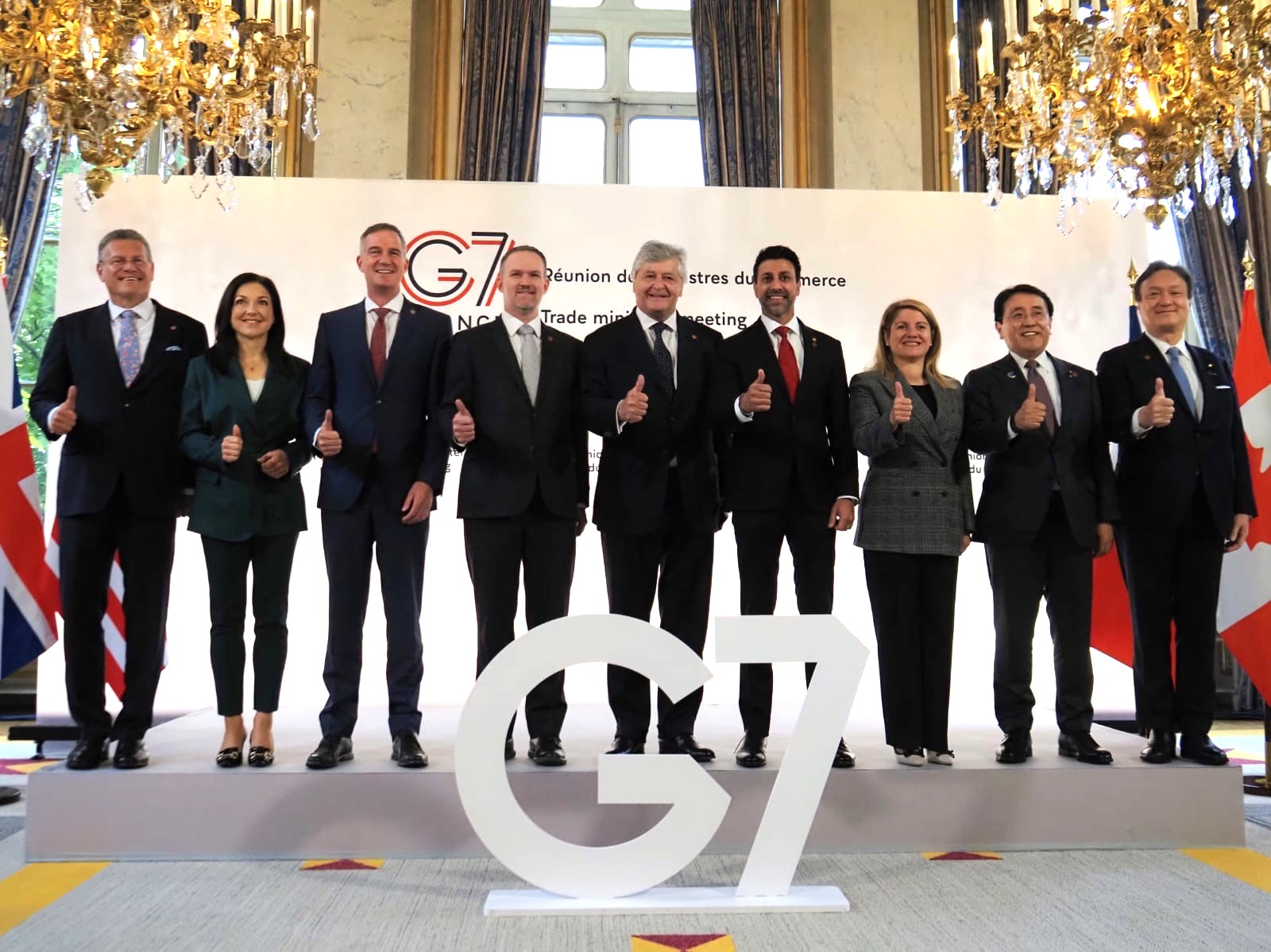
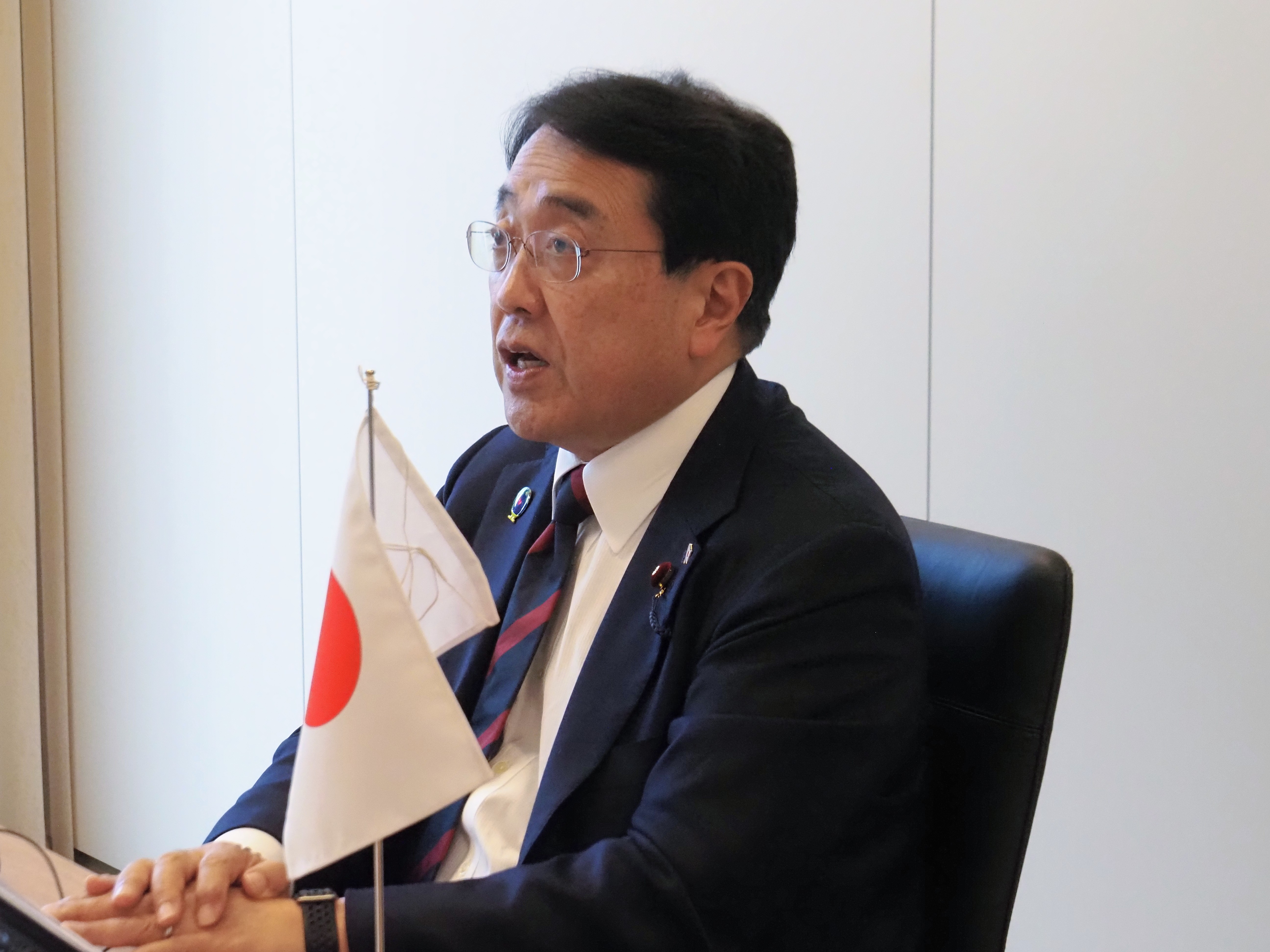
From Tuesday, May 5, to Friday, May 8, 2026, Mr. Akazawa Ryosei, Minister of Economy, Trade and Industry, visited the French Republic and the Kingdom of Belgium. He attended the G7 Trade Ministers’ Meeting in Paris, France, on Wednesday, May 6; the Japan-EU High-Level Economic Dialogue in Brussels, Belgium, on Thursday, May 7; and the G7 Critical Minerals Ministerial Meeting held online also on May 7.
The G7 Trade Ministers’ Meeting adopted the G7 Trade Ministers’ Communique, which expressed grave concerns regarding economic coercion through arbitrary export restrictions. The Japan-EU High-Level Economic Dialogue issued a joint press statement on maintaining the multilateral trading system and strengthening cooperation on economic security and industry.
1. G7 Trade Ministers’ Meeting
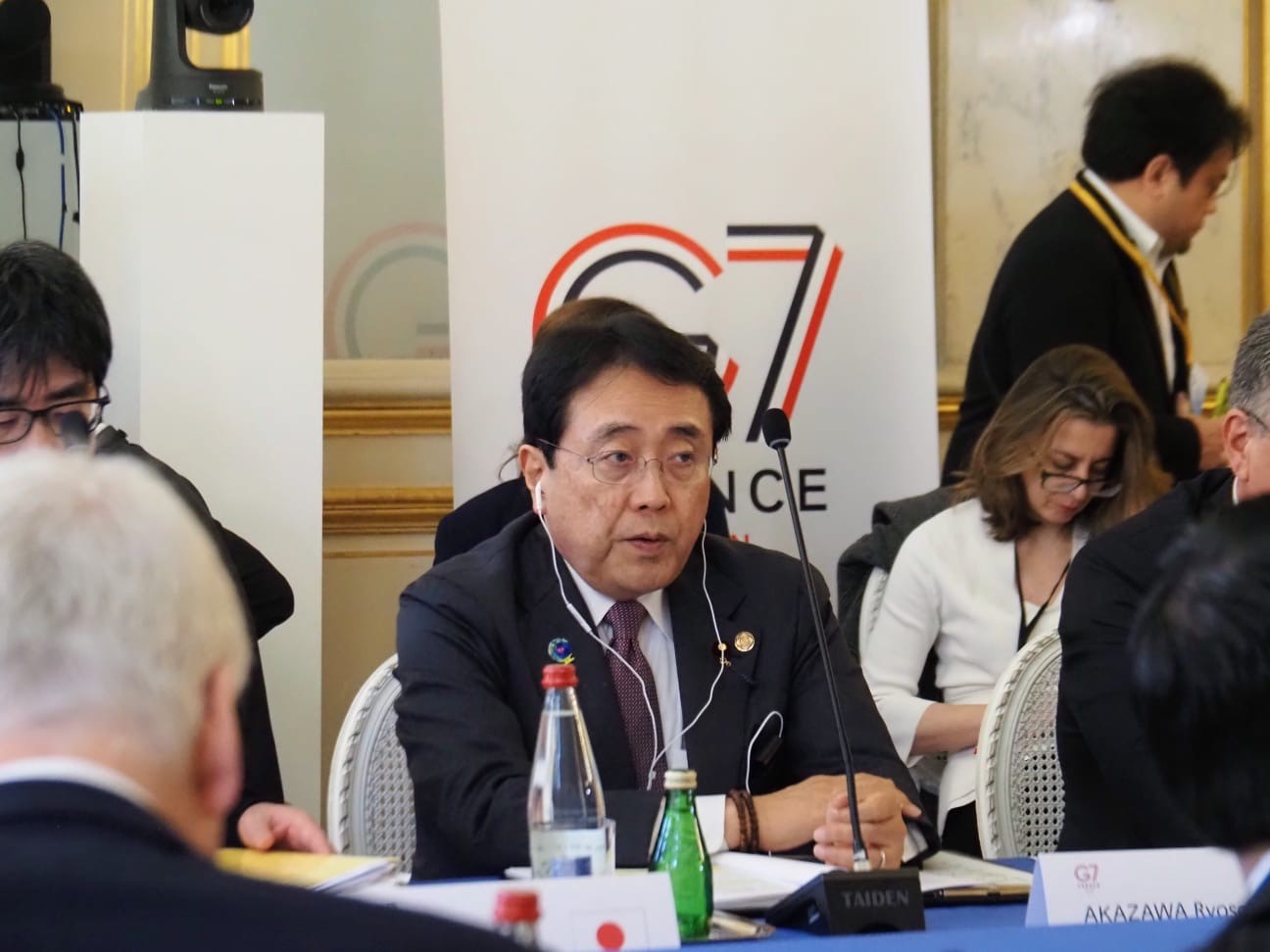
On Wednesday, May 6, the G7 Trade Ministers’ Meeting was held in Paris, France, and Minister Akazawa and Mr. Horii Iwao, State Minister for Foreign Affairs, attended it.
Following the online G7 Trade Ministers’ Meeting held in February 2026, the G7 Trade Ministers’ Meeting in Paris was held in three sessions themed on: (1) addressing non-market policies and practices leading to excess industrial capacities, (2) fostering value chain resilience for critical minerals, and (3) addressing challenges related to small parcels. In addition, a working lunch was held in light of the outcomes of the 14th WTO Ministerial Conference (MC14).
Minister Akazawa made the remarks outlined below during the sessions.
Session 1: Addressing non-market policies and practices (NMPPs) leading to excess industrial capacities
- NMPPs and the global overcapacity originated from them are undermining fair competition, discouraging investment, harming industries and workers, and impeding healthy industrial development.
- Within the G7, we must avoid sliding into protectionism that fragments markets among like‑minded countries. We should not exclude each other’s products; rather, we must preserve mutual market access among like-minded partners.
- At the same time, we should consider appropriate actions against these NMPPs by China, while not abandoning fundamental responses through strengthening rules. It is essential to work with like-minded partners, including the G7, to express concerns regarding coercive actions, such as arbitrary export controls.
Session 2: Fostering value chain resilience for critical minerals
- Amid disruptions to global critical minerals supply chains, it is an urgent task for the G7 to work together and develop alternative sources of supply. It is meaningful that we have shared this objective and have been engaging in frank exchanges of views on possible trade measures for critical minerals within the G7.
- It is important to build a flexible and effective framework grounded in the realities of the market. Careful policy design is required.
Session 4: Working lunch (14th WTO Ministerial Conference [MC14] and future cooperation)
- The WTO, as the infrastructure underpinning a rules-based multilateral trading system, has enhanced business predictability and contributed to economic prosperity across countries.
- It is urgent to pursue reforms aimed at restoring and strengthening the WTO’s functions. In WTO reform, Japan considers ensuring a level playing field (LPF) to be particularly important. In order to address non-market policies and practices, Japan intends to accelerate substantive discussions from multiple angles, in coordination with like-minded partners,
- In light of the current situation in the Middle East and energy market, strengthening supply chain resilience and maintaining the multilateral trading system as a prerequisite for that is important. To support Asia in the face of difficult circumstances, Japan proposed the “Partnership On Wide Energy and Resources Resilience Asia (POWERR Asia)” initiative to strengthen supply chain resilience across Asia. In addition, to advance global supply chain resilience, it is essential to deter unjustified trade restrictive measures by exporting countries. Japan will work together with G7 partners to maintain and strengthen the rule-based multilateral trading system.
As explained above, G7 trade ministers engaged in active discussions during each session, and as their outcome, adopted the G7 Trade Ministers’ Communique, which included an expression of grave concerns regarding economic coercion through arbitrary export restrictions, especially with respect to critical minerals.
2. Japan-EU High-Level Economic Dialogue
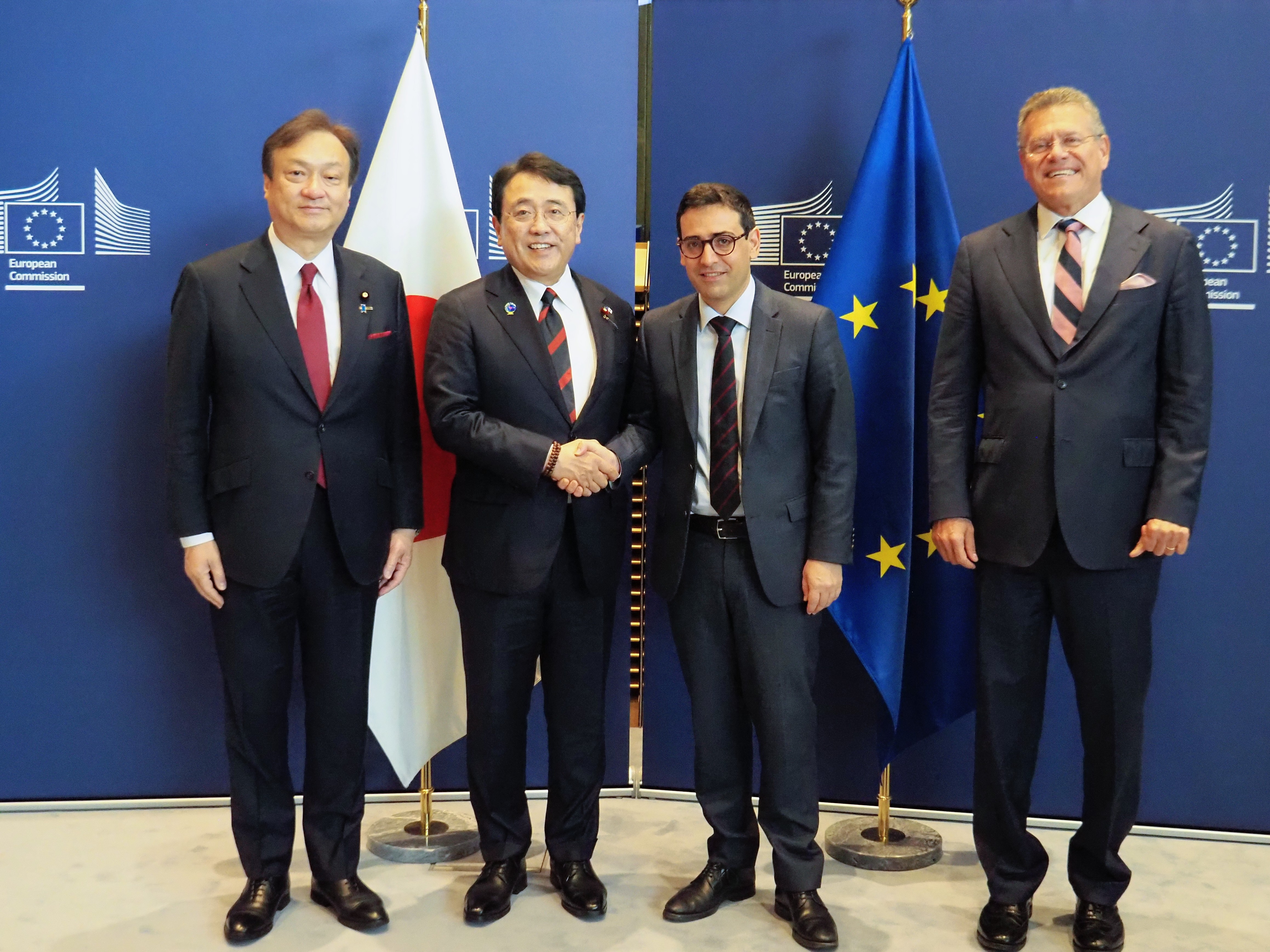
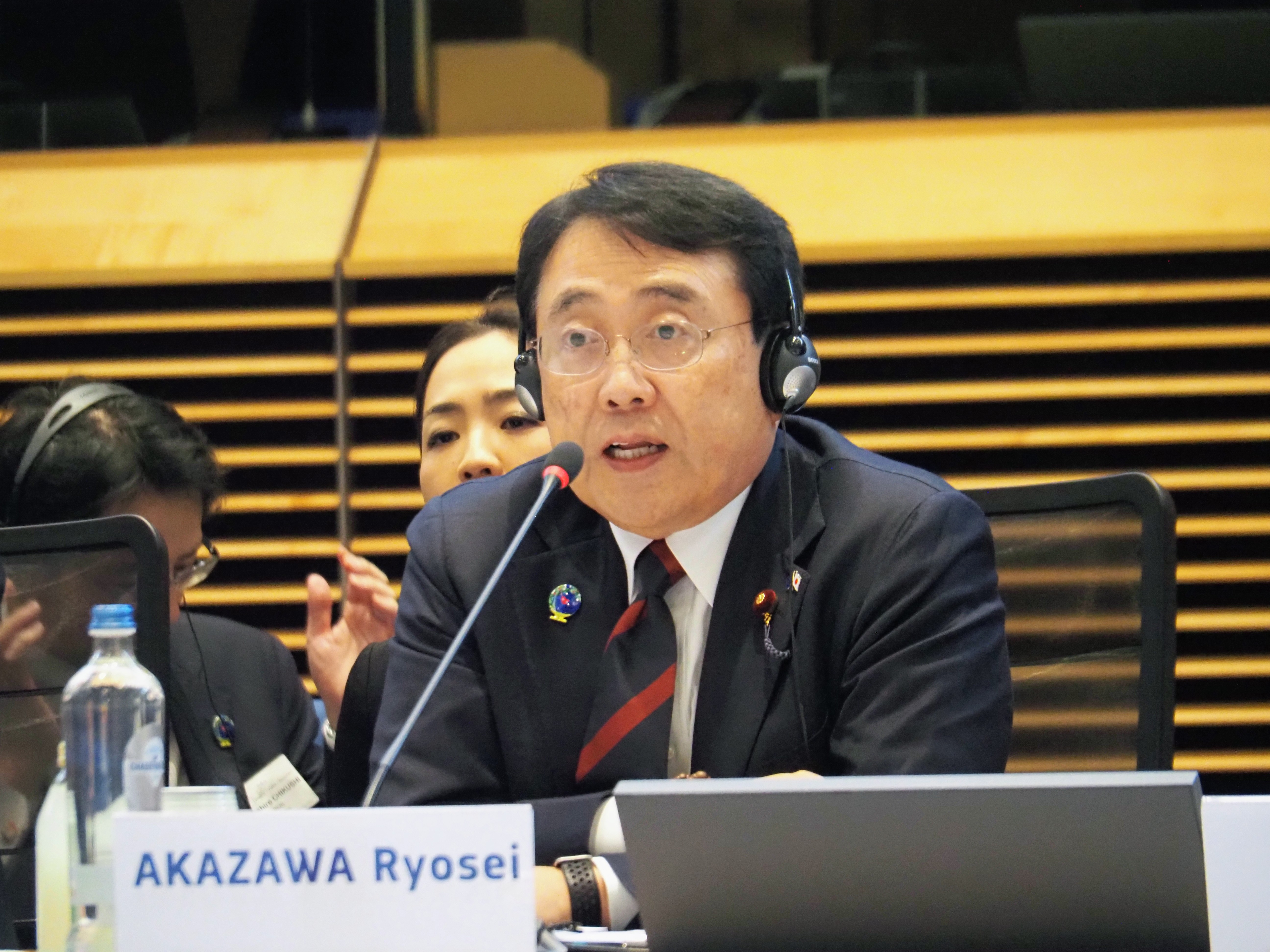
On Thursday, May 7, the Seventh Japan-EU High-level Economic Dialogue was held in Brussels, Belgium. The Dialogue was co-chaired by Minister Akazawa and State Minister Horii on the Japanese side, and by Mr. Maroš Šefčovič, European Commissioner for Trade and Economic Security, Interinstitutional Relations and Transparency, and Mr. Stéphane Séjourné, Executive Vice-President of the European Commission for Prosperity and Industrial Strategy, on the EU side. This was the first dialogue held as a 2+2 meeting. At the outset, Minister Akazawa introduced Japanese food to the EU ministers and senior officials.
The four ministers discussed (1) the geopolitical situation and international trade, (2) economic security, and (3) industrial cooperation, and issued a joint press statement as an outcome of the meeting.
(1) Geopolitical situation and international trade
Recognizing the importance of cooperating with like-minded nations, particularly the EU, with which Japan shares fundamental values, to address challenges facing the global economic order, including the current situation in the Middle East, Japan exchanged views with the EU side on the situation in the Middle East and on international trade, and shared the importance of free trade, including in energy. The four ministers concurred that Japan and the EU will cooperate to maintain and strengthen the multilateral trading system, including dialogue between the EU and the Comprehensive and Progressive Agreement for Trans-Pacific Partnership (CPTPP), collaboration through the G7, and WTO reform.
(2) Economic security
The four ministers shared concerns about the expansion of unjustified export restrictions and reemphasized the importance of cooperation among like-minded countries to ensure economic security, given the geopolitical situation. In particular, they concurred that not only Japan and the EU but also the G7 will continue to work together to prevent technology leakage and to accelerate initiatives to strengthen supply chains, including those for critical minerals.
(3) Industrial cooperation
Regarding industrial cooperation, the four ministers confirmed progress across a wide range of fields, including critical minerals, batteries, innovation, biotech, defense and space industry, and clean energy, under the Japan-EU Competitiveness Alliance established at the July 2025 Japan-EU Summit. In particular, they confirmed that Japan and the EU will support concrete cooperation to establish projects aimed at diversifying the supply of critical minerals, and concurred on promoting cooperation between Japanese and EU companies to strengthen the Japan-EU battery supply chain. The Japan side also raised its concerns regarding the EU’s proposed measures on steel products and its Industrial Accelerator Act proposal for the automotive sector.
3. G7 Critical Minerals Ministerial Meeting
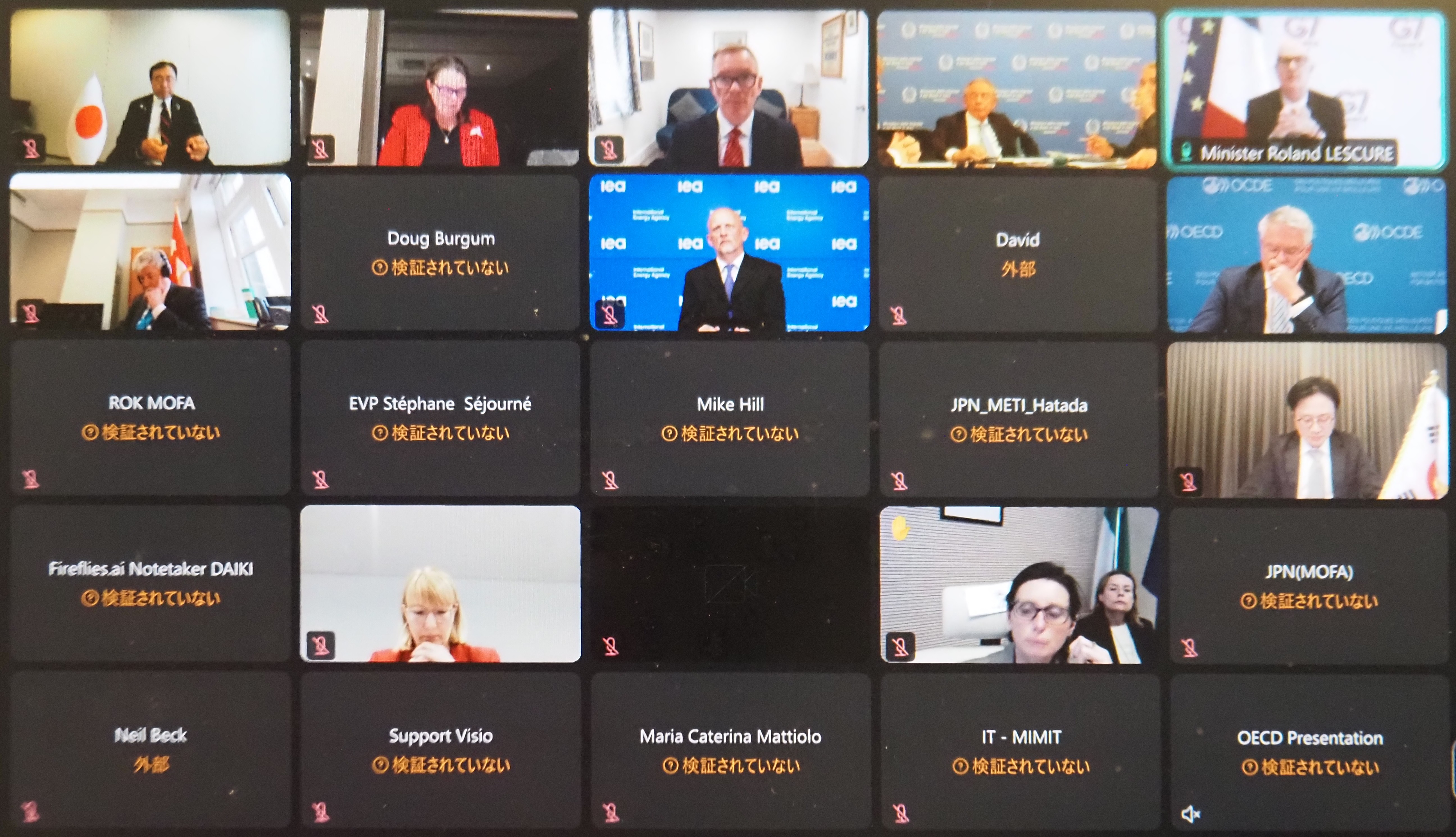
On Thursday, May 7, the G7 Critical Minerals Ministerial Meeting was held online, and Minister Akazawa attended on behalf of the Government of Japan during his visit to Belgium.
The G7’s first-ever ministerial meeting on critical minerals was held at the initiative of France, the chair. At the meeting, participants discussed ways to support the diversification of critical minerals supply chains. Minister Akazawa explained that, recognizing the urgent need to develop alternative supply sources to reduce dependencies on specific countries, Japan was proceeding to establish projects and providing support through public financial support, and added that coordinated support within the G7 would be important for developing such projects.
Related Materials
- G7 TRADE MINISTERS’ COMMUNIQUE(PDF:248KB)

- Joint press statement of 7th Japan-EU High-Level Economic Dialogue(PDF:238KB)
Divisions in Charge
Minister Akazawa’s visit in general and the G7 Trade Ministers’ Meeting: Principal Director’s office, International Economic Affairs Department, Trade Policy Bureau
Japan-EU High-Level Economic Dialogue: Europe Division, Trade Policy Bureau
G7 Critical Minerals Ministerial Meeting: Mineral Resources Division, Manufacturing Industries Bureau
 Download(To Adobe site)