

From Ownership to
Passing On Value:
Building Social Mechanisms for Circularity
through Citizens and Companies
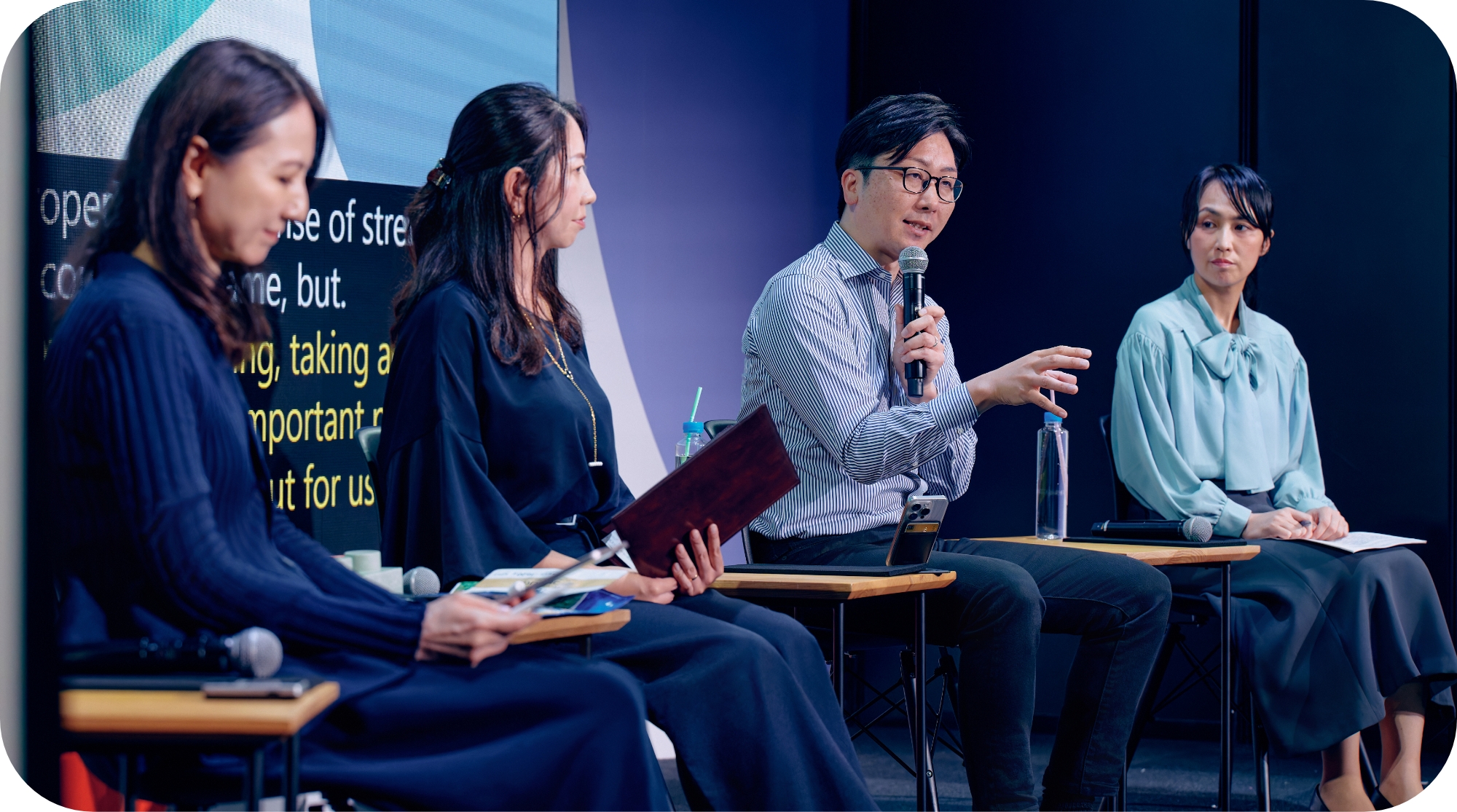
The Ministry of Economy, Trade and Industry held the Circular Economy Laboratory at Expo 2025 Osaka, Kansai from September 23 to 29, 2025, offering visitors a fun and engaging way to learn about the circular economy. This article shares insights and discoveries from the exhibits and stage events at the venue.
message to the future.
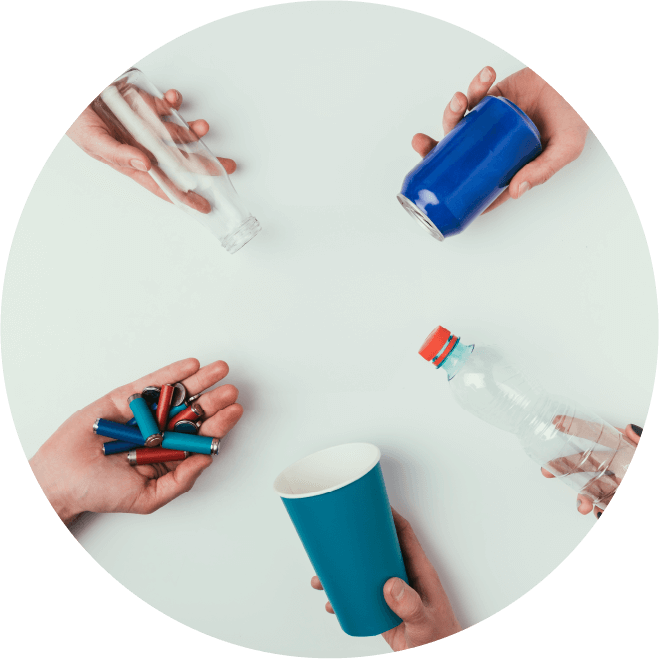
Choosing refills, recycled materials,
or secondhand items is a vote that supports companies in advancing circularity.
keeps resources alive.
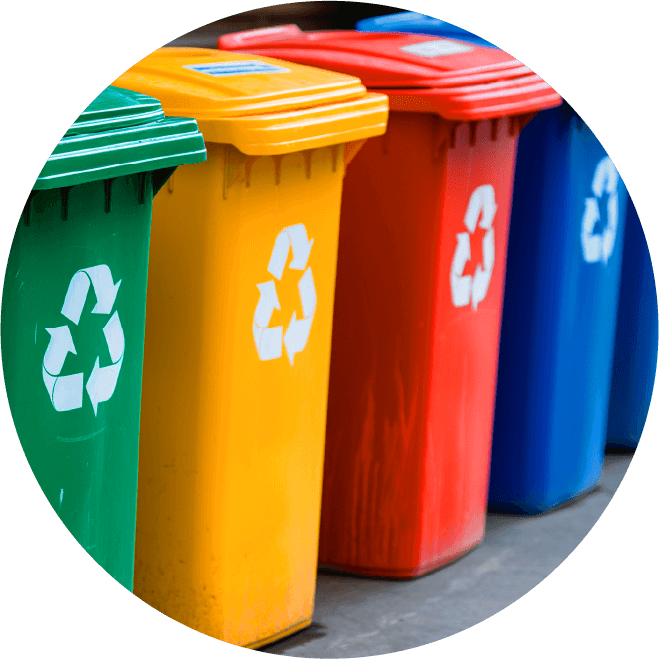
Sorting items correctly is a vital
first step in passing their value
on to the next stage.
Up to this point, we have looked at what the circular economy is and the actions each of us can take. However, circular-economy initiatives are never limited to “individual effort” alone. When citizens work together—and when citizens and companies join hands—the circle of resource circulation can expand even further.
In this article, we take a closer look at the initiatives companies are already advancing in society and how those efforts connect to our everyday lives.

- Your choices when you buy can shape the future: Circular Economy actions you can start today
- From ownership to sharing: Toward a society where home appliances, furniture, and tableware can be used more freely
- Sorting is an investment in the future: Creating new “gateways for resources” together as a society
- Where are the pitfalls in circulating resources? Technologies and systems that transform the mindset of “that’s just how it is”

Your choices when you buy can shape the future: Circular Economy actions you can start today
The principles of the circular economy not only encourage consumers to reconsider how they shop, but also open up new possibilities for companies themselves.
In this section, we focus on corporate initiatives that support more circular purchasing choices. Let’s explore practical ideas that can inspire actions you can start taking today.
【Kao】Choosing refills can contribute
even more to future resources
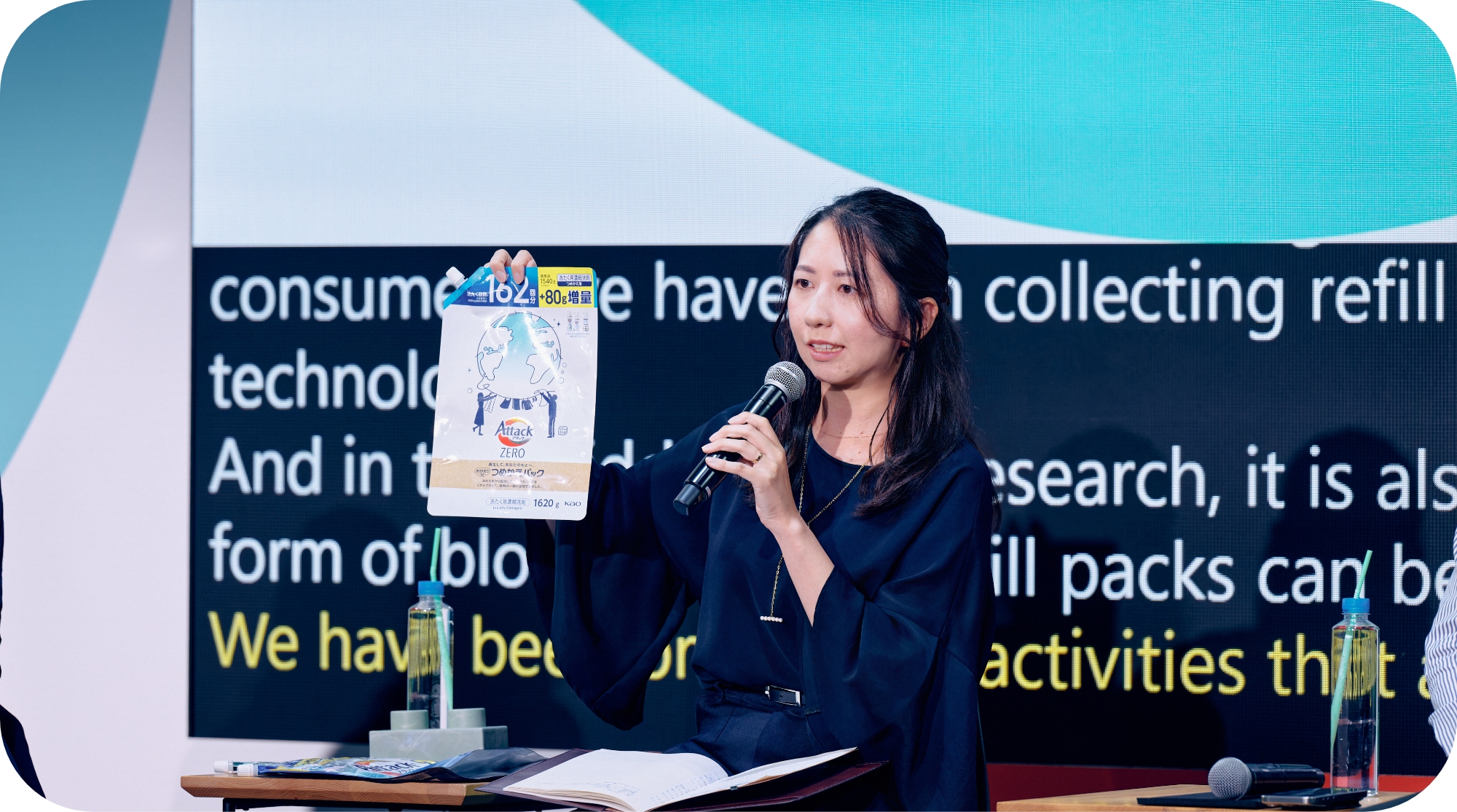
Refill packs for shampoo, detergent, and other household products have become common items in daily life. According to Kao, simply choosing a refill option can reduce plastic use by approximately 76%.
Kao is also advancing an initiative called RecyCreation, in which used refill packs are collected and transformed back into material for new products. Up to now, this has included efforts to visualize circulation by converting used packs into items such as plastic blocks.
Today, the company is going a step further—developing technology for horizontal recycling that allows refill packs to be recycled back into refill packs, enabling resources to stay in use for even longer.
A familiar everyday choice, selecting a refill, now has the potential to connect to an entirely new cycle in which a pack is reborn as a pack once again.
【Unicharm】Choosing products made with environmentally conscious materials
Paying attention to the materials used in products can offer important clues for creating circularity. Unicharm, under its RefF (Recycle for the Future) initiative, is taking on the challenge of horizontal recycling for used disposable diapers—a material long considered extremely difficult to recycle.
In Osaki Town in Kagoshima Prefecture, the company is already collecting used diapers separately and recycling them into new products such as adult-care diapers and cat litter. In Indonesia, Unicharm is also exploring region-specific sustainable resource use by adopting bagasse (sugarcane residue that was previously discarded) as a bio-based material for limited-edition products.
Choosing products from companies committed to building a circular future is, in itself, a vote of support for these forward-looking initiatives.
【Mercari】Buying secondhand as a new choice
Circular purchasing is not limited to buying new products. Among younger generations in particular, choosing to buy secondhand is becoming increasingly common. Meanwhile, it is said that households in Japan collectively hold an average of roughly 1.82 million yen worth of “dormant assets”—items with real value that remain unused despite being perfectly functional.
On the flea market app Mercari, one in two members of Generation Z sell their unwanted items and use that money to buy things they want, enjoying a personal cycle of selling and buying. Once someone experiences “selling” for the first time, the psychological hurdle to purchasing secondhand tends to decrease, making it easier to choose pre-owned items.
Embracing secondhand shopping not only reduces the environmental footprint associated with manufacturing and disposal—it may also allow us to feel the joy of seeing an item “live on” in someone else’s hands.

From ownership to sharing:
Toward a society where home appliances, furniture, and tableware can be used more freely
At the same time, the long-standing assumption that we must buy what we use is beginning to change. A lifestyle centered on using only what you need, when you need it is becoming more widespread. This shift represents a transition in values—from owning to using. Let’s look at how companies are expanding our choices and explore what our future relationship with everyday products might look like.
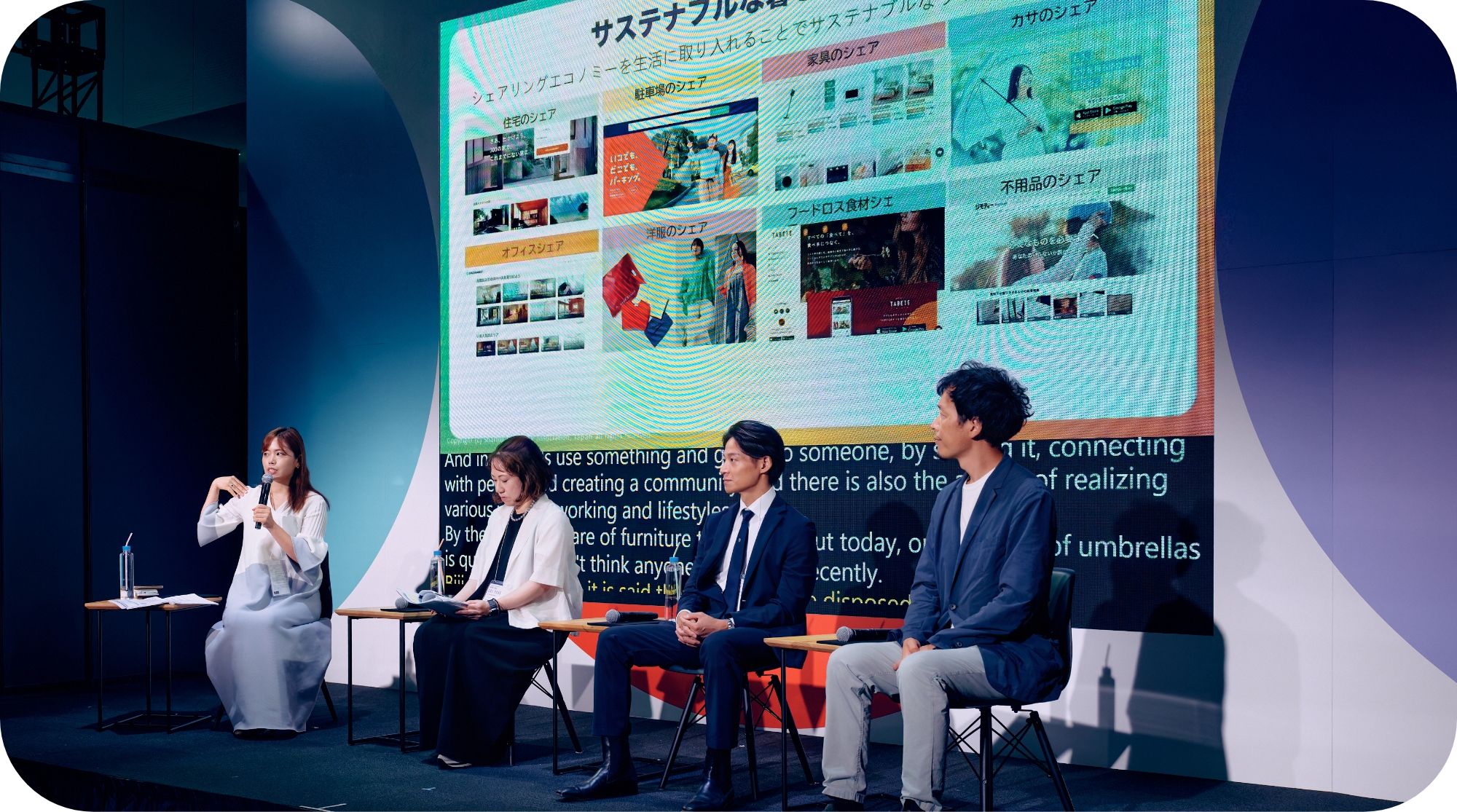
【Panasonic】Choosing to use things for longer and buy secondhand with confidence
“I want to keep using the appliances I’m attached to for as long as possible.” Panasonic’s initiatives respond directly to this desire. The company extends product lifespans through repair and maintenance while also focusing on selling refurbished items, products such as initial-defect returns that have been repaired and inspected. By offering a one-year warranty on refurbished items that meet strict quality standards, Panasonic is dispelling the perception that secondhand feels a bit unreliable and providing appliances that people can use with peace of mind.
In June 2025, Panasonic began opening its refurbishment process to the public at its Utsunomiya plant in Tochigi Prefecture. Factory tours are now available, helping to lead the way in creating locally rooted, circular manufacturing.
According to Panasonic, customer satisfaction with refurbished products is an impressive 94%. The options of repairing and continuing to use what you have and choosing secondhand items with verified quality are steadily gaining positive traction.
【CLAS】A subscription service for furniture and appliances
that lets you freely choose to rent, return, or buy
Have you ever struggled with disposing of furniture or home appliances when moving or when your lifestyle changes? The circular subscription service CLAS offers a solution by providing furniture and appliances on a monthly basis, enabling a lifestyle where you can freely choose to rent, return, or buy.
The service is simple: rent what you need when you need it, and return items when you no longer do. A dedicated team handles repairs and cleaning so that each item can be passed on to the next user. And if you try something and find that it really fits your lifestyle, you also have the option to purchase it.
Driven by the idea that things don’t have to be brand-new to be good for users, CLAS encourages people to try items before buying. For large furniture and appliances in particular, having such flexible options helps reduce unnecessary consumption of products and energy.
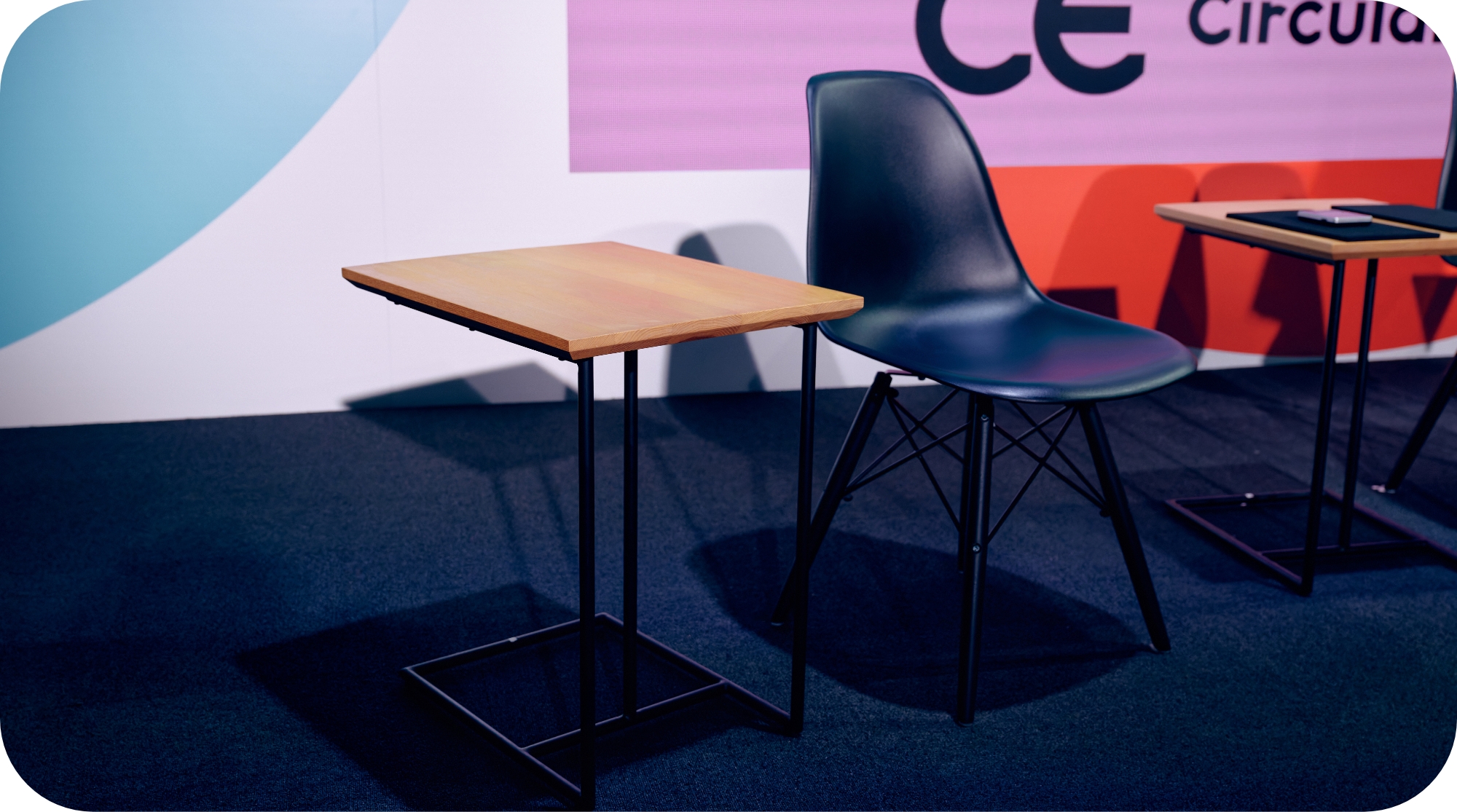
The desks and chairs used at the venue were also rented through CLAS.
【KAMAN】Reusable tableware that makes “not disposable” the new normal
In our everyday lives, the number of things we can share is steadily increasing, and one example is reusable tableware used at event venues and food trucks.
Japan generates 7.69 million tons of plastic waste each year, and remarkably, 46.8%(Japanese Only) of it comes from single-use containers and packaging. Simply not throwing these items away can significantly reduce overall waste.
KAMAN’s service Megloo is bringing this shift into practice. Users can opt for reusable containers when buying takeout, then return them to collection boxes located in cafés or offices. The containers are then washed and managed at dedicated facilities before being put back into circulation.
Rather than feeling obligated to do it because it's good for the environment, it is the positive experience of doing something that feels good which naturally makes you choose to reuse that turns reuse into a part of everyday life.
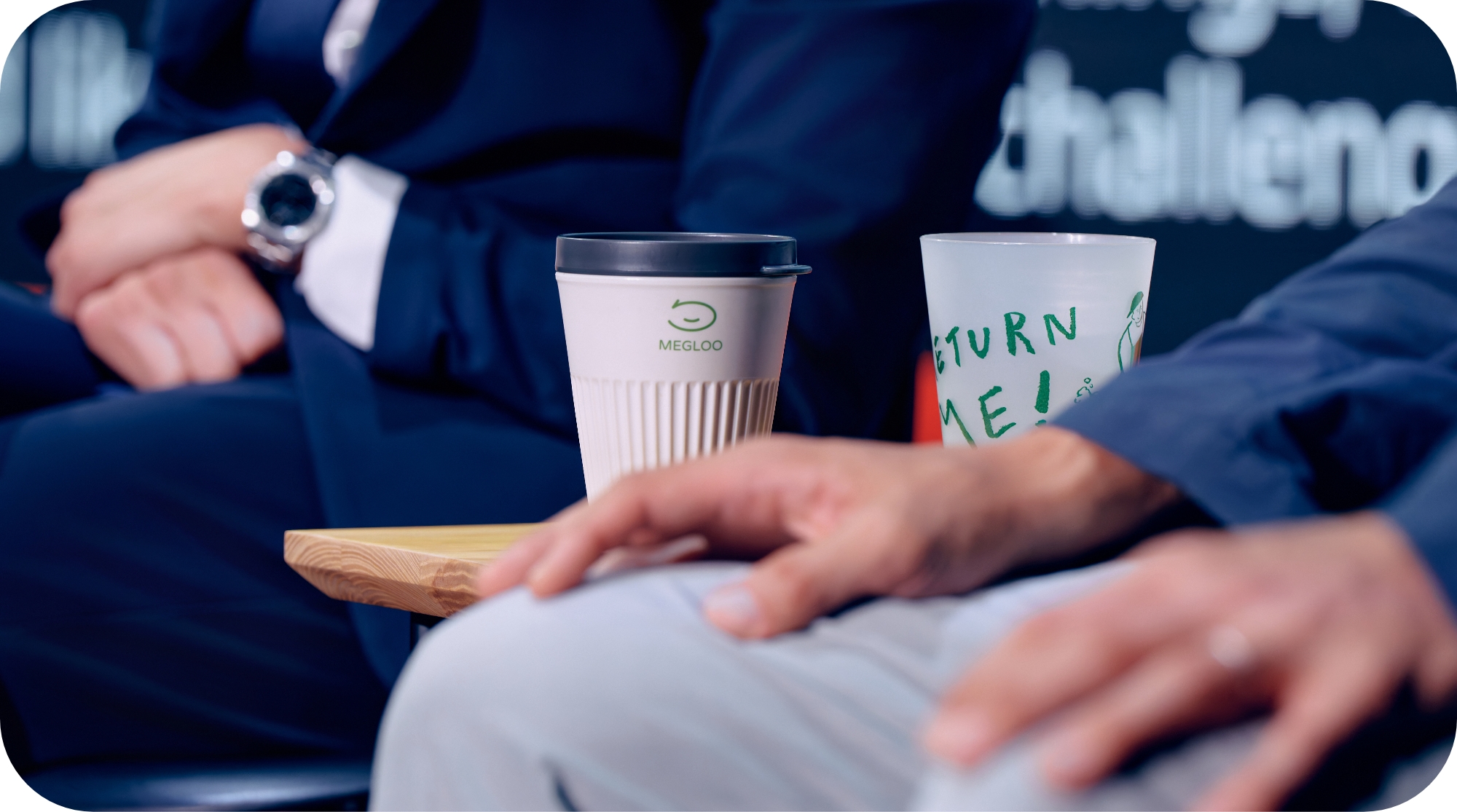
Megloo’s reusable cups. At J.League match venues, this system has reportedly helped reduce waste by roughly half.

Sorting is an investment in the future:
Creating new “gateways for resources”
together as a society
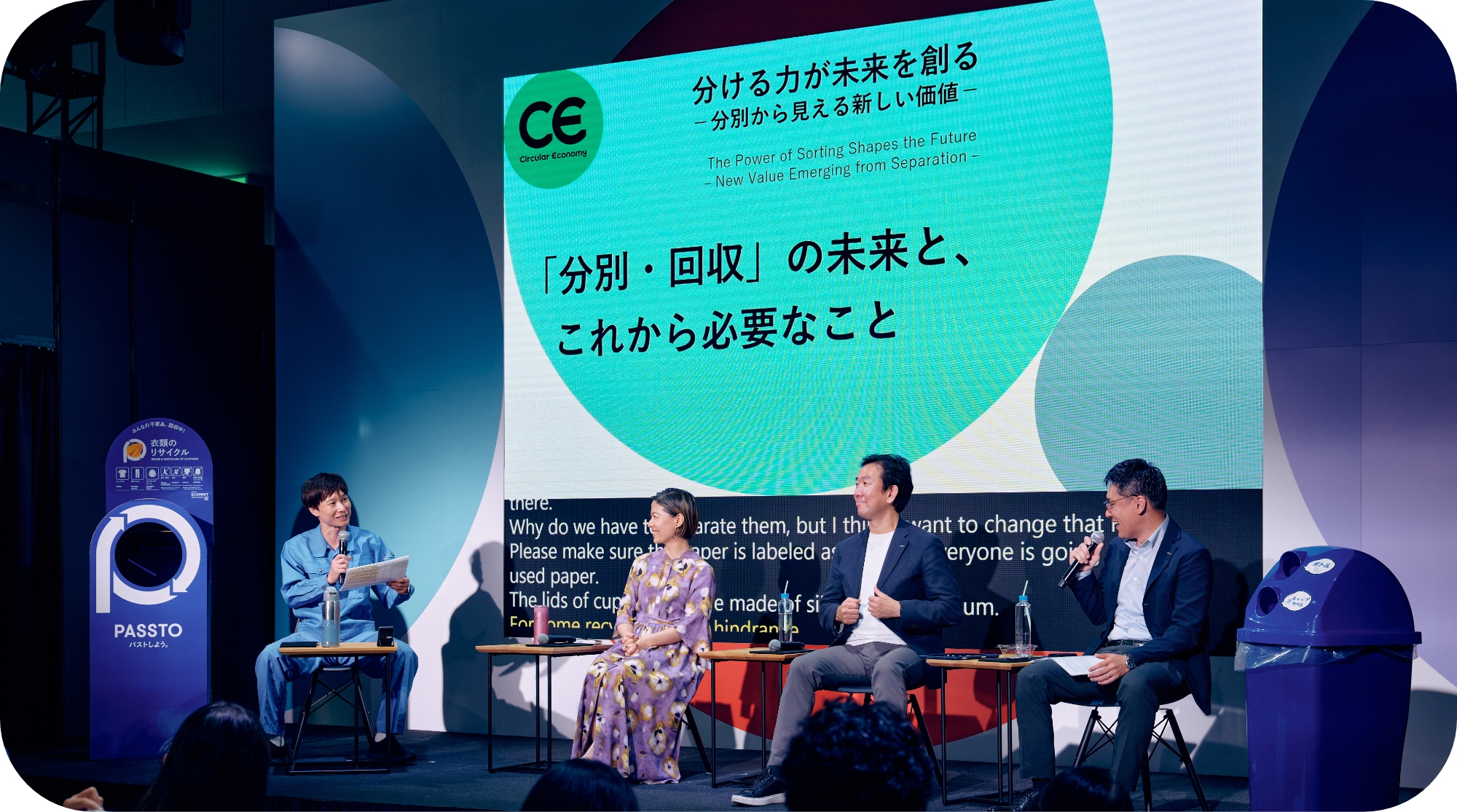
Next, the act of “sorting” is one area of the circular economy where individual actions have an especially powerful impact. But do you know how sorting actually connects to the resources of the future?
Where do sorted materials go, and how are they reborn? Across society, initiatives are emerging to shed light on what happens to materials after they are sorted.
【ECOMMIT】Making alternatives to throwing away easier and more accessible
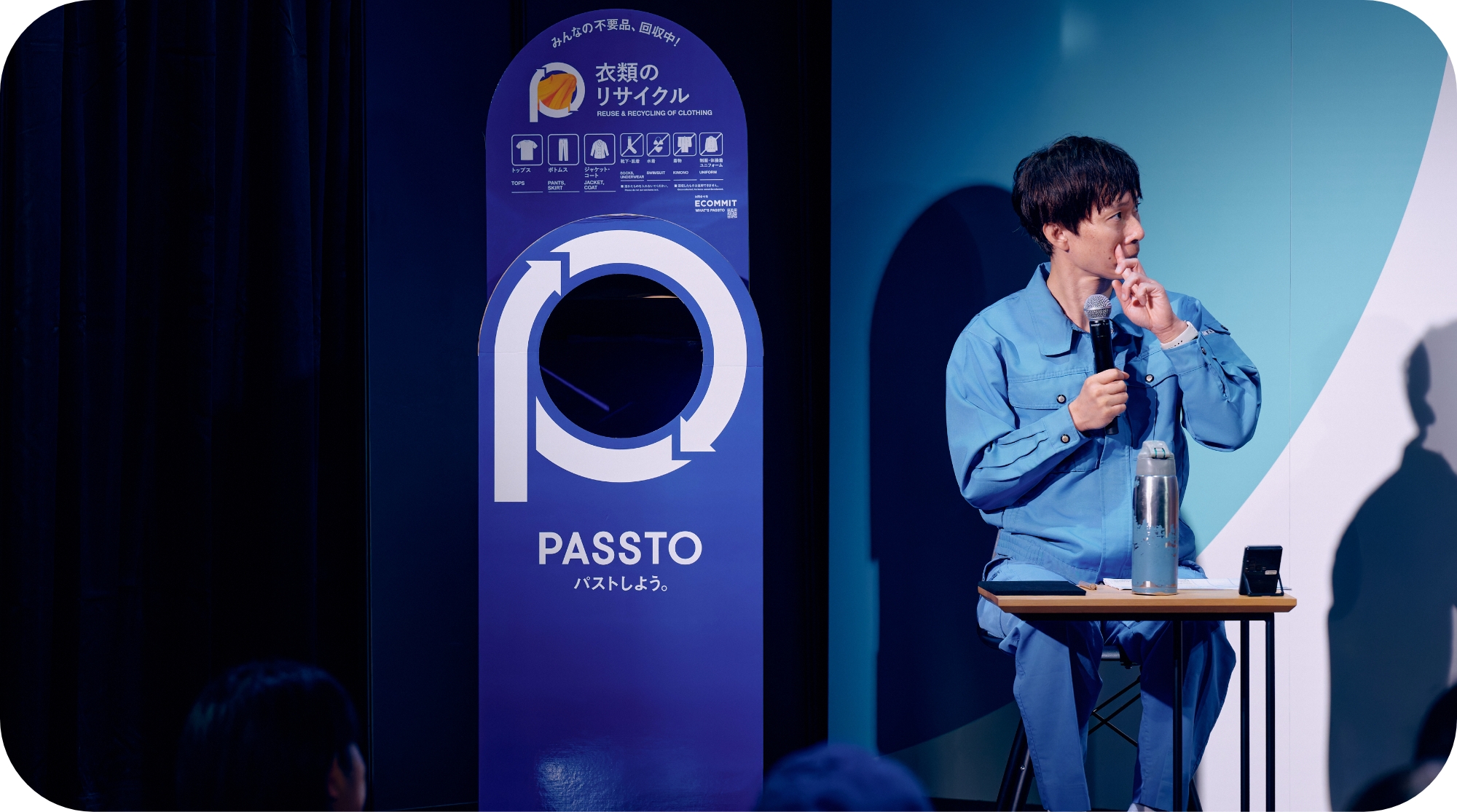
Do you have clothes in your closet that are still usable, but that you hesitate to throw away—only to leave them there because taking them somewhere to sell feels like too much trouble? ECOMMIT addresses this issue by installing PASSTO collection boxes across Japan, in locations such as shopping malls and apartment buildings, making it easy to let go of unwanted clothing and household items without discarding them.
Using PASSTO is simple, just drop unwanted clothes into a collection box while you’re out shopping. Of the items collected, 88.3% are reused and 10.5% are recycled, returning them to society. With Home Delivery PASSTO, users can also send items directly from home by mail—not only clothing, but also toys, tableware, and other items that they no longer use but that are still perfectly usable.
Users say that the service has encouraged them to think beyond simply throwing things away, and to pause before buying new items. Making reuse and recycling more accessible does more than increase disposal options, it also provides an opportunity to rethink how we relate to the things we own.
【Suntory】That small extra step helps connect PET bottles to the future
There are also resources for which tangible results have already been achieved thanks to each of us putting sorting into practice. A prime example is PET bottles.
Since 2011, Suntory has been promoting bottle-to-bottle horizontal recycling, a process that turns used PET bottles back into new PET bottles. Today, more than one out of every two PET bottles used for domestic soft drinks is made from 100% recycled material.
What supports this high recycling rate is the cooperation of each and every consumer. After finishing a drink, PET bottles should be placed in recycling boxes next to vending machines. At that time, be sure to empty the bottle completely, remove the label, take off the cap, and lightly crush it. This small extra effort helps improve recycling efficiency. Our everyday awareness, combined with corporate technology, is what makes large-scale resource circulation possible.
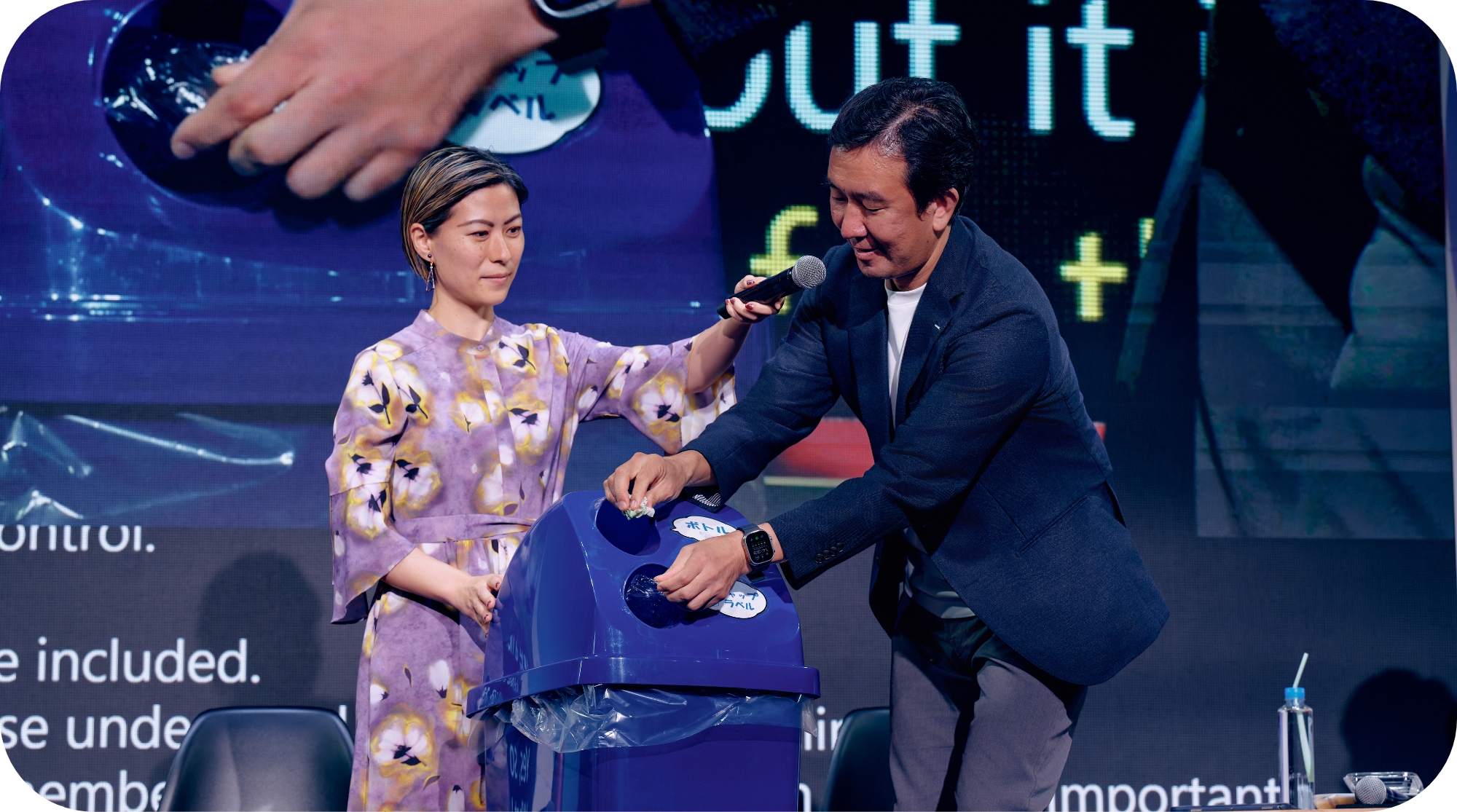
The box next to the vending machine is not actually a trash can, but a recycling box.
【SATO】Invisible technologies that support sorting
Sorting is supported not only by visible systems. SATO Corporation, which works with food labels and seals, has developed systems that use barcodes and other tools to manage product information and track how collected resources are processed after collection.
Thanks to these technologies, reliable data can show that the resources we entrust to the system are indeed being circulated properly.
Looking ahead, SATO is also developing technology that embeds IC tags into labels and containers, allowing people to access sorting instructions simply by holding their smartphones over them. A future where anyone can easily understand the correct way to sort items, right where they are, is already close at hand.


Where are the pitfalls
in circulating resources?
Technologies and systems
that transform the mindset of “that’s just how it is”
Items that have been carefully sorted through each person’s everyday efforts are then turned into raw materials, chemically broken down, or processed through corporate technologies—and by being “passed on,” they are reborn as new products.
Let’s take a closer look at the current state of the technologies and systems being developed by companies working to make this circulation possible.
【Mitsubishi Chemical】Diversifying circular solutions through the “oilification” of plastics
Globally, 400 to 500 million tons of plastic are used each year. Plastics made from multiple materials mixed together, unlike single-material items such as PET bottles, have been particularly difficult to recycle.
To address this challenge, Mitsubishi Chemical is developing technology that converts used plastics back into oil. This process aims to return plastics to the raw-material level, allowing them to be used in the same way as newly refined petroleum. Through this oilification process, recycled materials can be reborn as new products while maintaining quality.
Commercial operation of this technology is scheduled to begin within fiscal year 2025. Plastics that were once difficult to reuse are now beginning to re-enter the cycle, opening up new possibilities for circularity.
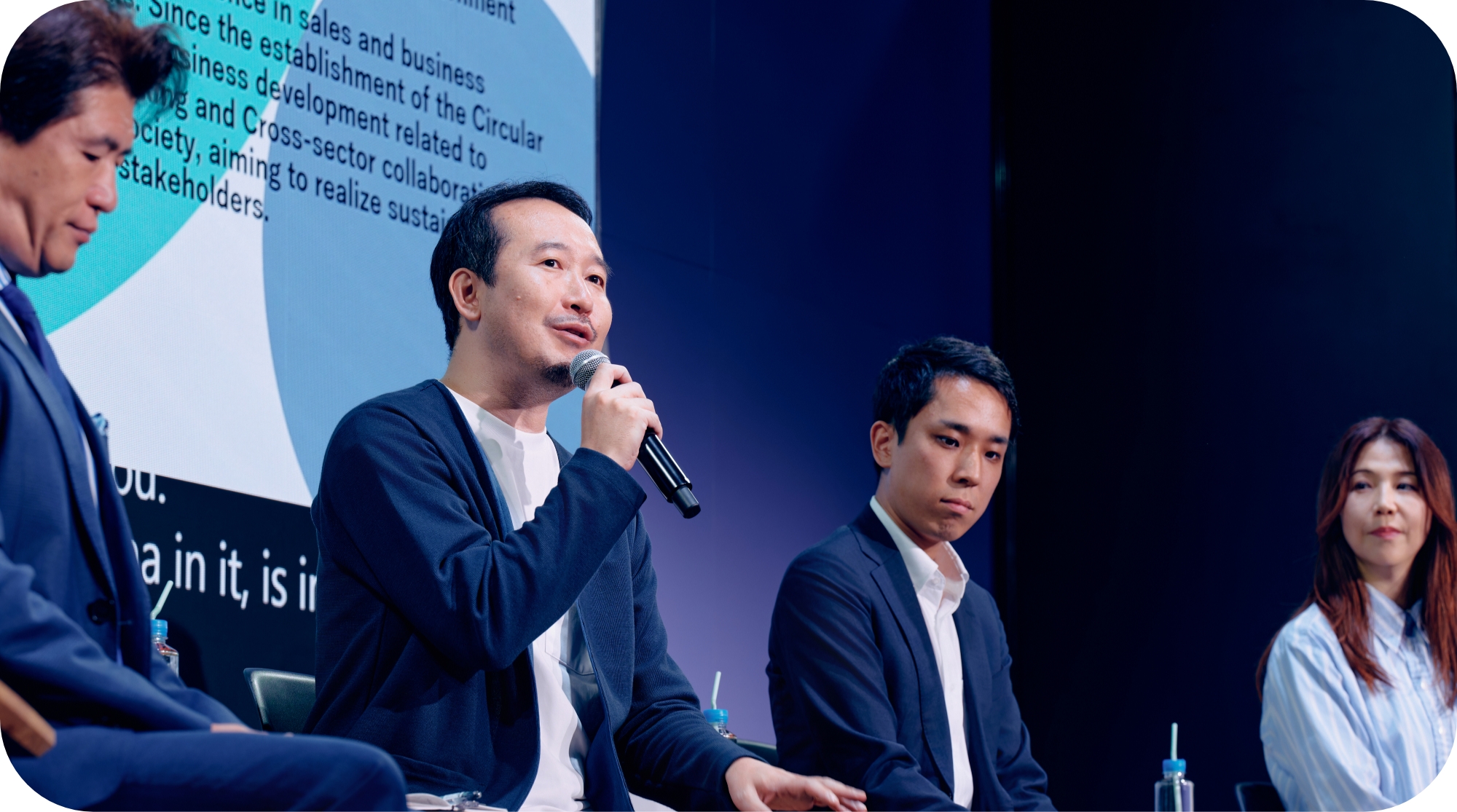
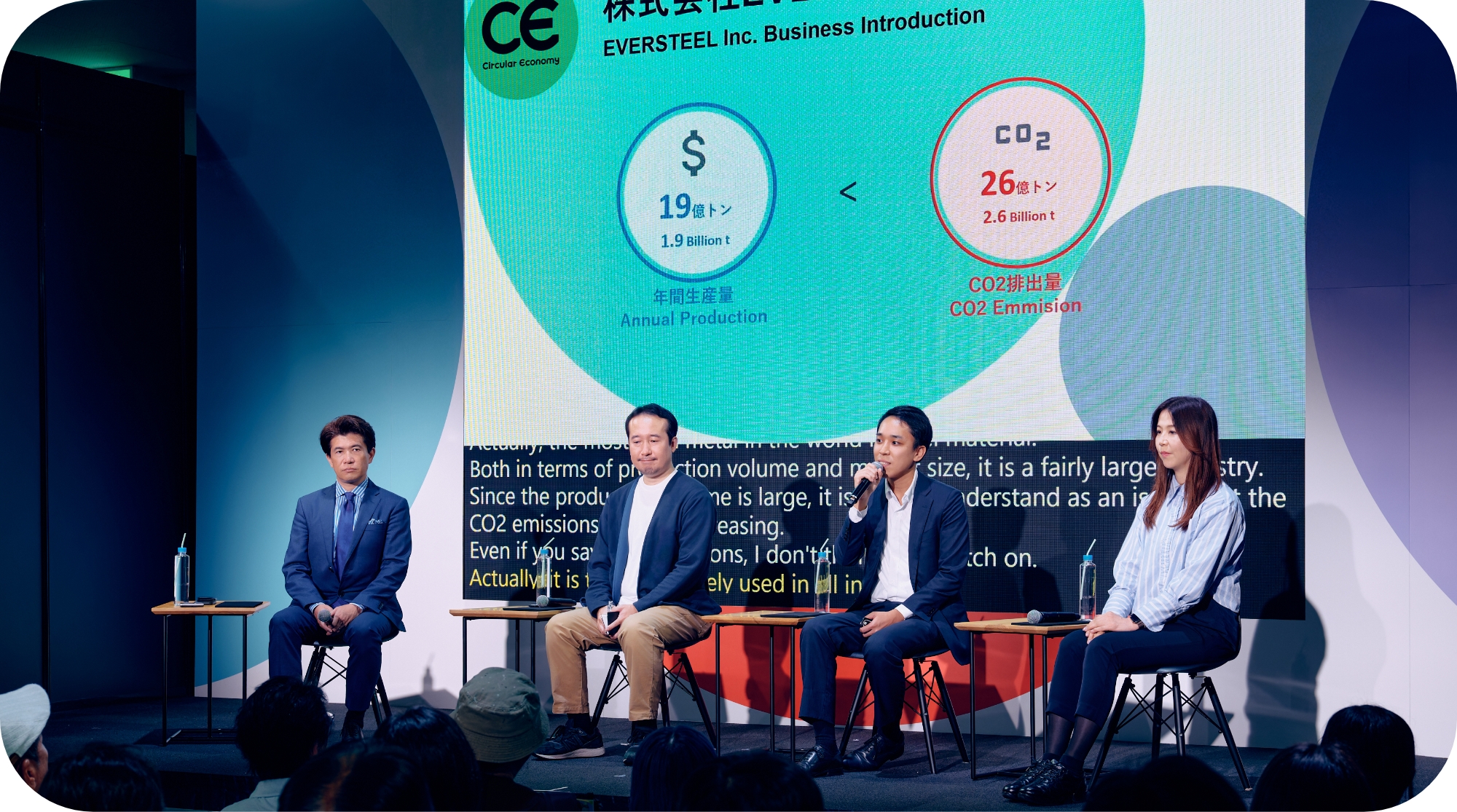
【EVERSTEEL】AI-powered steel recycling:
Transforming one of the largest CO2-emitting industries
Steel is indispensable to buildings, bridges, vehicles, and home appliances. At the same time, the steel industry is said to account for roughly 40% of total industrial CO2 emissions, making it one of the contributors to climate change. This is why recycling plays such a critical role. Recycling steel is said to reduce CO2 emissions during production to as little as one quarter of conventional levels.
However, steel scrap can contain glass, copper, aluminum, and even explosive materials, which must currently be identified and removed by human inspection, a highly demanding and labor-intensive task.
This is where EVERSTEEL’s image-recognition AI comes in. Trained on the experience of skilled workers, the AI analyzes on-site video in real time, accurately identifying impurities, preventing hazards, and improving recycling efficiency.
【Loss Zero】Moving beyond food industry norms toward a more delicious cycle
One area where circulation often comes to a halt in our daily lives is food. In Japan, approximately 4.64 million tons of food are discarded each year, equivalent to throwing away one rice ball per person, every single day.*
What makes this even more striking is that much of this food is thrown away despite still being perfectly edible. One reason is Japan’s unique “one-third rule.” Under this convention, the delivery deadline from manufacturers to retailers and the in-store sales period are each set at roughly one third of the time between the production date and the best-before date. For example, if a product has a six-month shelf life, it must be sold by retailers at least two months before its expiration date. After that point, it is returned or discarded.
Loss Zero takes a different approach—reducing food loss by turning it into something delicious. The company purchases items such as strawberries that were unsold due to their appearance alone, or surplus chocolate, and transforms them into new sweets and other products. In addition, by adopting a flexible, irregular subscription model, Loss Zero can respond to one of food loss’s key challenges, the difficulty of predicting when and how much surplus food will occur.
* Based on data from the Ministry of the Environment, “Estimated Amount of Japan’s Food Loss and Waste Generated in FY2023.”

From the richness of owning
to the richness of being connected
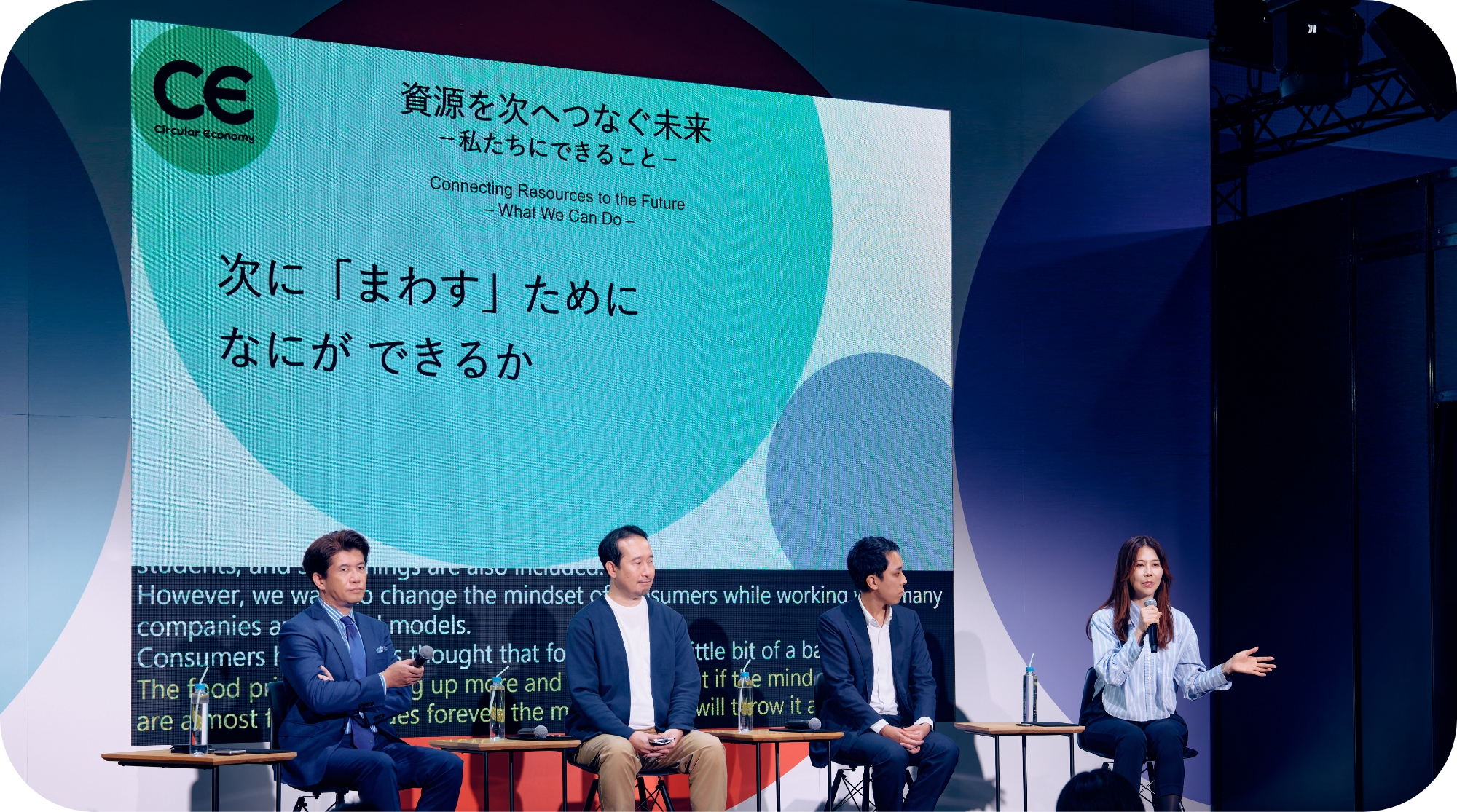
There was a time when ownership was seen as a symbol of prosperity. The circular economy, however, shows us that there is also richness to be found in passing on value from one stage to the next.
Continuing to use items through repair, choosing reuse, and sorting correctly—each of these individual actions has the power to keep an item’s value in circulation. Companies that receive this baton then connect that value in new forms through the creation of technologies and services.
Rediscovering the joy and sensitivity that come from feeling connected to others through new relationships with things, this is the very first step toward creating the resources of the future.
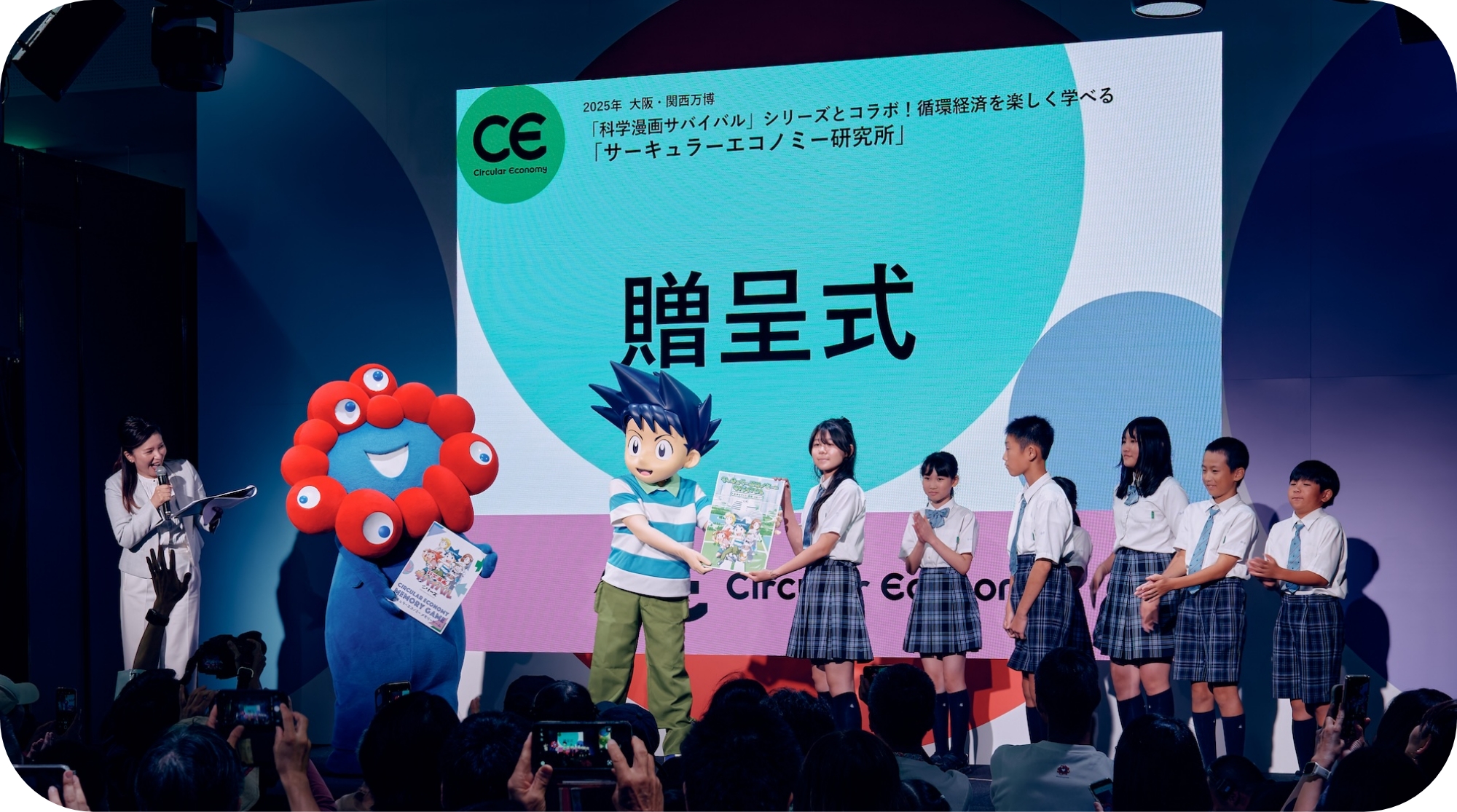
At the closing ceremony, Myaku-Myaku, the official character of Expo 2025 Osaka, Kansai, and Geo from the Survival Science Manga series, which collaborated with the Circular Economy Laboratory, joined the event to present students from Shijonawate Gakuen Primary School with learning booklets and a card game designed to make resource circulation fun and easy to understand. A student representative told the audience, “It became an unforgettable memory, along with a deeper understanding of the circular economy.”
With this, the Circular Economy Laboratory at Expo 2025 Osaka, Kansai came to a close. However, this initiative does not end with the Expo. Beginning in October 2025, a new program titled Circular Economy School will launch, starting in Toyama as its first stop, followed by an event in Kyoto on Saturday, November 29. Additional sessions are also planned for Saitama and Tokyo. Visitors will be able to enjoy selected hands-on exhibits that proved especially popular at the Circular Economy Laboratory.
In addition, through the Asahi Shogakusei Shimbun, a nationwide newspaper for elementary school students, learning booklets and a card game designed to make resource circulation fun and easy to understand will be distributed to elementary schools nationwide that wish to participate, further expanding opportunities to learn about the circular economy.
This website will continue to share updates on upcoming events and learning activities taking place across different regions. We’ll also keep bringing you stories of how children encounter the circular economy and what they take away from those experiences—so be sure not to miss future articles!