

What Can We Do in
Our Everyday Lives?
Learning About the Circular Economy
Through Manga and Games:
The Circular Economy School
The Ministry of Economy, Trade and Industry held the Circular Economy Laboratory at Expo 2025 Osaka, Kansai from September 23 to 29, 2025, offering visitors a fun and engaging way to learn about the circular economy. After the Expo, the initiative hit the road, evolving into traveling outreach classes held across Japan. Through original manga, quizzes, and card games, these learning events helped make the circular economy feel more familiar and relevant to everyday life. In this article, we share a report on the Circular Economy School held in Toyama.
use this a little longer?”
In our previous report, we shared an overview of the Circular Economy Laboratory held at the Osaka–Kansai Expo, introducing the fundamentals of the circular economy as well as scenes of children experiencing what a circular way of living looks like through the event.
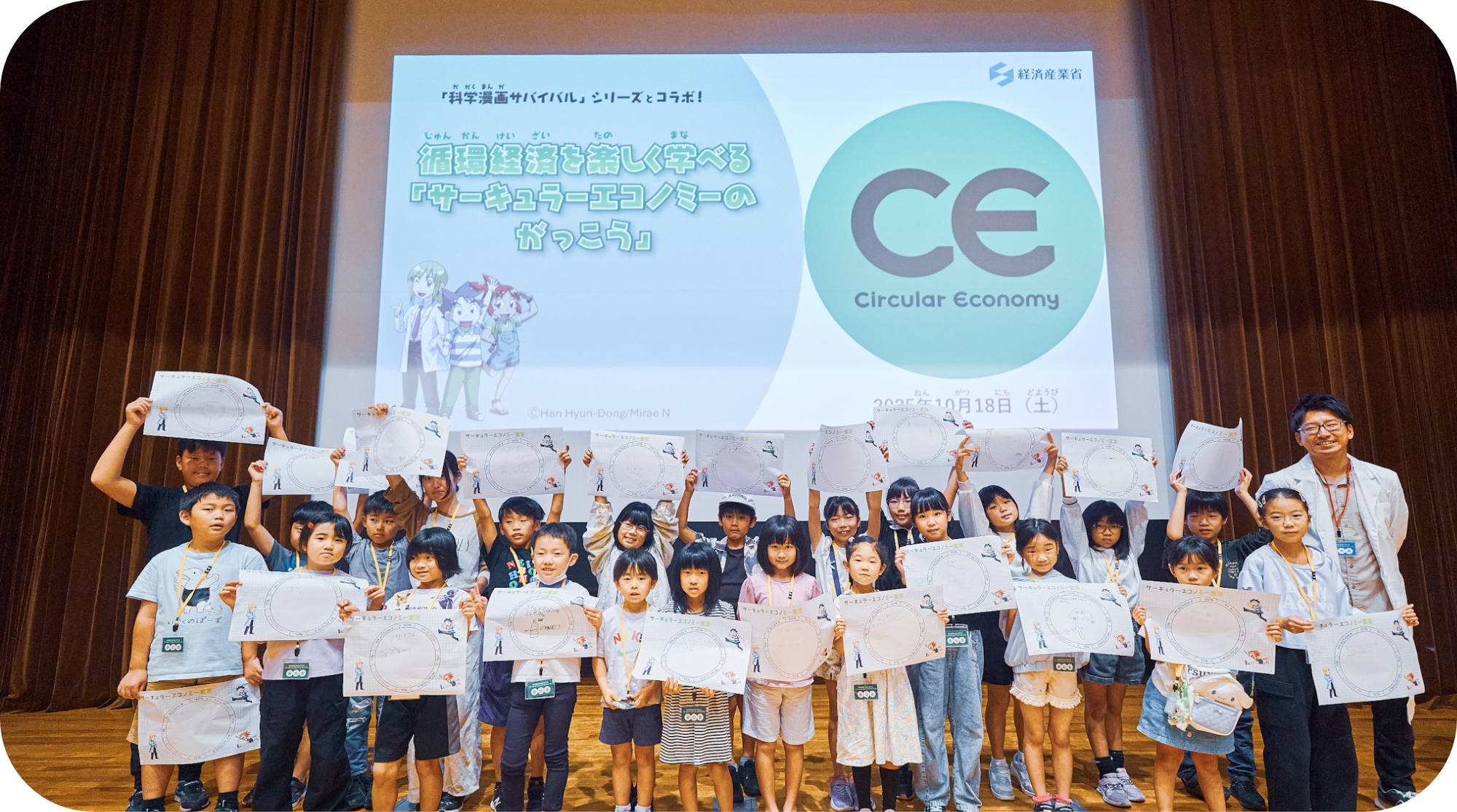
This time, we report on the Circular Economy School held in Toyama Prefecture on October 18, which made use of the learning booklets and exhibition materials originally used at the Expo.
The event was held in three sessions, with a total of 74 children participating. During the classes, the children first learned the basics of the circular economy from instructors from the Circular Economy Laboratory. They then enjoyed lessons using an original manga created in collaboration with the popular Survival Science Manga series, along with a card game, through which they learned, while playing, specific actions in everyday life that connect to the circular economy.

Learn: Not just recycling?
A “round” economy that starts with BUY
“Do you know what the circular economy is?”
At the start of the class, when the instructor posed this question, many of the children tilted their heads in confusion. And that is hardly surprising as even among adults, only about one in three is familiar with the term.* The lesson therefore begins by first understanding what this concept actually means.
*Based on an online survey of 1,000 people aged 18 and over conducted nationwide (July 30–August 1, 2025).
The sample consisted of 100 men and women from each age group: teens–20s, 30s, 40s, and 50s.
https://www.meti.go.jp/policy/energy_environment/shigenjunkan/circular_economy/en/action/
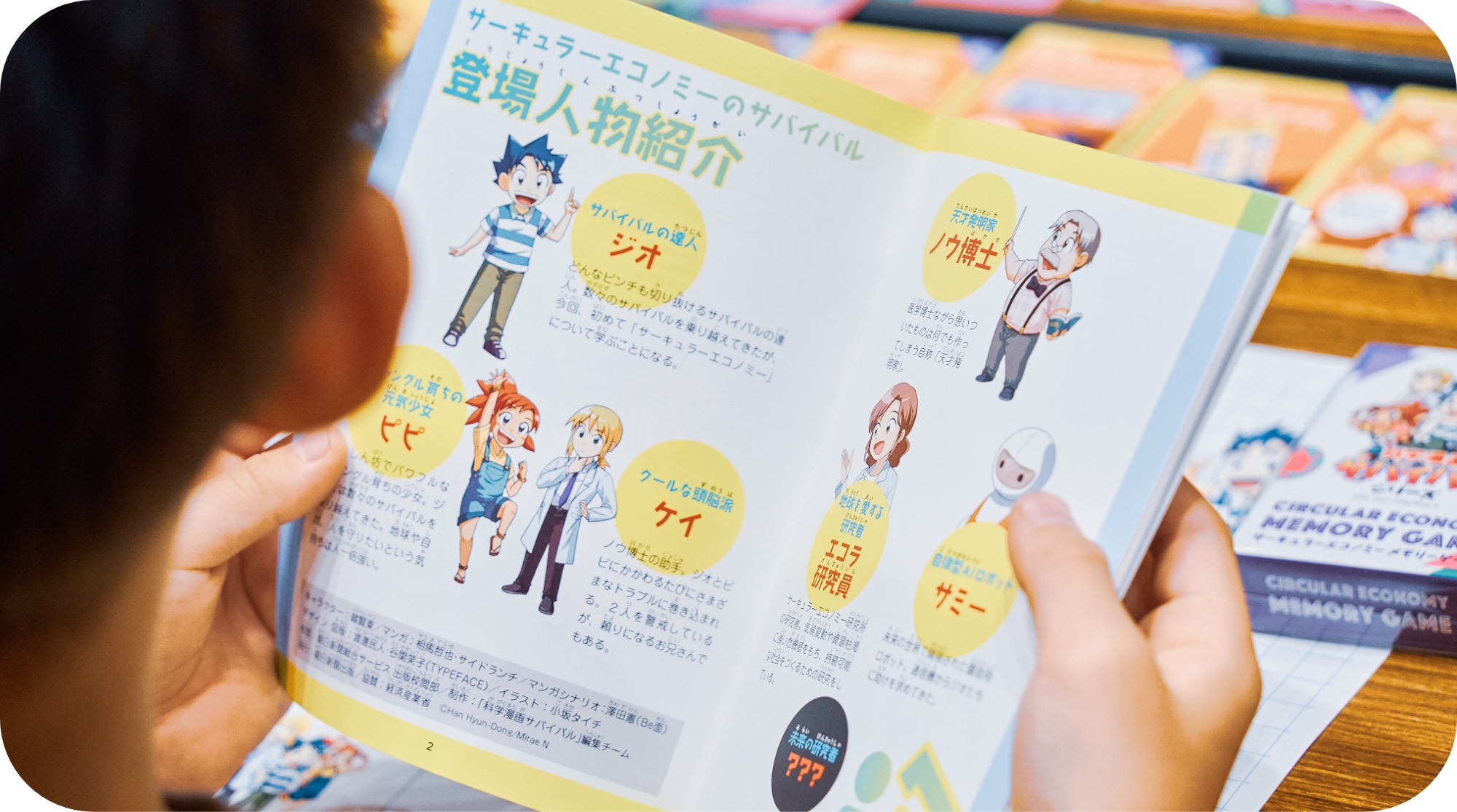
The learning materials feature an original manga starring characters from the popular Survival Science Manga series. Alongside familiar characters such as Geo and Pipi, the children explore the world of the circular economy.
The circular economy can be described as a “round” economy. Rather than a one-way flow of make → use → throw away, it is a system designed to minimize waste, keep products in use for as long as possible, and, even when they can no longer be used, bring them back into circulation as resources—creating continuous loops that enrich both the economy and the environment.
To put this continuous circulation into practice, four key perspectives are essential: BUY, USE, SORT, and PASS ON.
BUY: Choosing products and services that place a lower burden on the environment
USE: Finding ways to keep items in use for as long as possible through various forms of ingenuity
SORT: Carefully separating waste so it can be used again as a resource
PASS ON: Reusing or recycling items once they are no longer needed
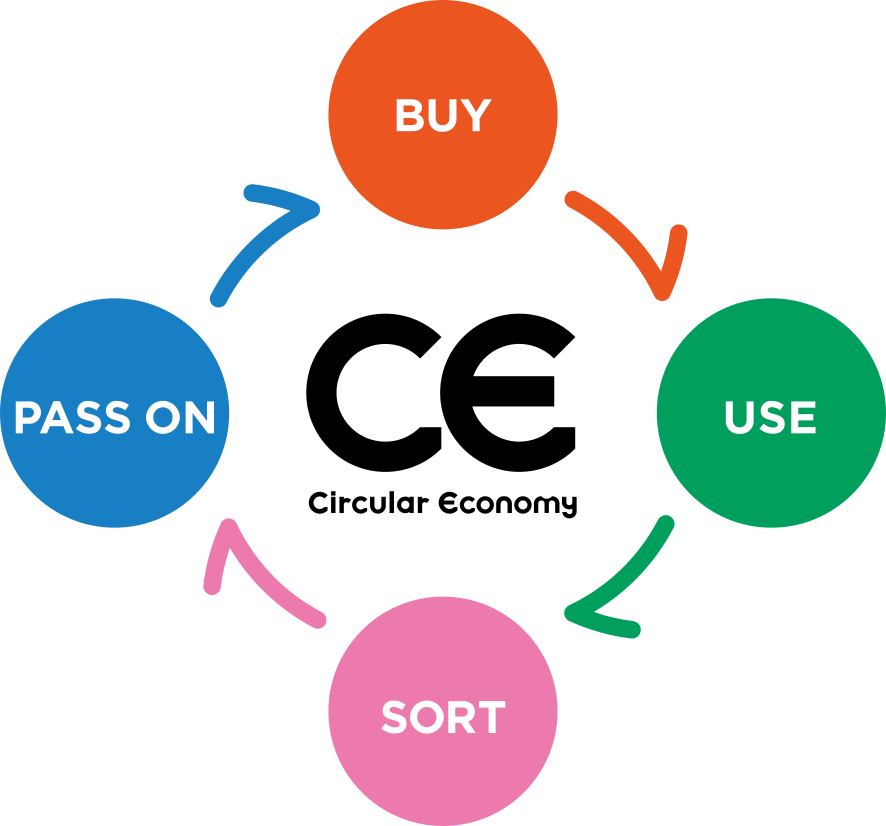
Until now, the action most commonly associated with contributing to the circular economy has been recycling (PASS ON). However, this represents only one part of the circular economy. What is more important is to recognize that the story of circulation already begins at the entry point when products first enter our lives—that is, at the moment we BUY them. These four perspectives—BUY, USE, SORT, and PASS ON—help us understand exactly that.
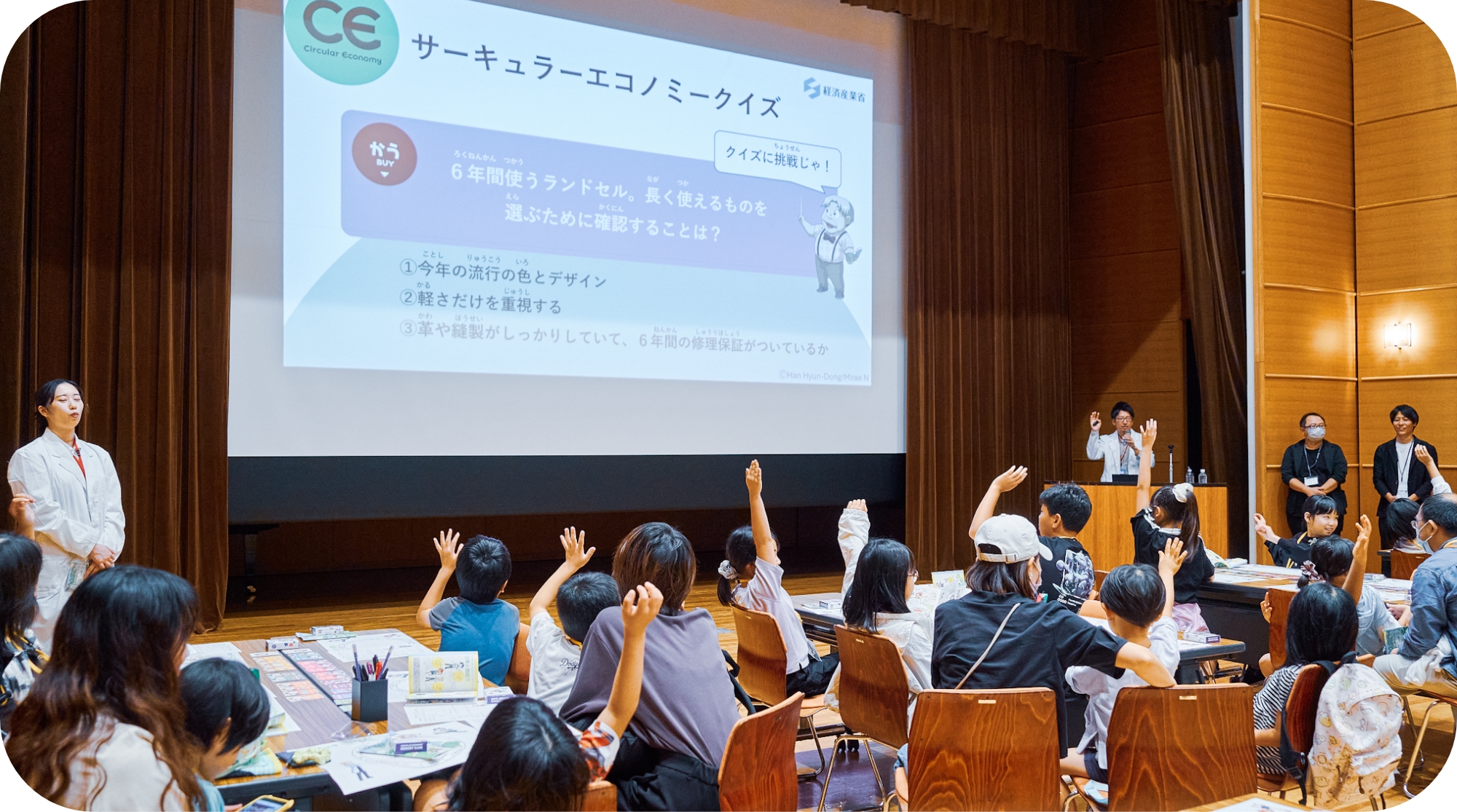
Children were presented with relatable quizzes based on everyday situations. One example asked, “A school backpack used for six years—what should you look for to choose one that will last?” The correct answer was whether the leather and stitching are sturdy and whether it comes with a six-year repair warranty. Many of the children answered correctly.
Play: Flip the cards and discover!
Let’s go looking for hidden actions in everyday life
In the first half of the class, the children learned that the circular economy can be understood through four perspectives: BUY, USE, SORT, and PASS ON.
However, understanding these concepts alone does not immediately make it easy to picture what specific actions to take in everyday life. To translate the various behaviors within these four categories into concrete actions that can be practiced daily, the program introduced the Circular Economy Memory Game.
In the second half of the class, the children used this game to discover, while playing, specific actions in everyday life that connect to BUY, USE, SORT, and PASS ON.
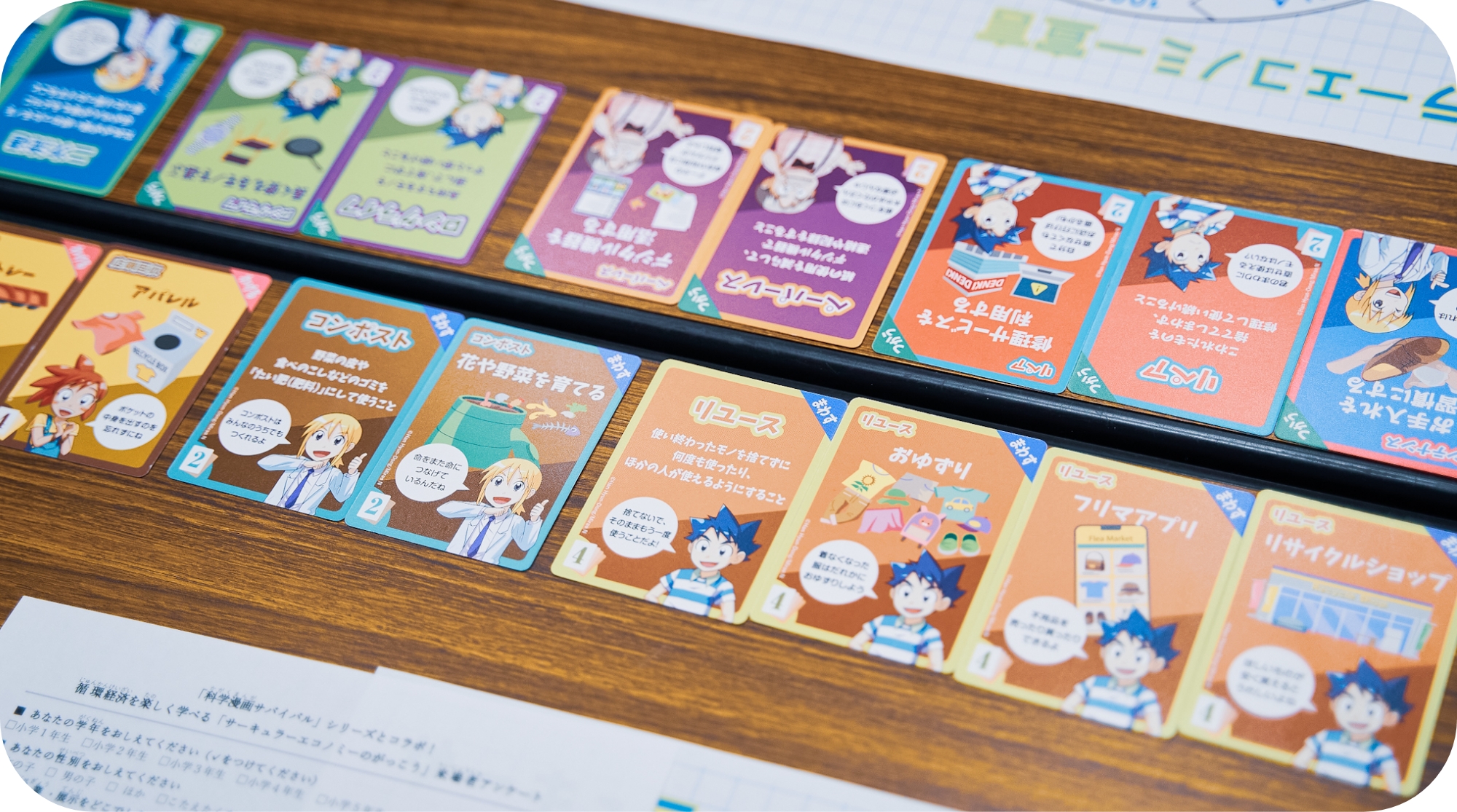
The deck consists of 39 cards. Each card shows one of the four categories in the upper right corner, with more specific actions, such as “reuse,” “maintenance,” and “donation,” written at the center.
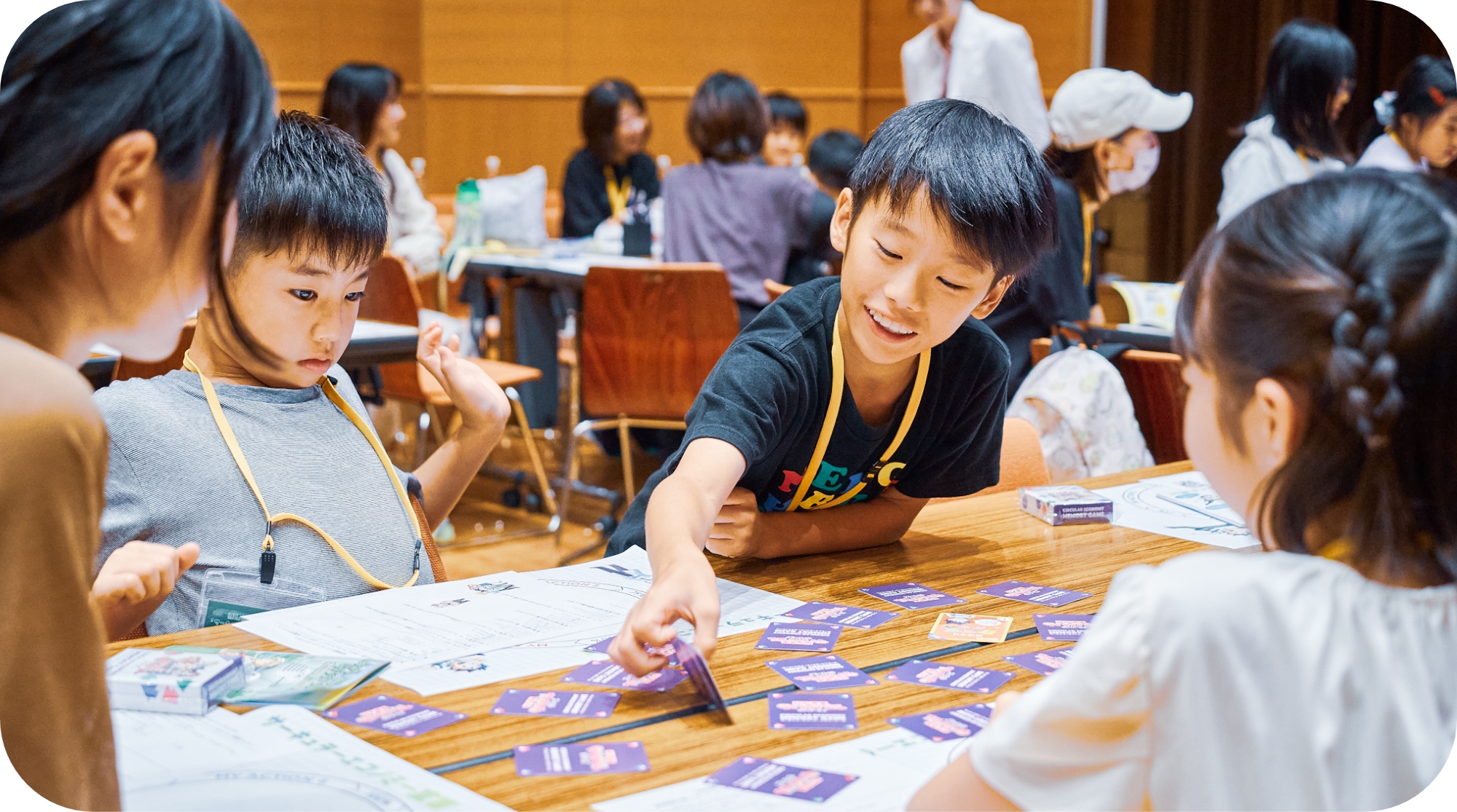
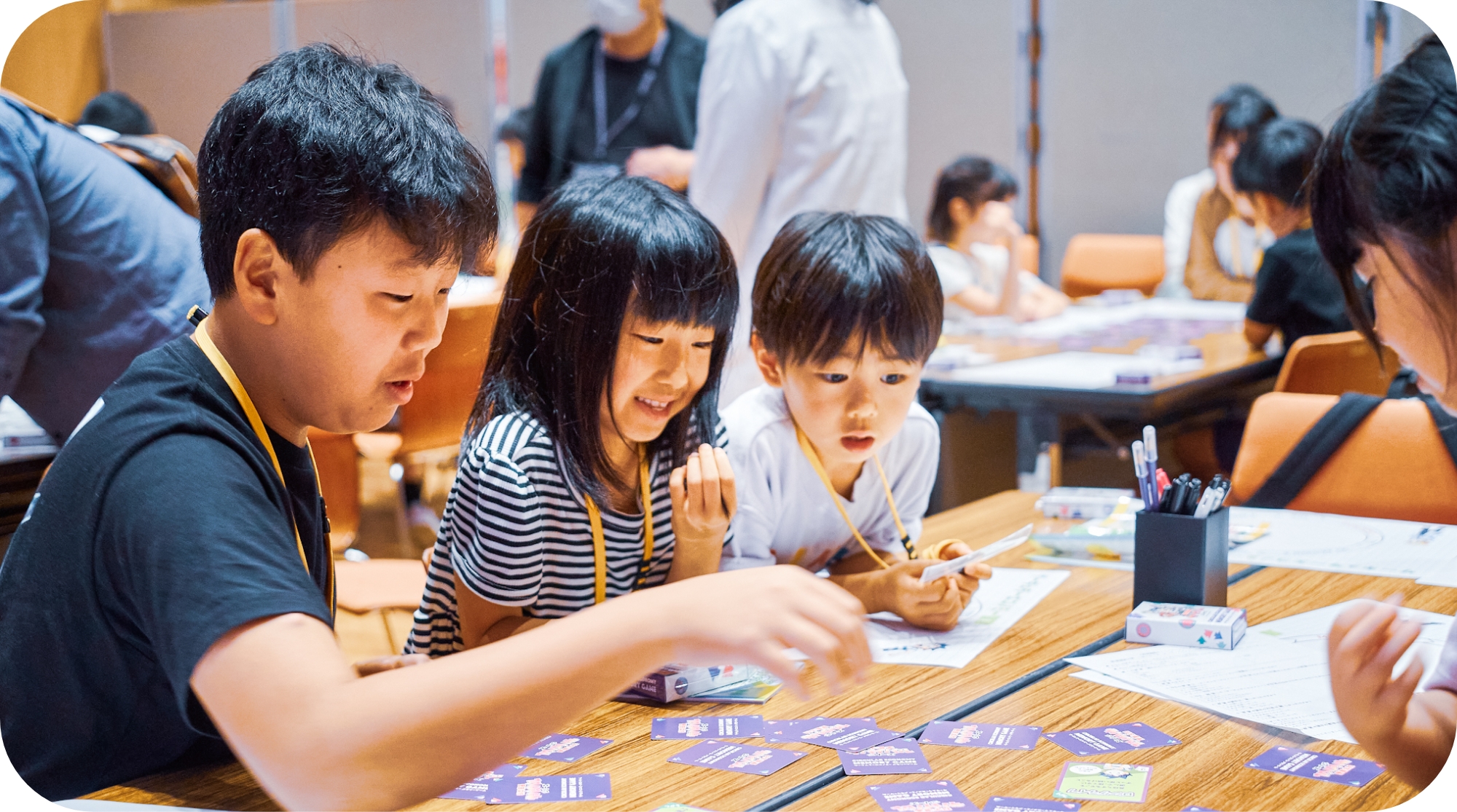
The rules of the card game are simple. Like the classic matching game played with a deck of cards, players collect a pair when they turn over two cards showing the same “action.” At the end, the person who has collected the most cards wins. With serious expressions on their faces, the children carefully flip over the cards one by one.
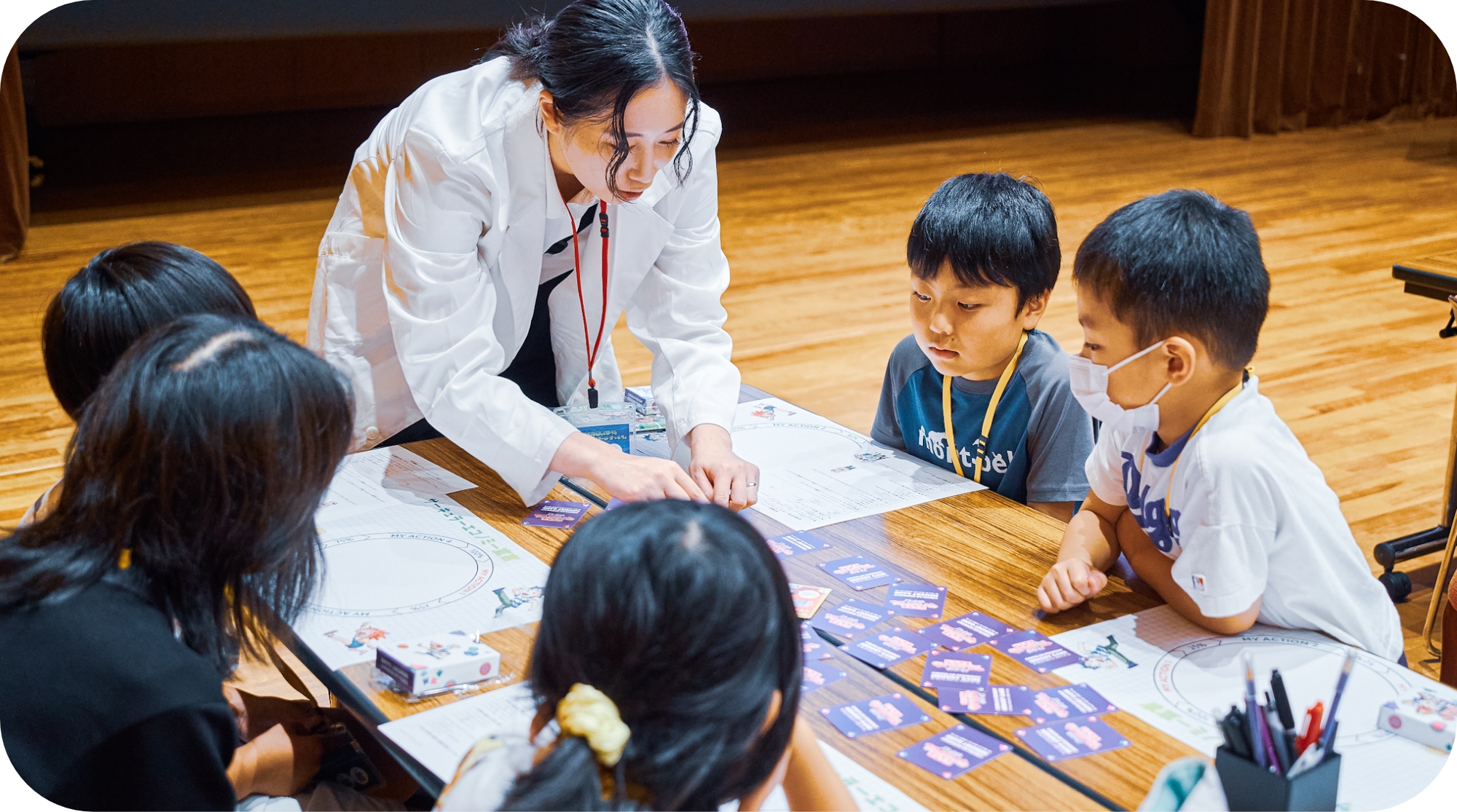
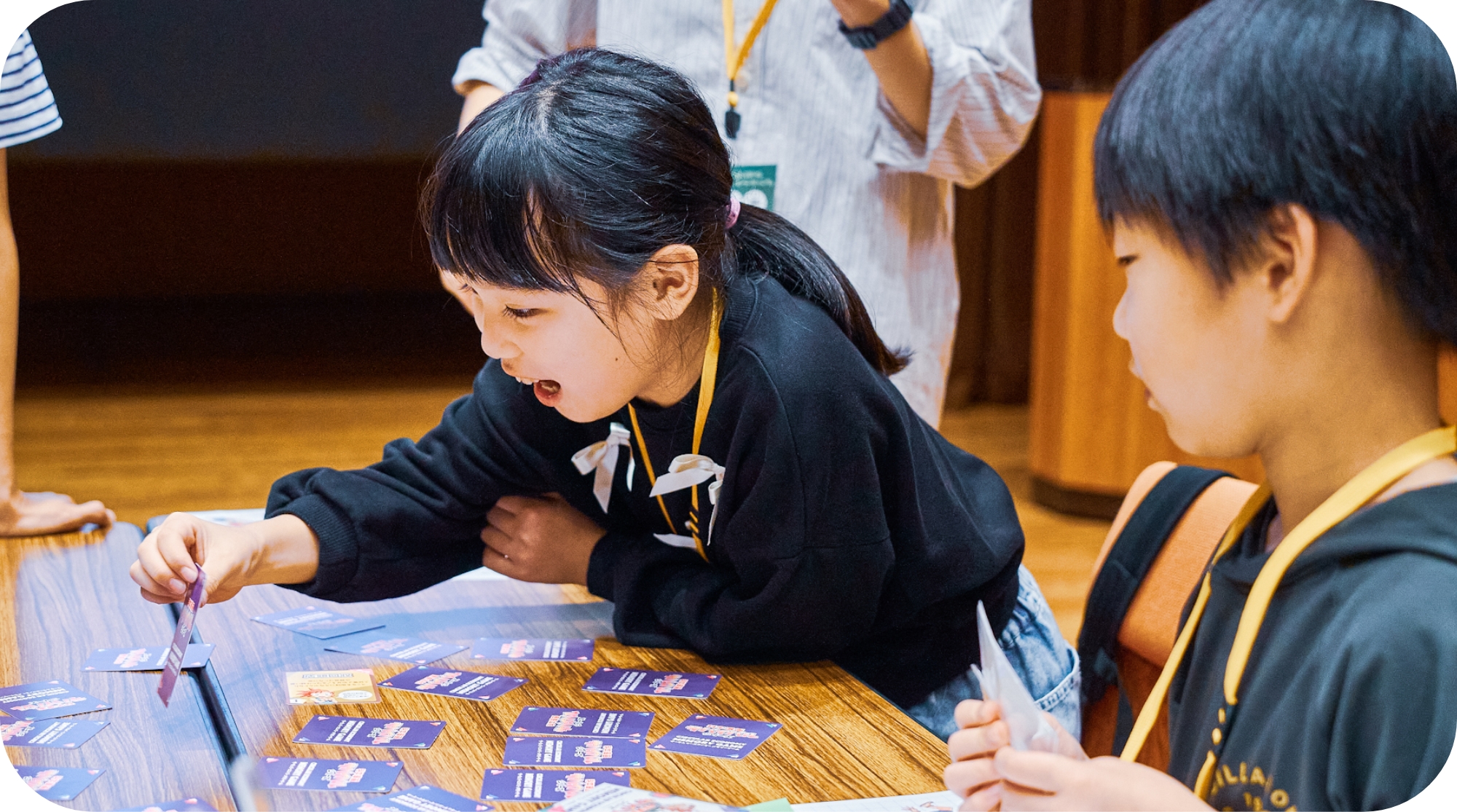
“Hey, I saw that one just a moment ago!” “Where was it again?” The venue was filled with the children’s excited voices.
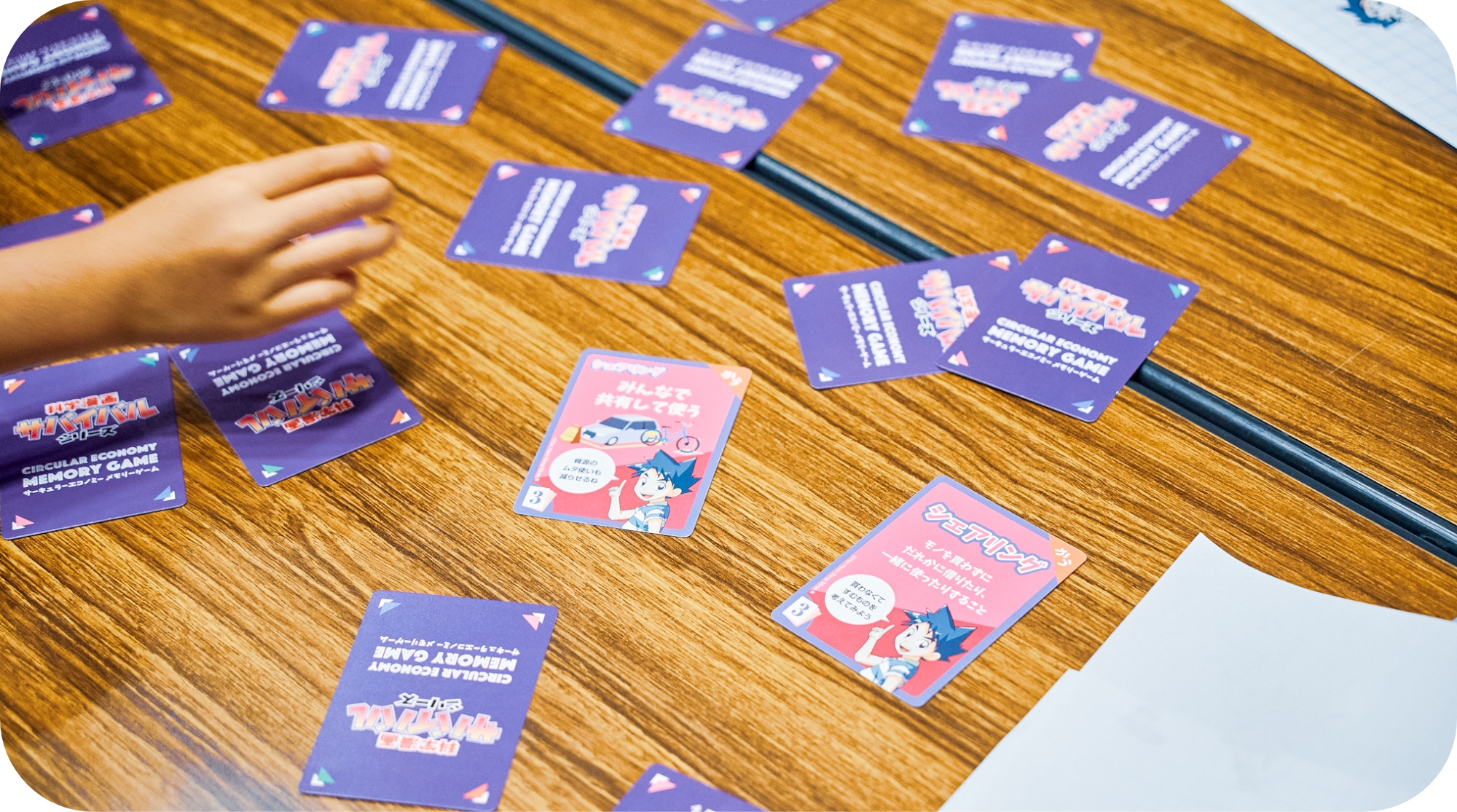
Let’s take a closer look at some of the cards the children are turning over.
One example in the BUY category is “sharing.” This refers to borrowing items instead of buying them, or using things together by sharing them with others. Concrete examples include sharing cars or bicycles, or borrowing clothes only when they are needed.
In recent years, a wide range of services has emerged, such as vehicle-sharing services and smartphone apps that allow people to borrow clothing and accessories. By first thinking about what you might not need to BUY if you shared it with others, and then looking for nearby services or shops that make this possible, the illustrations and characters on the cards clearly offer hints for practical actions that can be taken in everyday life.
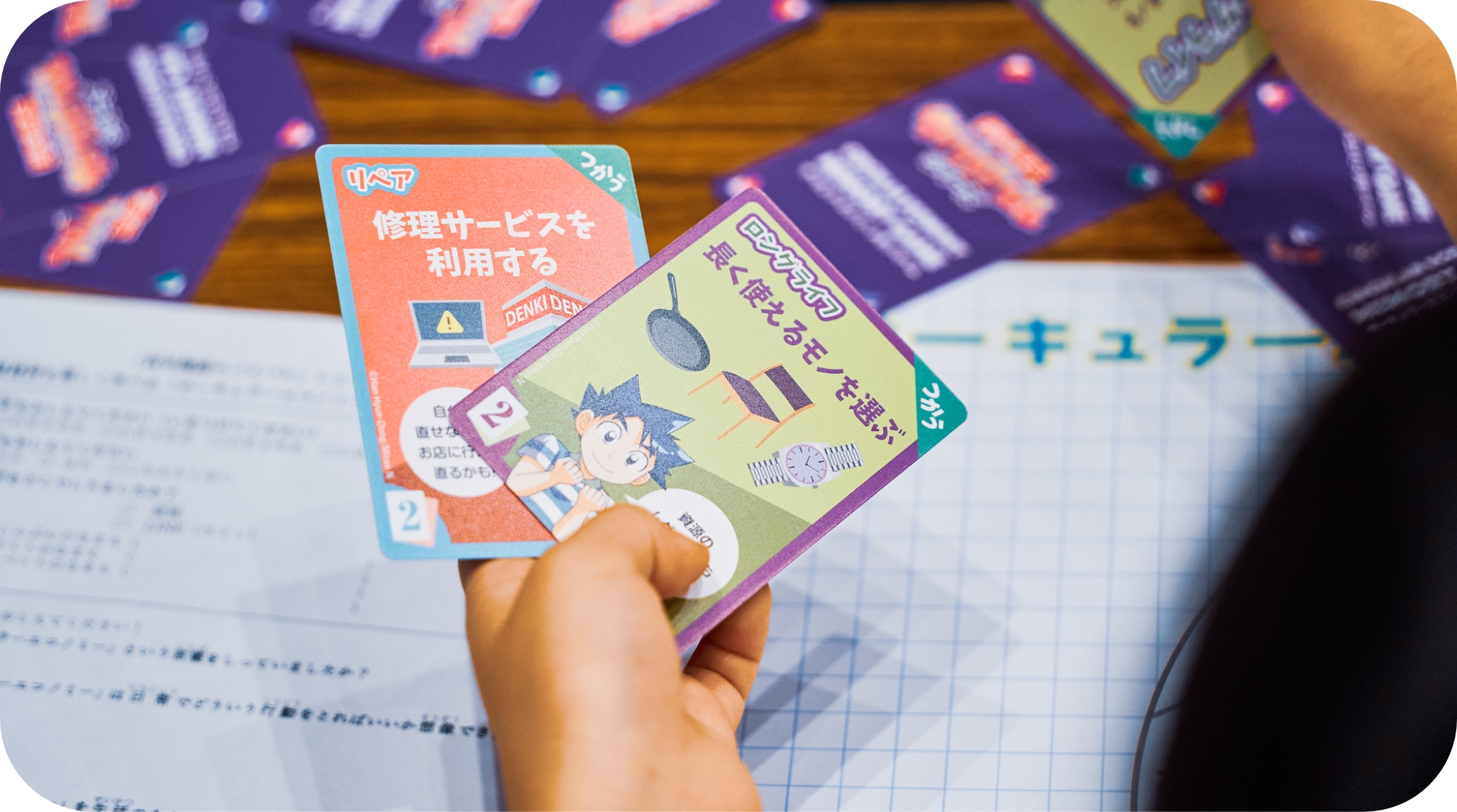
Specific actions related to USE include “multi-use,” which means finding multiple ways to use a single item again and again. Snack boxes, jars, and bottles, items that might previously have been thrown away without much thought, can take on new roles when you apply a bit of creativity. Thinking about “different ways to use” these items can reduce the effort and cost of buying something new, making it easier on your wallet as well.
Other actions under USE include “long life,” which means choosing durable items and continuing to use them with care. Under SORT, there is “in-store collection,” where empty containers or used items are collected at shops and recycled. And under PASS ON, there is “reuse,” which involves passing on items you no longer need to someone else instead of throwing them away.
Some of these terms may sound unfamiliar, but each one represents a simple action that anyone can put into practice in everyday life.
BUY: Sharing, secondary markets, minimal packaging, local production for local consumption
USE: Multi-use, long life, repair, maintenance
SORT: In-store collection, waste separation
PASS ON: Donation, composting, reuse
For the children, collecting all of the cards was not an easy task. However, by repeatedly turning over the cards during the game, they gradually learned the meanings of the terms and naturally absorbed the way of thinking behind the circular economy.
Think: What can I do?
The first step the children discovered
Through the game, the children learned concrete actions they can take in their daily lives that connect to the circular economy. To conclude the class, each child took time to reflect on what they had learned and declare the actions they want to take from now on to support the circular economy.
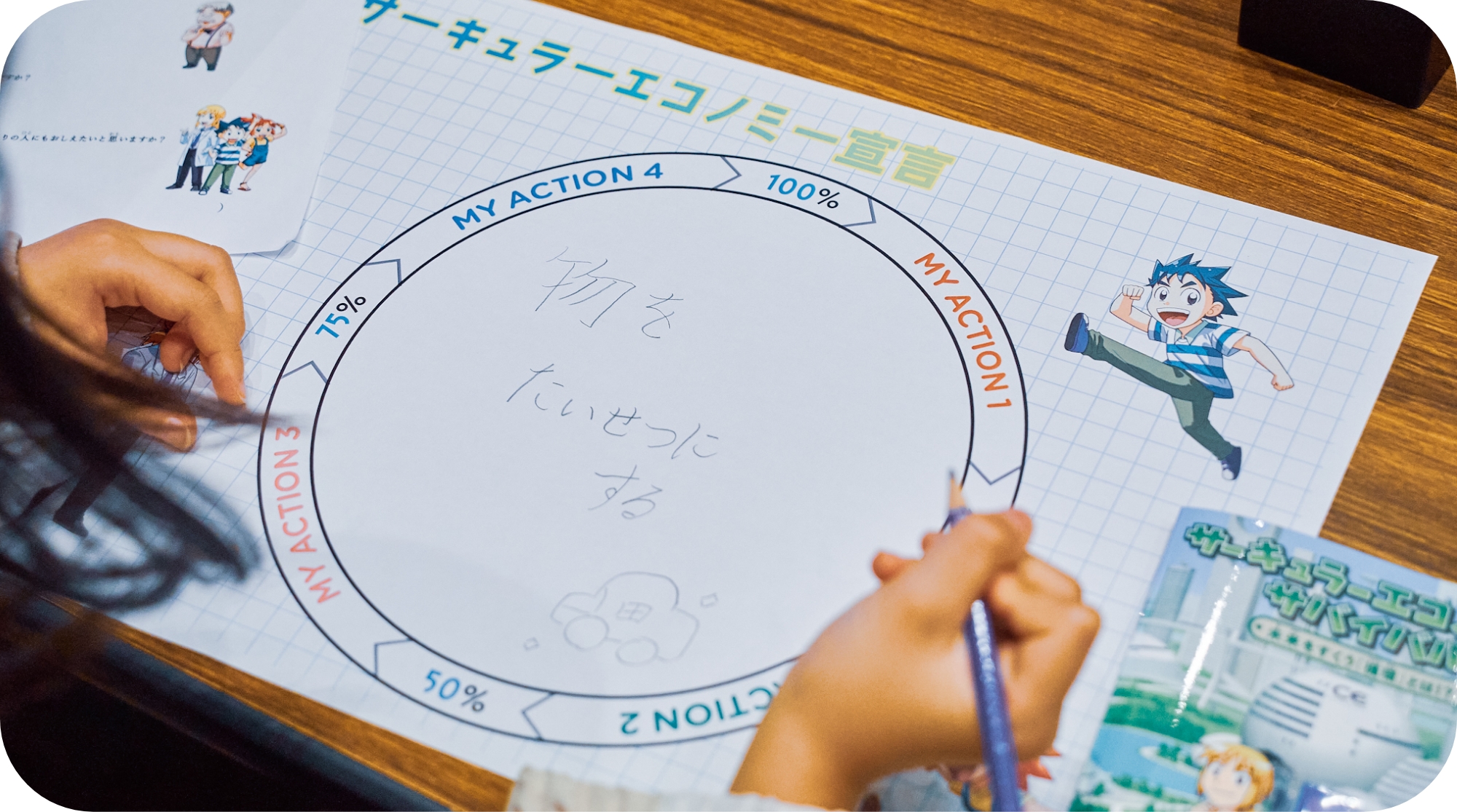
Each child wrote down the actions they would like to try and the things they feel they can do on the worksheet handed out to them.
“I will buy only what I need.”
“I will repair broken items and continue to use them.”
“I will pass on items that are still usable to someone else.”
“I will sort plastic bottles properly.”
“I will bring an eco-bag to the supermarket.”
Rather than being told by adults what they should do, the children themselves felt, thought, and discovered, through the game, what actions they could take on their own. This is what the Circular Economy Declaration is about.
Each declaration may be a small promise on its own. Yet seeing the children confidently share their commitments in their own words, in front of everyone, was like watching heroes protecting the future. Some even declared that they would share their promises with their parents. In that moment, the future generation was clearly beginning to expand the circle of the “round” economy with their own hands—a hopeful scene that took shape before our eyes.
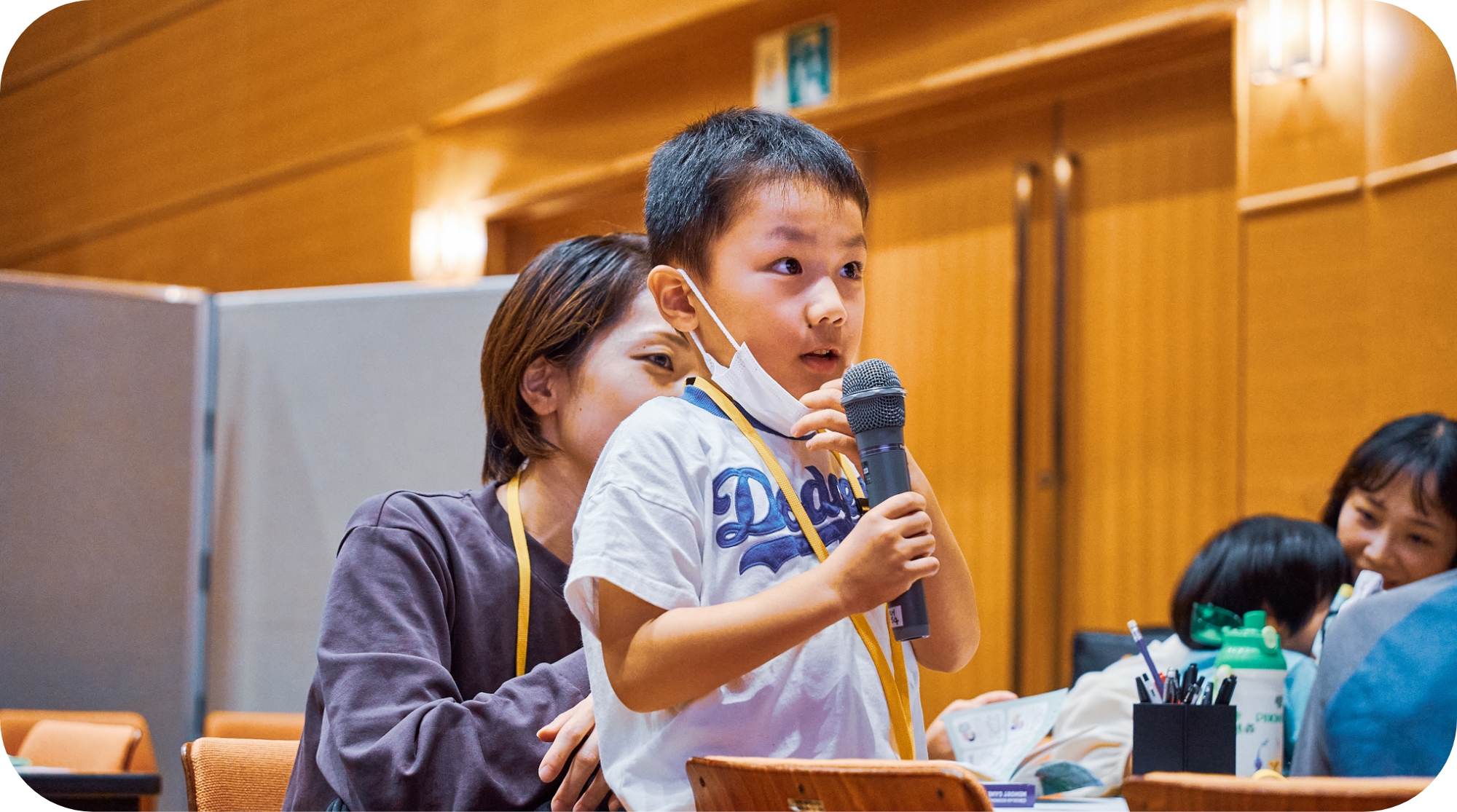
With that, the Circular Economy School in Toyama came to a close. After the event, children shared comments such as “I learned a lot about the circular economy,” “I was able to learn actions in a fun way through the card game,” and “I want to try practicing the circular economy in my everyday life,” suggesting that the program served as an engaging introduction to the topic.
In the post-event survey, nearly 90% of the children responded that they would like to teach the circular economy to people around them. This made it easy to imagine a future in which the circular economy spreads outward from the children who took part.
Parents also shared positive feedback, including comments such as, “This was the first time I had heard the term ‘circular economy,’ but I realized it is surprisingly close to everyday life and would like to start practicing it from tomorrow,” and “I used to think only about recycling, but I now understand that the circular economy includes many different approaches, all of which are necessary.”
Next, the Circular Economy School will be held in Kyoto on November 29, followed by sessions in Tokyo from January 9 to 12. The program will continue to travel to locations across Japan, so please stay tuned.

Small daily actions add up
to create a larger circle of circulation
The term “circular economy” may sound complex, making it difficult for some people to picture how it actually works. In reality, however, what shapes the circular economy is a set of actions that are surprisingly close to home—things we can do every day, or may already be doing without even realizing it.
Choosing items that can be used for a long time, taking good care of what you buy, pausing before throwing something away to consider whether it can be repaired—when these habits accumulate, disconnected flows gradually begin to link up, forming a circle of circulation.
Moreover, as each of us makes these actions part of our everyday routine, companies are encouraged to develop more durable products and create convenient systems that support the circle of BUY, USE, SORT, and PASS ON, leading to broader change across society. As a first step toward creating that change, why not take a moment to rethink how you interact with the things in your daily life?