

Clothes, Things,
and the Way We Live
A Comfortable, Circular Way of Life
Created by the Choice to Pass On
When you hear the term circular economy, you might picture environmental policies in far-off countries or complex corporate initiatives. Yet new forms of circulation are already taking shape much closer to home—in our closets and living rooms, and even on our smartphone screens. In this article, we explore these surprisingly familiar examples of the circular economy from the perspective of everyday life.
a choice that makes
everyday life easier
The circular economy is not about putting up with inconvenience or forcing yourself to do without. By using only what you need, when you need it, you can reduce both expenses and the burden of managing your belongings—making everyday life surprisingly light and effortless.
not to throw things away
changes how we
relate to them
Instead of discarding things once you’re done with them, use them carefully and pass them on to the next person. With just this shift in mindset, items move from being mere consumables to becoming something that connects one person to another.
support the work of
people you may
never meet
Cleaning that keeps clothes in good condition, repair skills that restore items to a usable state, and careful delivery that ensures they arrive safely. When we choose to borrow, give, or pass on, we help sustain these forms of work and keep systems in motion that allow items to be used for longer.
Until now, our economy has largely been built on a use-and-discard model—making things, using them, and letting them go once they have served their purpose. The circular economy gently shifts this assumption, focusing instead on passing value from one stage to the next, and then on to the next again.
This does not mean putting up with inconvenience for the sake of the environment. By adopting convenient services and new systems, everyday life becomes easier and our range of choices expands. In that sense, the circular economy represents a positive and forward-looking change.
For this article, we spoke with people who regularly use three types of services related to fashion, the buying and selling of goods, and housing. What emerged was not a story of making an effort for the environment, but rather a picture of a comfortable cycle that naturally took shape as they refined and simplified their own lives.

Fashion in Circulation:
Opening your closet
to the city and
discovering a new side
of yourself
The first person we spoke with was Ms. Osaka, who works full-time at a ward office in Osaka City while raising three children. She has been using the monthly fashion rental service airCloset for more than five years and is one of the people who has naturally incorporated fashion circulation into her everyday life.
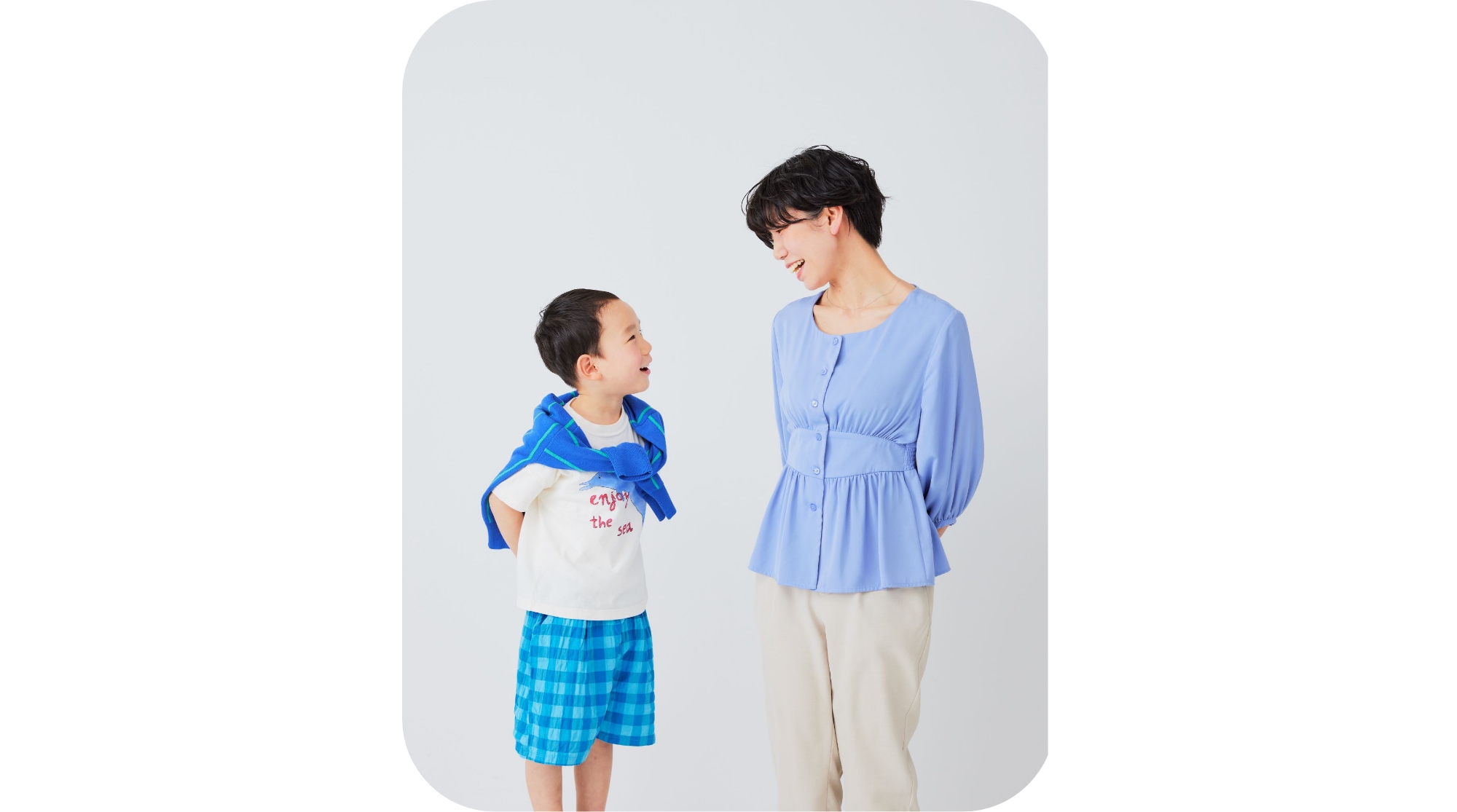
Ms. Osaka (right), wearing clothes rented through airCloset
A professional perspective
that turned a concern
into enjoyment
What led Ms. Osaka to start using the service was the gap between her work attire and her casual clothes.
“I used to dress casually most of the time, but in the workplace I began to be expected to dress in a more composed and professional way. It felt wasteful to buy clothes I would only wear on limited occasions, and I didn’t really have much time to choose them in the first place.”
She now works in a role that involves frequent face-to-face interactions and places importance on creating a clean, reassuring impression for the people she meets. For that reason, she sends requests to airCloset’s stylists that focus on choosing outfits appropriate for the setting.
“When I choose clothes myself, I tend to stick to safe colors and shapes. But when a professional selects them, I receive colors and on-trend designs I would never pick on my own. Surprisingly, they often suit me, and I get compliments from other moms and from my husband saying, ‘Your outfit looks great today.’ That makes me really happy—and now, using airCloset itself has become a source of enjoyment for me.”
Using each piece longer
and keeping it in great condition
Connections that grow
by choosing to pass on clothes
The biggest change in Ms. Osaka’s life has been her attitude toward buying clothes.
“I’ve really stopped buying clothes altogether. Even when I see something nice in an advertisement, I can pause and think, ‘I can just request something like this on airCloset.’ My closet stays tidy, and I hardly need to bother with seasonal wardrobe changes anymore.”
What stood out was that Ms. Osaka had no concerns at all about wearing clothes that had previously been worn by someone else.
“The clothes that arrive are so clean that I find myself wondering, ‘Are these really secondhand?’ I never feel that typical ‘used’ quality at all. I think that’s because they’re carefully maintained using specialized detergents and professional techniques. It feels like everyone is passing clothes on together, so I’ve even stopped doing seasonal clothing swaps. It’s as if the whole city is my closet.”
Rather than each person storing clothes away in their own closet, garments are professionally cleaned, repaired, and circulated among many different people. Because this kind of system exists, clothes can continue to be used comfortably and for a long time.
In fact, choosing services like these also supports the cleaning expertise that keeps clothes in good condition, as well as the logistics work that ensures they are delivered with care. The choice to take good care of an item of clothing together quietly supports people’s livelihoods behind the scenes and gives rise to new patterns within the economy.
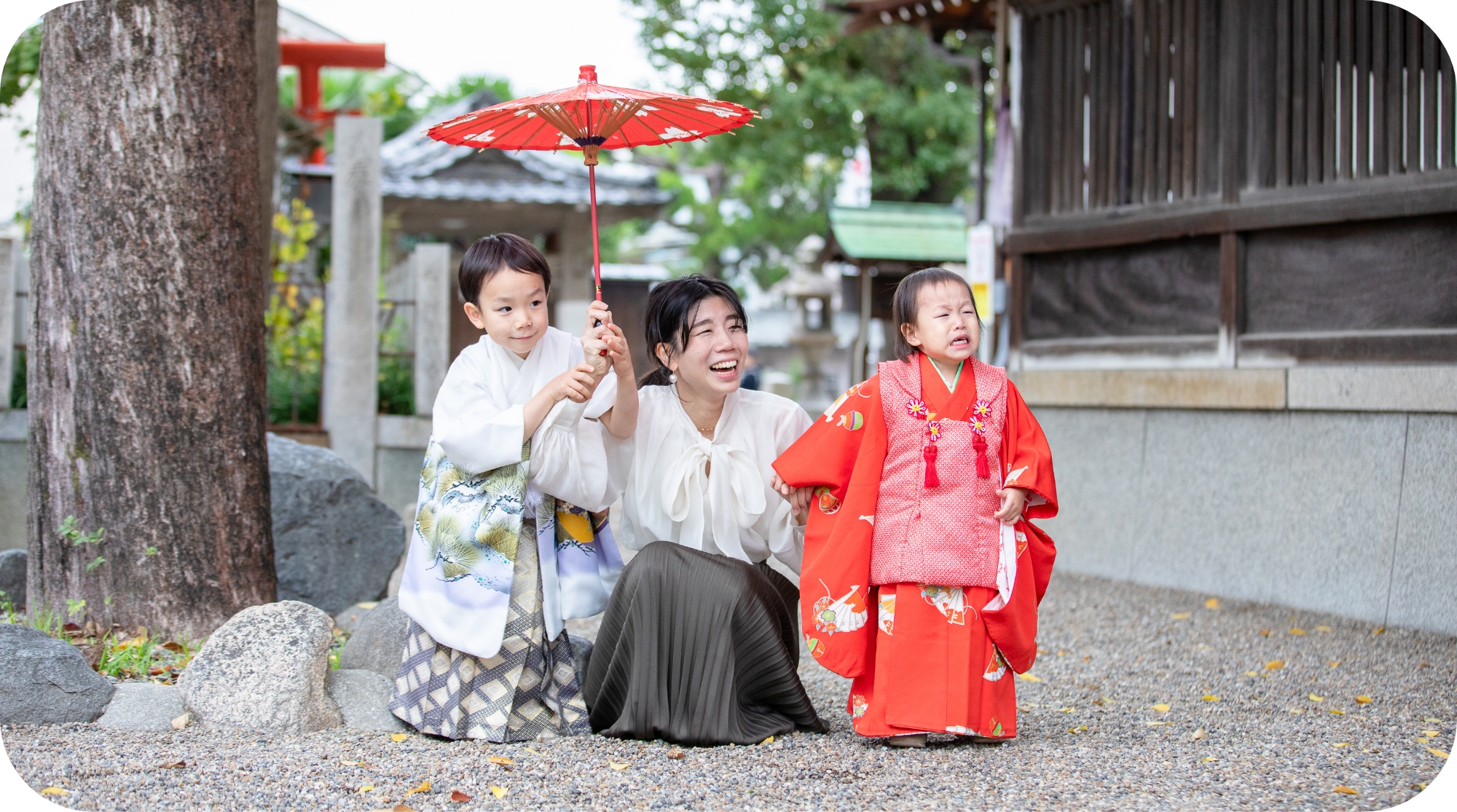
Ms. Osaka at her children’s Shichi-Go-San celebration, a traditional milestone event, wearing a dress rented through airCloset

Goods in Circulation:
What one person
no longer needs
can become
something essential
somewhere else
in the world
Next, we spoke with Sakko, a freelancer based in Hokkaido. She has been using the flea market app Mercari for more than five years and now enjoys reuse-driven circulation so much that she even shares her tips and experiences on social media.
“The day something
I thought was trash
was given a price”
Sakko’s circular lifestyle began when she was confronted with just how many things she owned during a move prompted by marriage.
“I thought I didn’t have that much, but no matter how many boxes I packed, there always seemed to be more. That’s when my husband suggested I try Mercari, and the first thing that shocked me was realizing that items I thought were just trash could actually be sold.”
The examples Sakko shared get to the very heart of the circular economy.
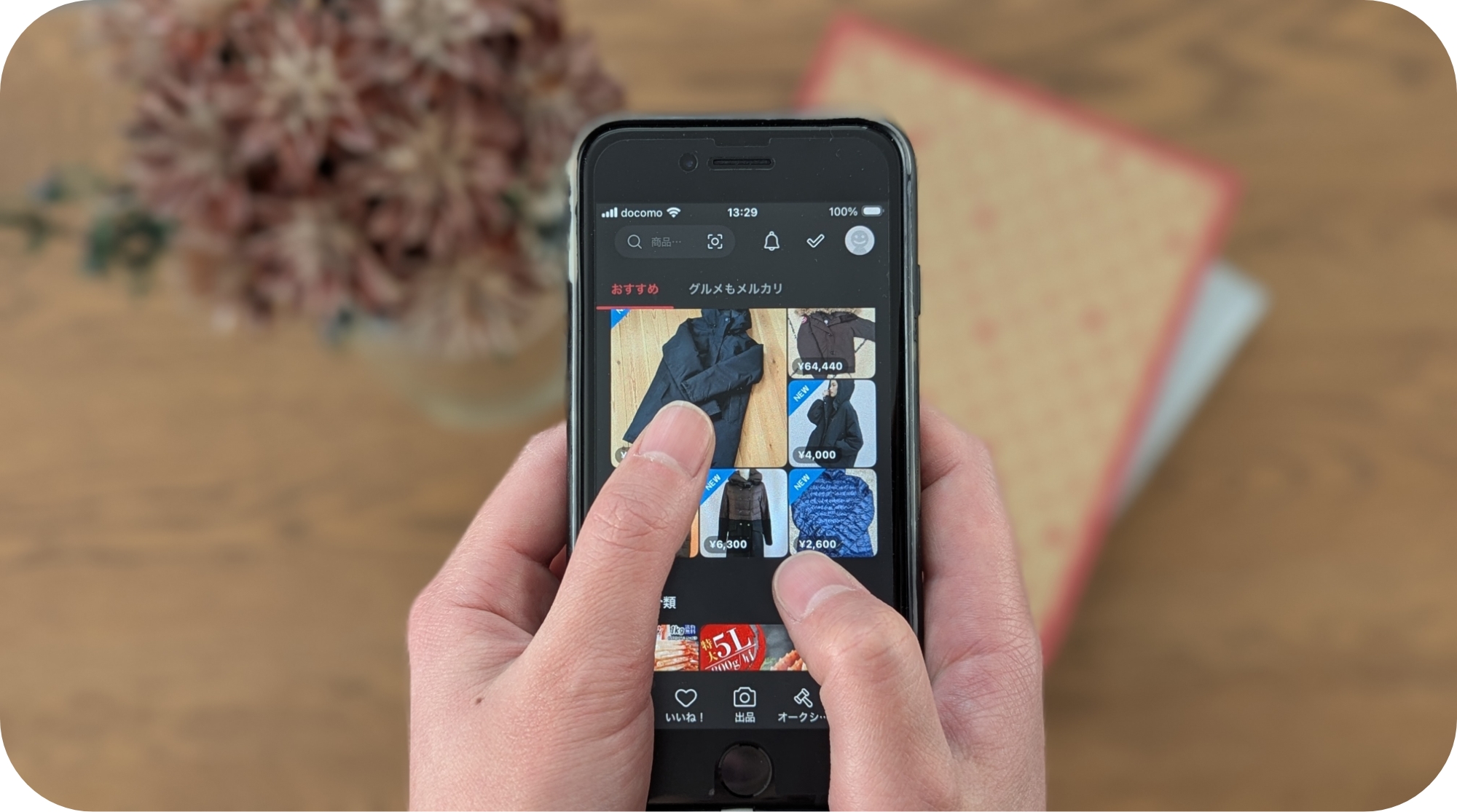
“Things I assumed had no choice but to be thrown away—like earphones with broken wires that no longer worked, a hair dryer that had stopped functioning, or cracked tableware—actually sold. Some buyers even messaged me to say, ‘I fixed the earphones and they work now,’ or told me they bought the plates to practice kintsugi, the traditional Japanese repair technique. I was genuinely surprised that there was demand for things like that.”
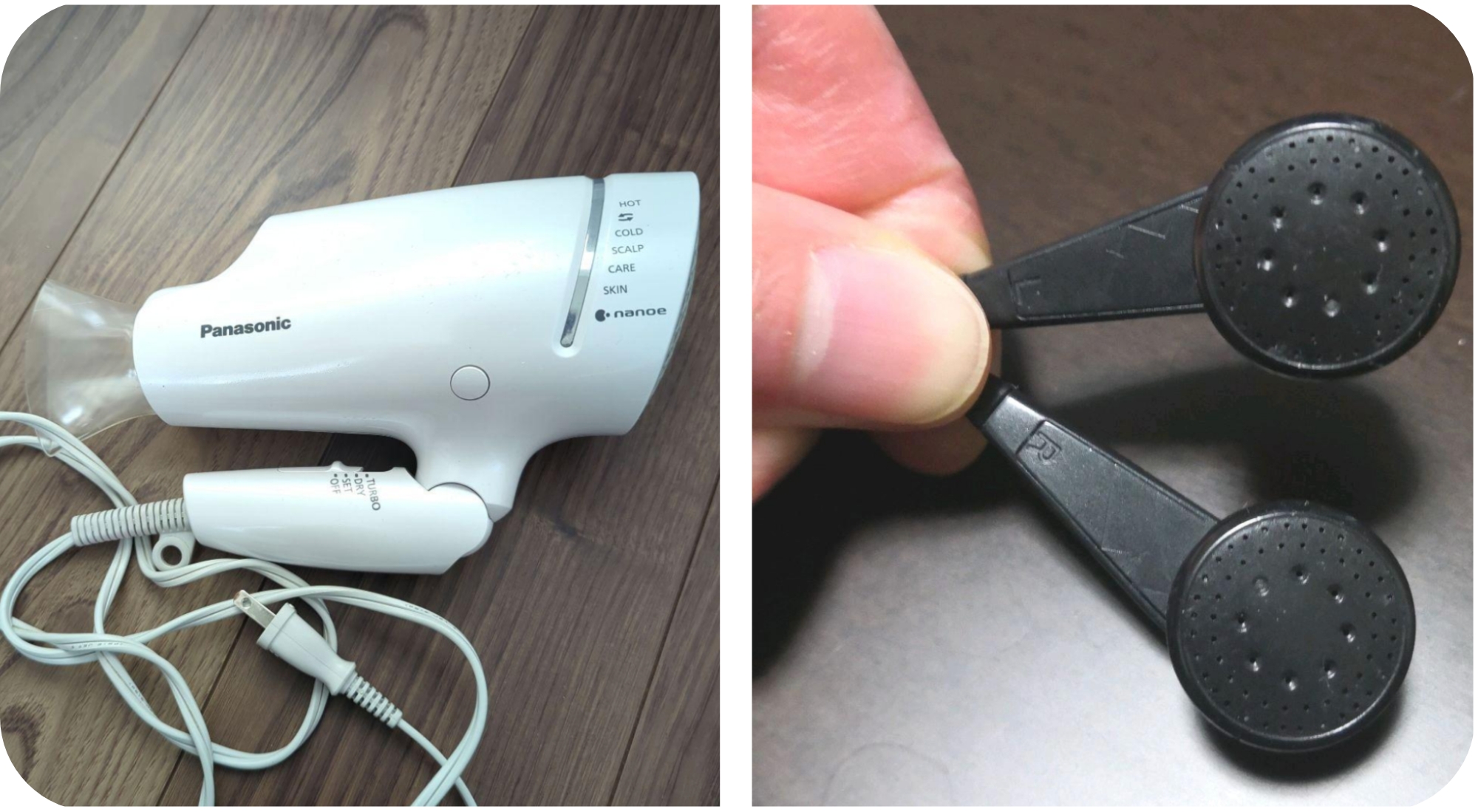
Items listed by Sakko that successfully found new owners
Items that Sakko once thought were no longer usable begin to serve a purpose again once they pass into someone else’s hands. What is unnecessary for one person can be exactly what someone else was looking for. Through encounters like these, the value of items that had previously been overlooked is being rediscovered.
As each of these individual exchanges accumulates, items that would otherwise have been thrown away remain in ongoing use. As a result, goods are passed from person to person, and new forms of circulation emerge naturally.
Buying with the intention
to “pass it on”
makes life this much easier
Sakko’s approach to consumption has also changed dramatically through her use of Mercari, shifting toward choices made with resale value in mind.
“In the past, I would wear things until they developed holes and then throw them away. Now, I’ve shifted to wearing an item three or four times and selling it while it’s still in good condition to fund my next purchase. Even expensive formal dresses that can cost close to 100,000 yen can sometimes be bought on Mercari for around 30,000 yen. Once I’ve worn something and no longer need it, I can simply pass it on to the next person. Having that option to keep items in circulation has also removed my hesitation about buying secondhand.”
Her mindset has shifted from using something up to passing it on in a condition that the next person can use. Sakko is careful to choose packaging materials that suit the recipient’s preferences and adds small thank-you stickers to express her appreciation—small gestures that show consideration for the next owner. Reflecting on exchanges that cross regional boundaries, she shares this story:
“I once traded with someone living on a remote island in Okinawa. Since it’s normal for deliveries to take around ten days, they sent me a relaxed message saying, ‘I’m happily waiting for it to make its way across the sea.’ Even though there was a great distance between Hokkaido and Okinawa, I felt reassured handing the item over.”
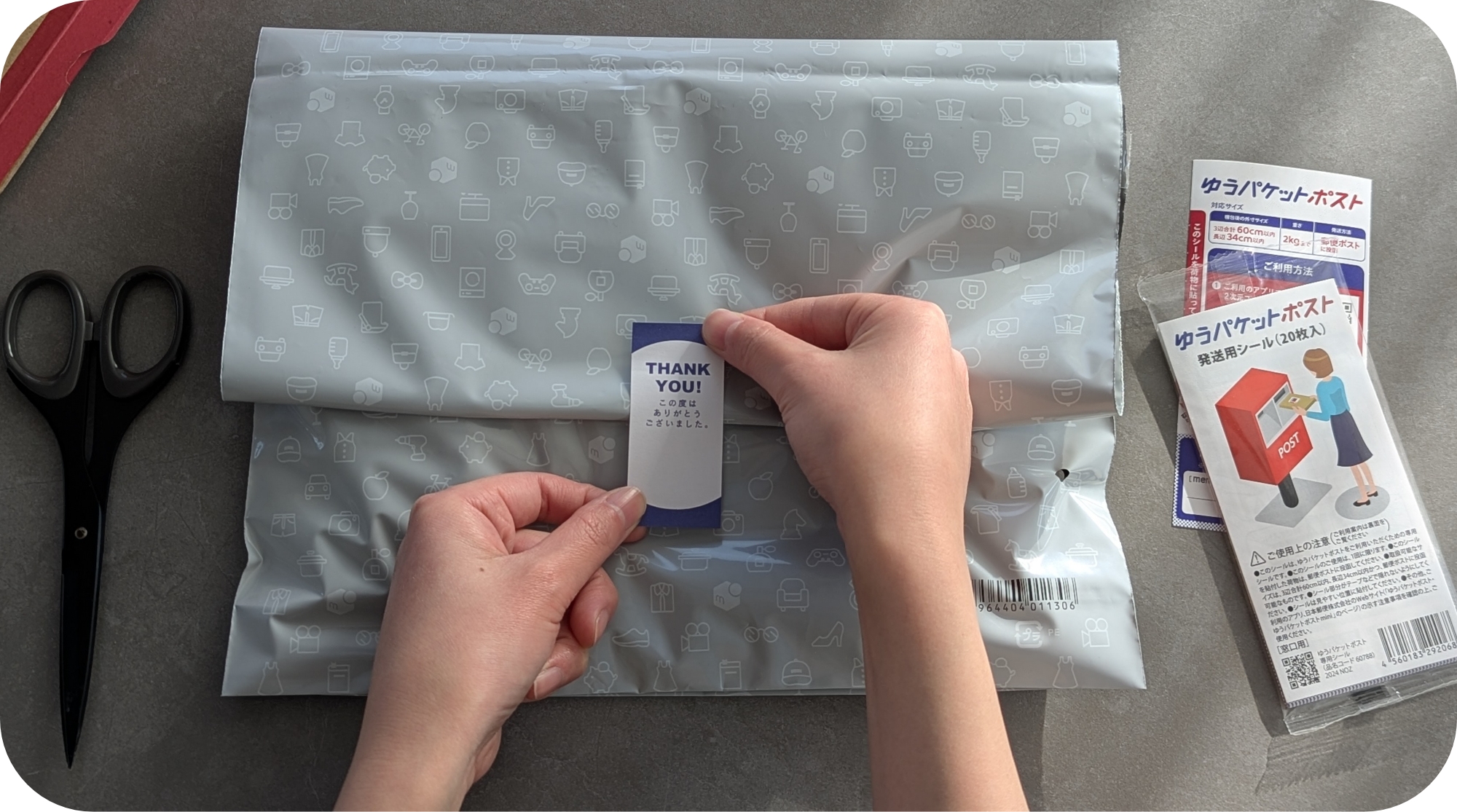
In an era of consumption that places constant emphasis on efficiency and speed, person-to-person transactions such as those on Mercari are redefining warm, human communication through goods. Items are no longer merely objects, but something that meets someone’s needs and is carefully passed on. Within this process, a new and richer relationship between people and goods is taking shape—one that was difficult to see in the age of mass production and mass consumption.

Circulation in
Everyday Infrastructure
Optimizing your home
to match each stage of life
Lastly, we introduce Mr. Kageyama, whose job requires frequent transfers and who is currently living alone in Saitama Prefecture. By using the furniture and home appliance subscription service CLAS, he is able to flexibly update and adapt his living environment.
The overwhelming freedom
that comes from not owning
Mr. Kageyama is transferred frequently for work, with moves occurring every few years. Each time, buying new heavy appliances such as refrigerators and washing machines, or arranging to have them moved, placed a significant burden on him in terms of both cost and effort.
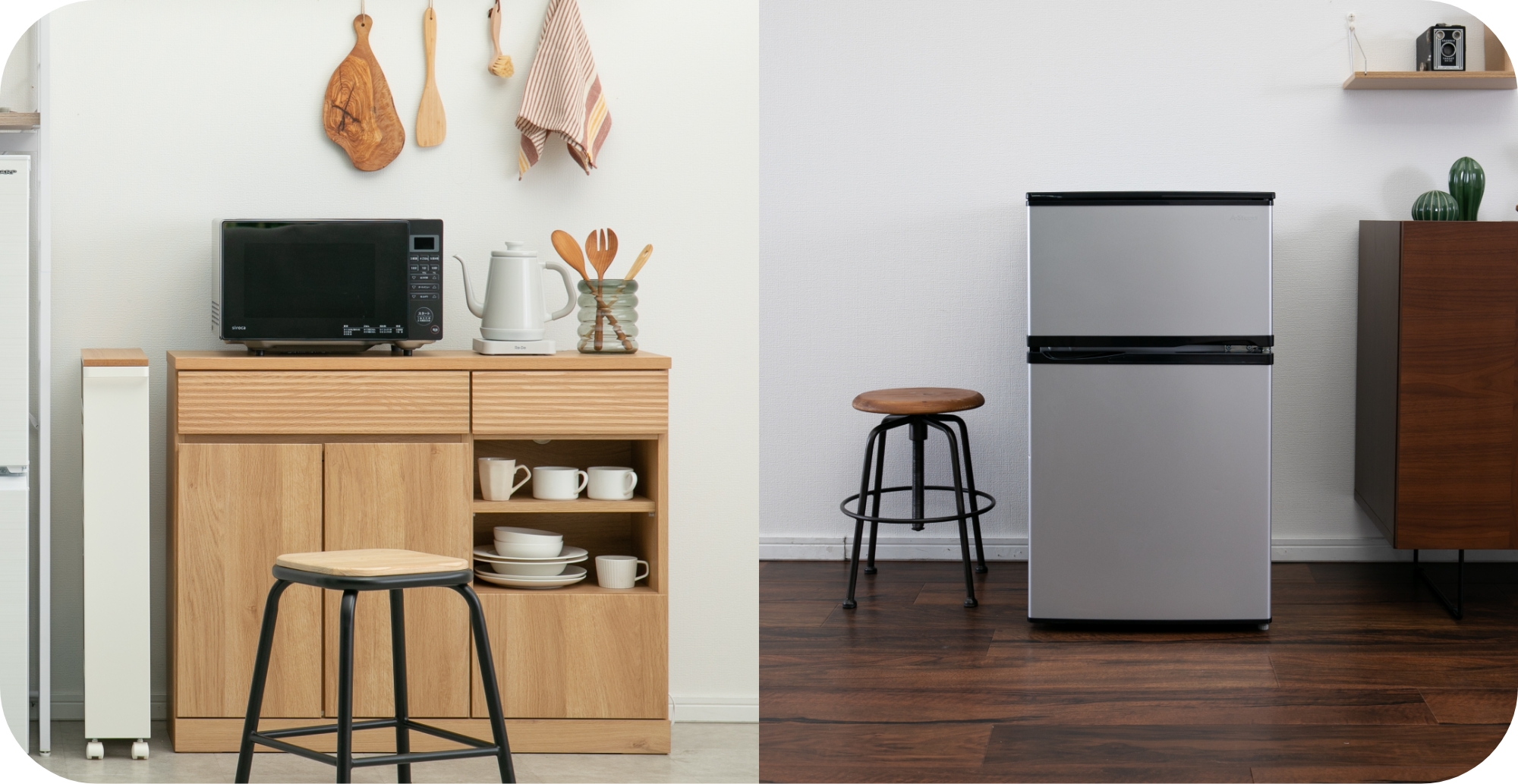
“Rather than transporting furniture every time I move, I decided it made more sense to rent what I need where I’m living and return it when I no longer need it. With that in mind, I chose to rent items like a television, microwave oven, refrigerator, and washing machine all together.”
The benefits Mr. Kageyama experiences go beyond simply saving money.
“When you own furniture or appliances, there’s always the hassle that comes with ownership—arranging repairs when something breaks, or the process of disposing as bulky waste when you no longer need them. With rentals, if there’s a problem, they replace it for you, and returning items is as simple as using your smartphone.”
Trying things out
can lead to new
sources of enjoyment
One particularly interesting aspect of Mr. Kageyama’s lifestyle is how circular services lower the barrier to trying something new.
“I’ve actually gotten really into cooking recently. It all started when I rented a pressure cooker through CLAS. I didn’t used to enjoy cooking, but once I tried using a high-performance appliance, I was amazed at how delicious dishes like braised pork and roast beef turned out. Now I even enjoy inviting friends over and cooking for them.”
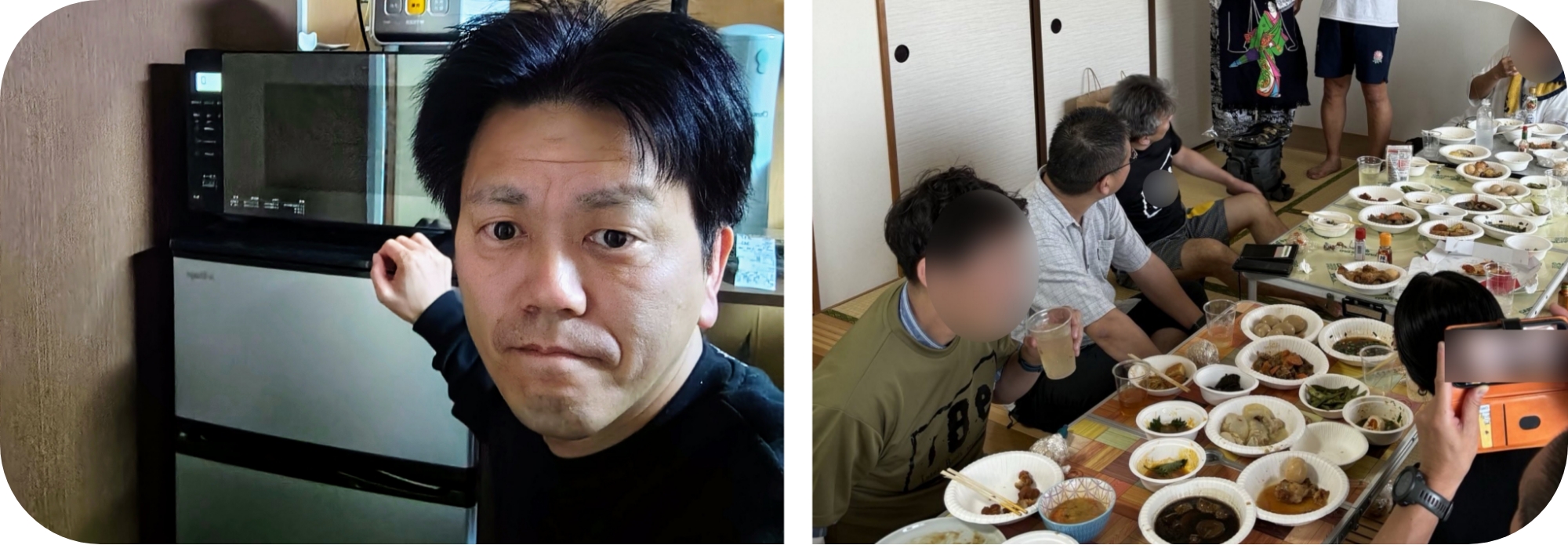
Hosting a dinner gathering with friends at home
After that, Mr. Kageyama began using a hybrid approach—purchasing cooking appliances he really liked, while renting appliances he had always wanted to try before deciding whether to buy them.
“Renting lets me keep upfront costs down and see whether something actually fits my lifestyle. Knowing I can simply return it if it doesn’t work out gives me the confidence to take that first step toward a new way of living. With more guests coming over these days, I’m even considering renting a sofa next.”
By viewing the home not as something fixed, but as something that continues to evolve, and by placing resources where they are needed, when they are needed, in the most appropriate form, Mr. Kageyama’s lifestyle demonstrates how well the circular economy fits with the increasingly flexible ways of working and living found in urban areas.

No strain required—
and yet
everything
stays in circulation
A new kind of cycle
woven into everyday life
What the three people we spoke with all had in common was that none of them felt they were forcing themselves to make sacrifices for the sake of the environment.
By circulating clothing, Ms. Osaka discovered the enjoyment of encountering a new side of herself.
Through goods, Sakko connects with other people and enjoys the very act of pausing to think, “This might still be usable.”
By using only what he needs, when he needs it, Mr. Kageyama has gained an easy, flexible way of living.
At first glance, their choices may seem different, but they share a common thread: not discarding things right away, and using them comfortably for as long as possible.
Behind the scenes, a wide range of work supports the value of these items—cleaning that keeps clothes in good condition, repairs that restore them for safe use, and careful delivery that ensures they arrive properly. When we choose not to own and to pass on, these forms of work are sustained as well.
Rather than insisting on owning everything, using what we need when we need it, and then passing it on once its role is complete—this way of using things is no longer something special. It is gradually spreading as one of the everyday choices available to us.


Your circular economy
—starting today
Practicing the circular economy doesn’t require major preparation or drastic changes.
- Before you buy something, check whether borrowing is an option.
- Before you throw something away, take a moment to imagine whether there might be someone who needs it.
- Instead of choosing something simply because it is cheap, try selecting items that seem built to last or easy to pass on to someone else.
The accumulation of these small actions makes everyday life easier and, as a result, creates a continuous cycle in which goods keep circulating.
By stepping back slightly from the burden of ownership and using what you need, when you need it, and only as much as you need, you begin to experience a new sense of comfort. Once you do, you may be surprised at how enjoyable a lifestyle built around passing things on can be.
As goods circulate, connections are formed, and everyday life becomes just a little easier. That future is already beginning—through the small, everyday choices we make.