

Is “Decarbonization”
Your First Calligraphy of 2026?
A Declaration
from
the Next Generation
to Make the
Circular Economy
Part of Everyday Life
The Circular Economy Lab, hosted by Japan’s Ministry of Economy, Trade and Industry at the 2025 Osaka–Kansai Expo, drew widespread attention and enthusiasm. The learning journey around circularity that began during that one electrifying week—when approximately 58,000 people took part—continued even after the Expo closed, with the baton passed on through outreach classes held across Japan under the banner of the Circular Economy School.
The venue was ITOCHU SDGs STUDIO KIDS PARK, a space where children encounter SDGs-related actions through play. Over four days, from January 9 to 12, a special event was held at this location.
In this article, we share highlights from the opening ceremony on the first day—where children made their Circular Economy Declarations through traditional New Year calligraphy—as well as scenes from the classes designed to refresh and update everyday ways of thinking.
It may sound complicated—
but it’s closer to home than you think!
What is a circular economy
that we build together?
A circular economy can be described in Japanese as a “round” economy. Instead of discarding things as waste, it is a system that enriches both the environment and the economy by using items for longer and keeping resources circulating again and again.
While the term itself may sound unfamiliar or complex, many people are already practicing aspects of the circular economy in their daily lives. Well-known actions such as the 3Rs—Reduce, Reuse, and Recycle—are also concrete steps toward building a circular economy.
What Does a Circular Economy Lifestyle Look Like? Starting with Four Everyday Actions
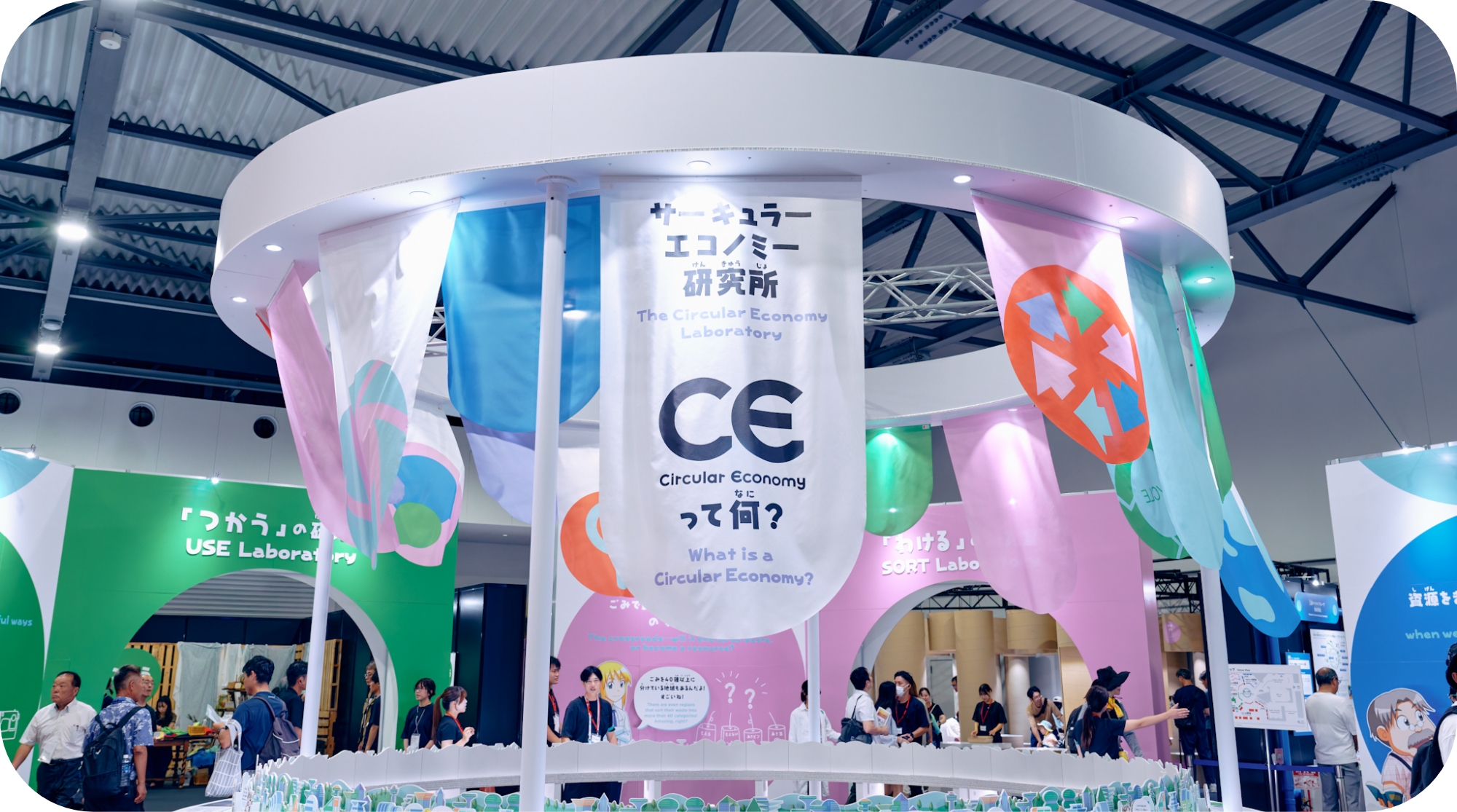
The Circular Economy exhibition held at the Osaka–Kansai Expo. In a post-event survey, 99% of respondents said they wanted to incorporate the circular economy into their daily lives, with many expressing a willingness to take concrete actions such as choosing locally produced food and properly sorting waste.
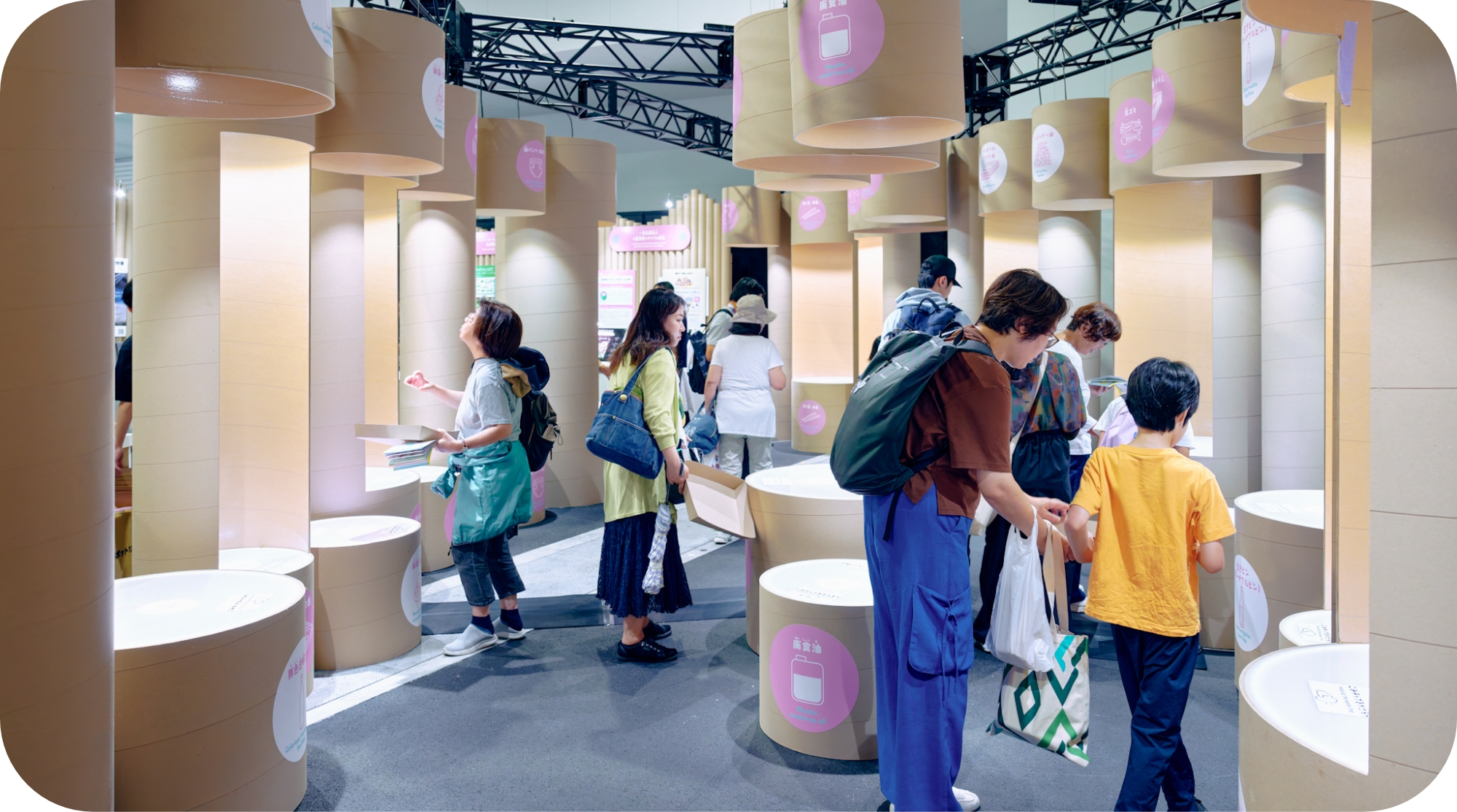
The exhibition was also designed with circularity in mind. Materials used for construction were selected for reuse after the event, achieving a resource circulation rate of 99.7% by weight.
Since the exhibition at the Expo, the Ministry of Economy, Trade and Industry has consistently emphasized one key message: the circular economy can only be achieved through collective action. For example, consumers carefully sort the items they discard, while businesses ensure that those materials are reused or recycled. Each individual action, taken together, leads to meaningful change.
That is precisely why it is so important for children, the next generation, to become familiar with the circular economy from an early age, and to grow into adults who see it as something entirely natural. This vision gave rise to the Circular Economy School, where children can learn while having fun through manga and card games.
Several months on from the Expo, the Circular Economy School has continued to travel to communities across Japan. More than simply conveying knowledge, it has evolved into a place that nurtures a mindset in which a society where resources circulate is seen as the norm.

Cheered on by
Myaku-Myaku and Geo!
Making a
Circular Economy Declaration
through New Year calligraphy
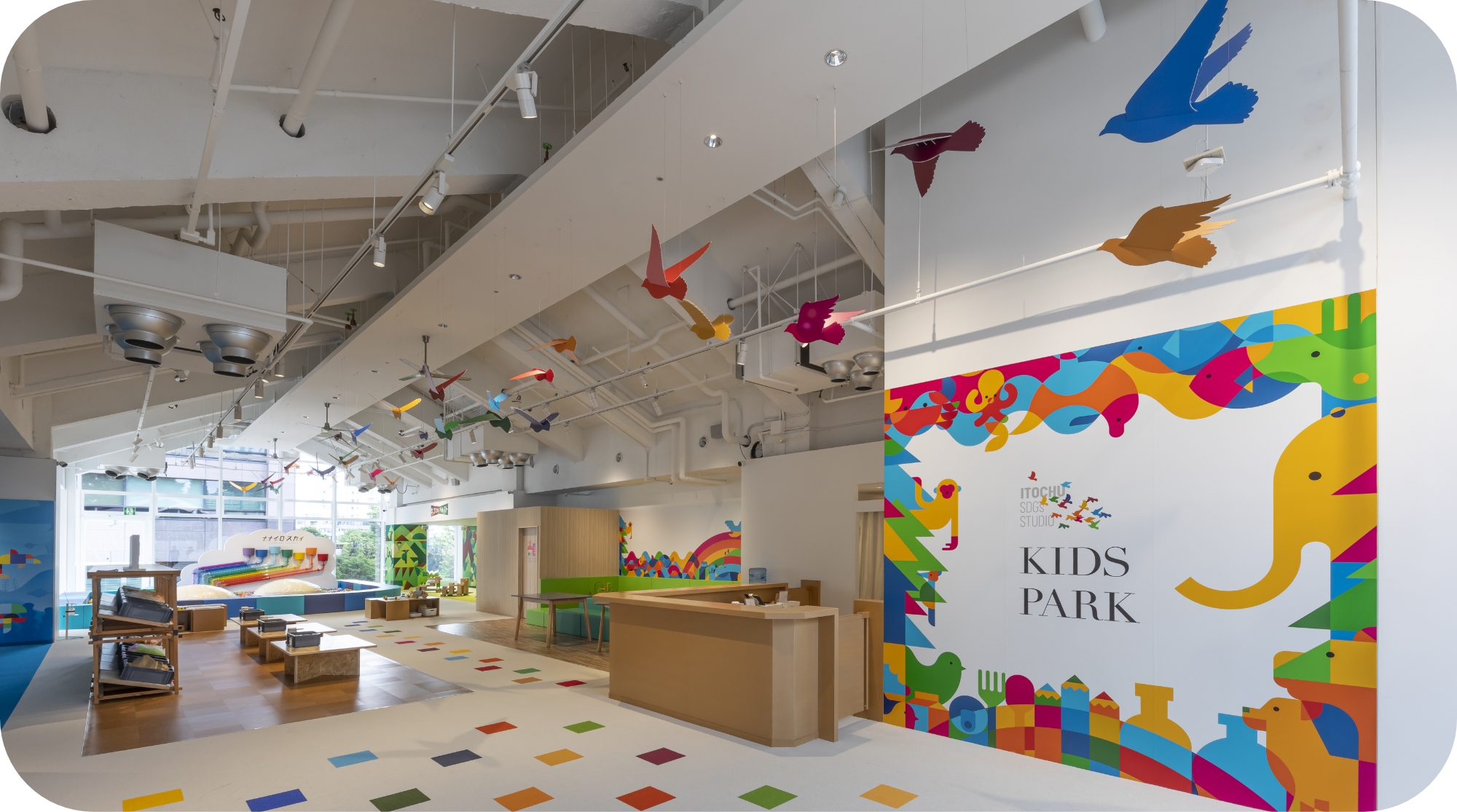
The Tokyo venue, ITOCHU SDGs STUDIO KIDS PARK, is a space where children can learn about the importance of the SDGs through hands-on experiences. It provided the perfect setting for an event built around this concept.
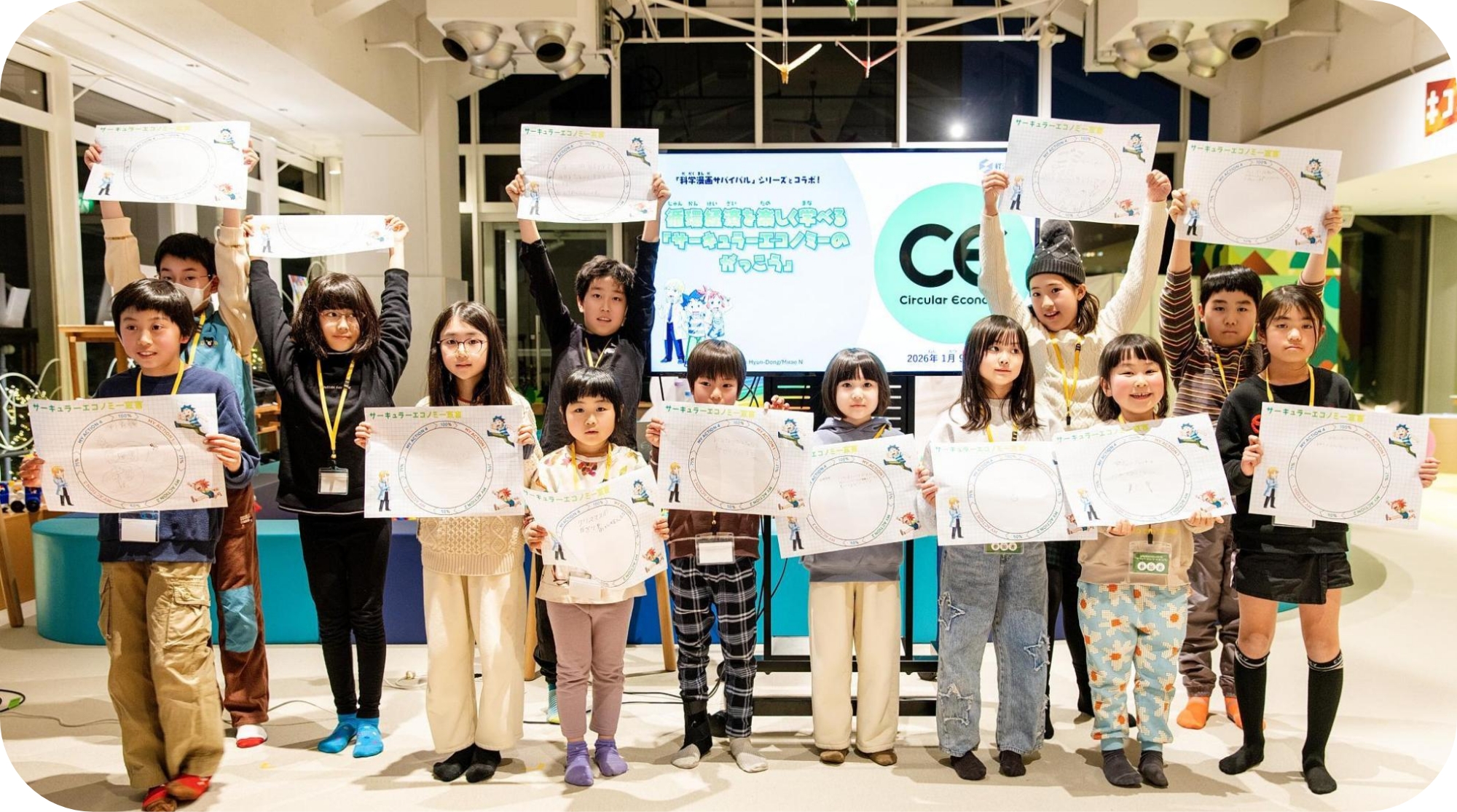
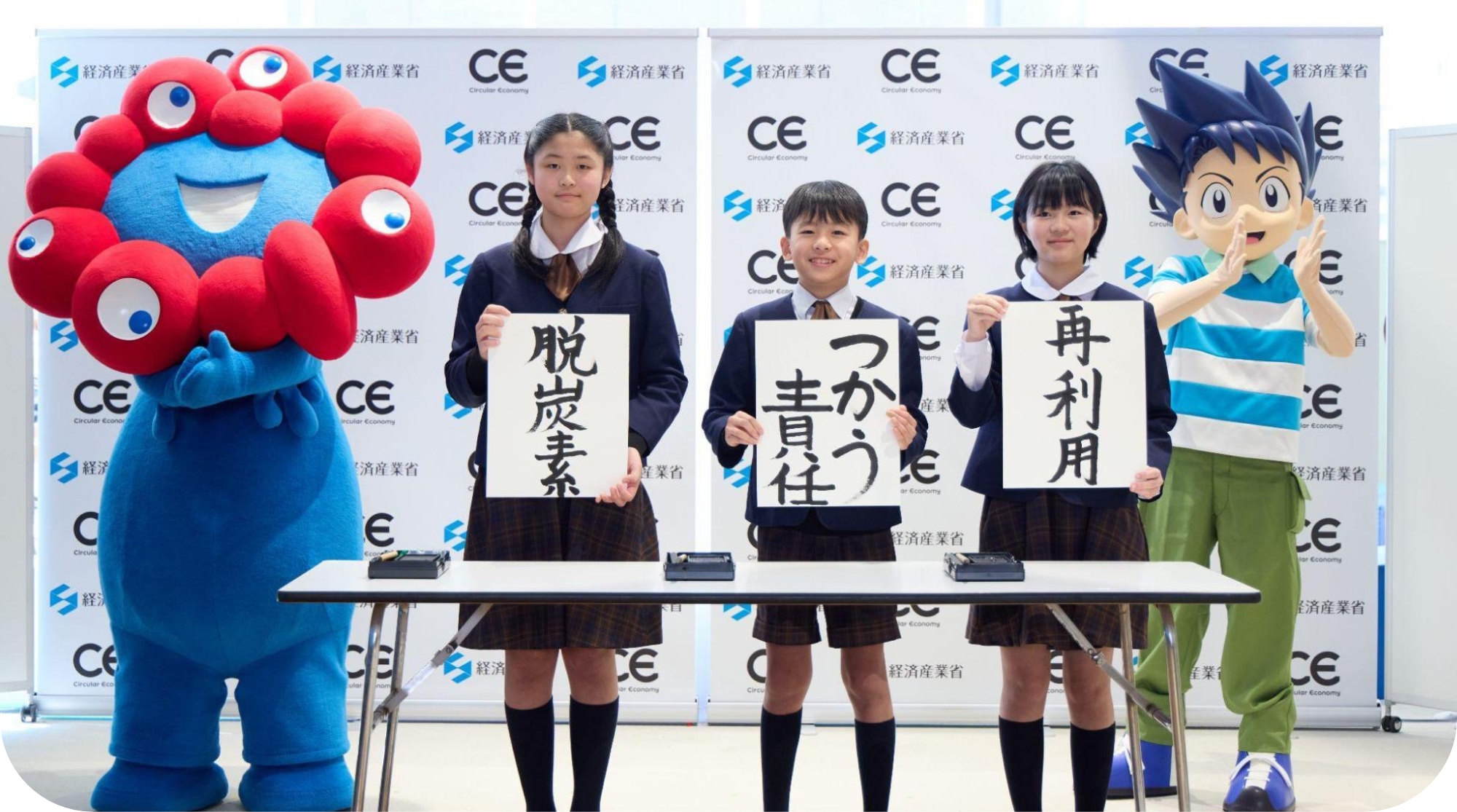
At the opening ceremony held on the morning of January 9, the vice principal and three students from Kunimoto Primary School took part in the event. The Circular Economy Declaration, which is usually made at the end of the program, was given a special New Year twist on this occasion, with the children expressing their commitments through traditional New Year calligraphy. They were cheered on by Geo, the main character from Survival Science Manga, as well as Myaku-Myaku, the official mascot of the Osaka–Kansai Expo.
At Kunimoto Primary School, students begin learning about environmental issues and the SDGs from an early age. In addition to studying the relevant concepts and systems, they actively take part in hands-on initiatives, such as collecting unwanted items from local shopping streets for recycling, by thinking about what they themselves can do and acting on those ideas.
With that background, the children carefully began writing their New Year calligraphy, brushing each character one by one with focus and intention.
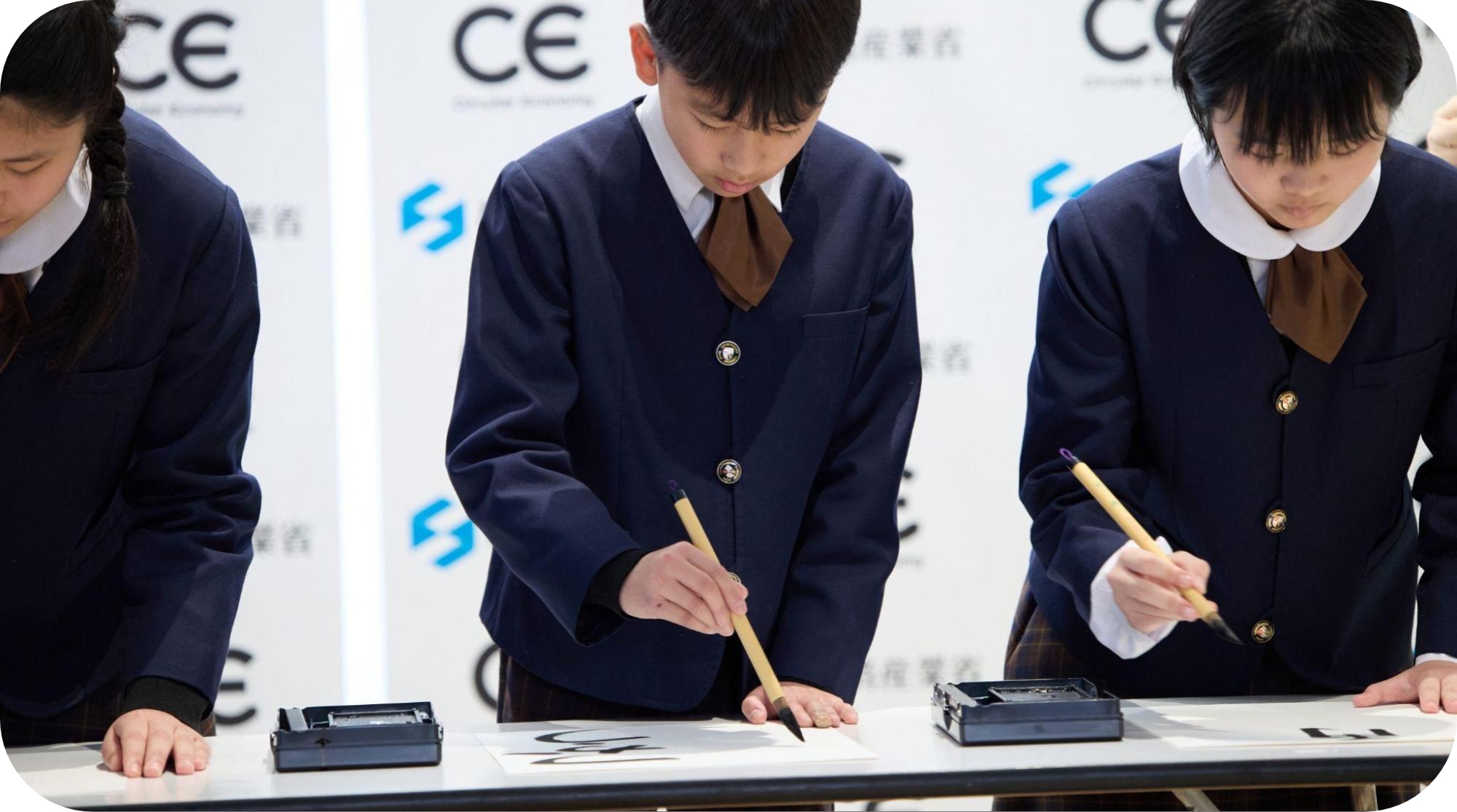
The words the children chose to write were “Decarbonization,” “Reuse,” and “Responsible Use.”
“When I learned about the circular economy, I also realized that we need to build a decarbonized society at the same time, so I chose to write ‘Decarbonization.’ From now on, I will make an effort to save electricity and water.”
“I often end up losing my stationery. That’s why I wrote ‘Responsible Use,’ as a personal goal to take better care of the things I own.”
“I wrote ‘Reuse’ because I want to pass on items I no longer use, or clothes I’ve outgrown, to other people instead of throwing them away.”
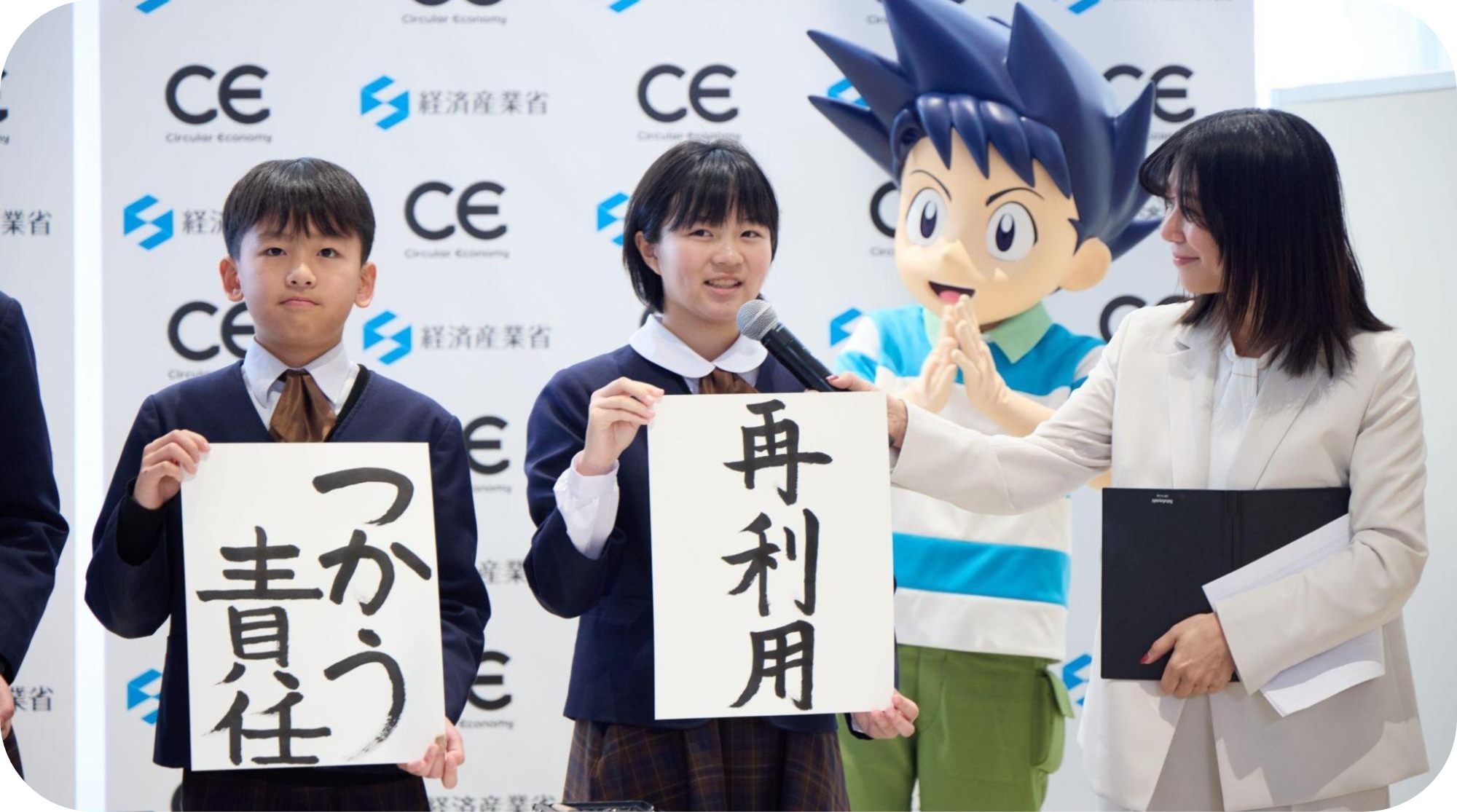
These were not borrowed slogans, but personal goals that the children arrived at by reflecting on their own daily lives, shaped by their ongoing involvement in environmental activities. The special experience of committing those goals to paper with a brush helped transform them into a more tangible and resolute intention. Each declaration was thoughtful and powerful, conveying a sense of confidence that these young participants will help lead the circular economy into the future.
Flip, match, and remember!
A class that connects
everyday life
with the circular economy
The Circular Economy School, held through January 12, brought together children from first through sixth grade. Through quizzes and card games, they explored the concept of the circular economy in an engaging and enjoyable way.
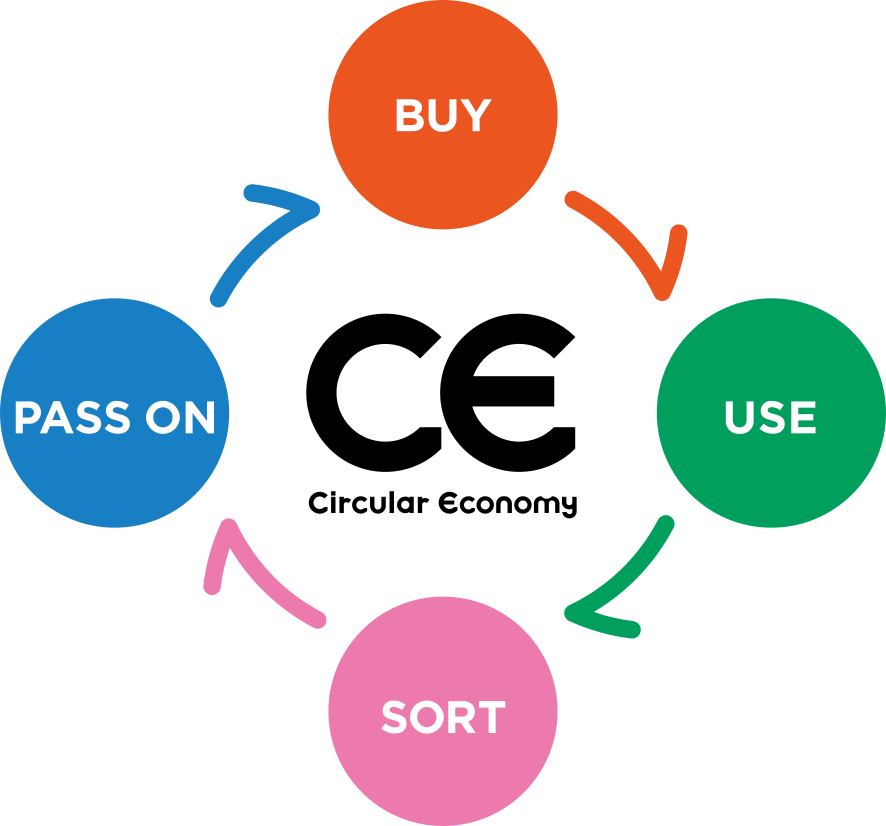
In the first half of the class, the circular economy was organized around four perspectives: Buy, Use, Sort, and Pass On.
Four perspectives essential
to putting the circular economy
into practice
Buy: Choosing products and services that place a lower burden on the environment
Use: Finding ways to use items for as long as possible through care and creativity
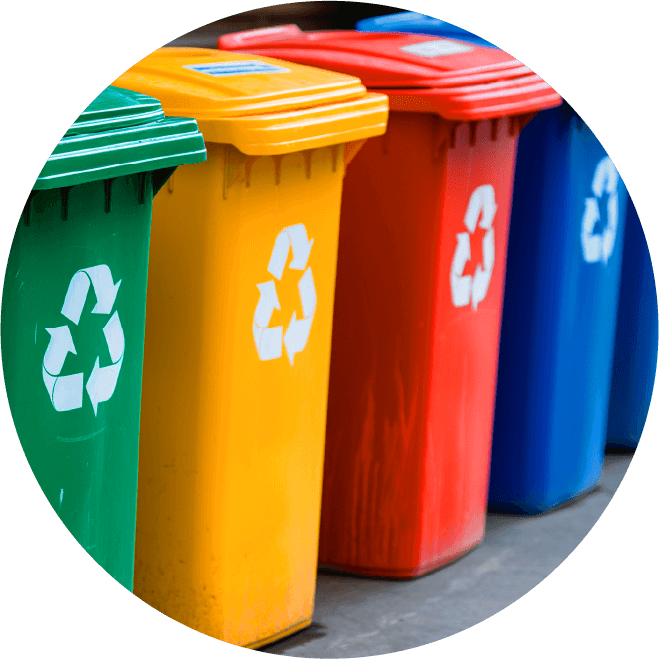
Sort: Separating waste as thoroughly as possible so it can be treated as a resource
Pass On: Reusing and recycling items after they have been used
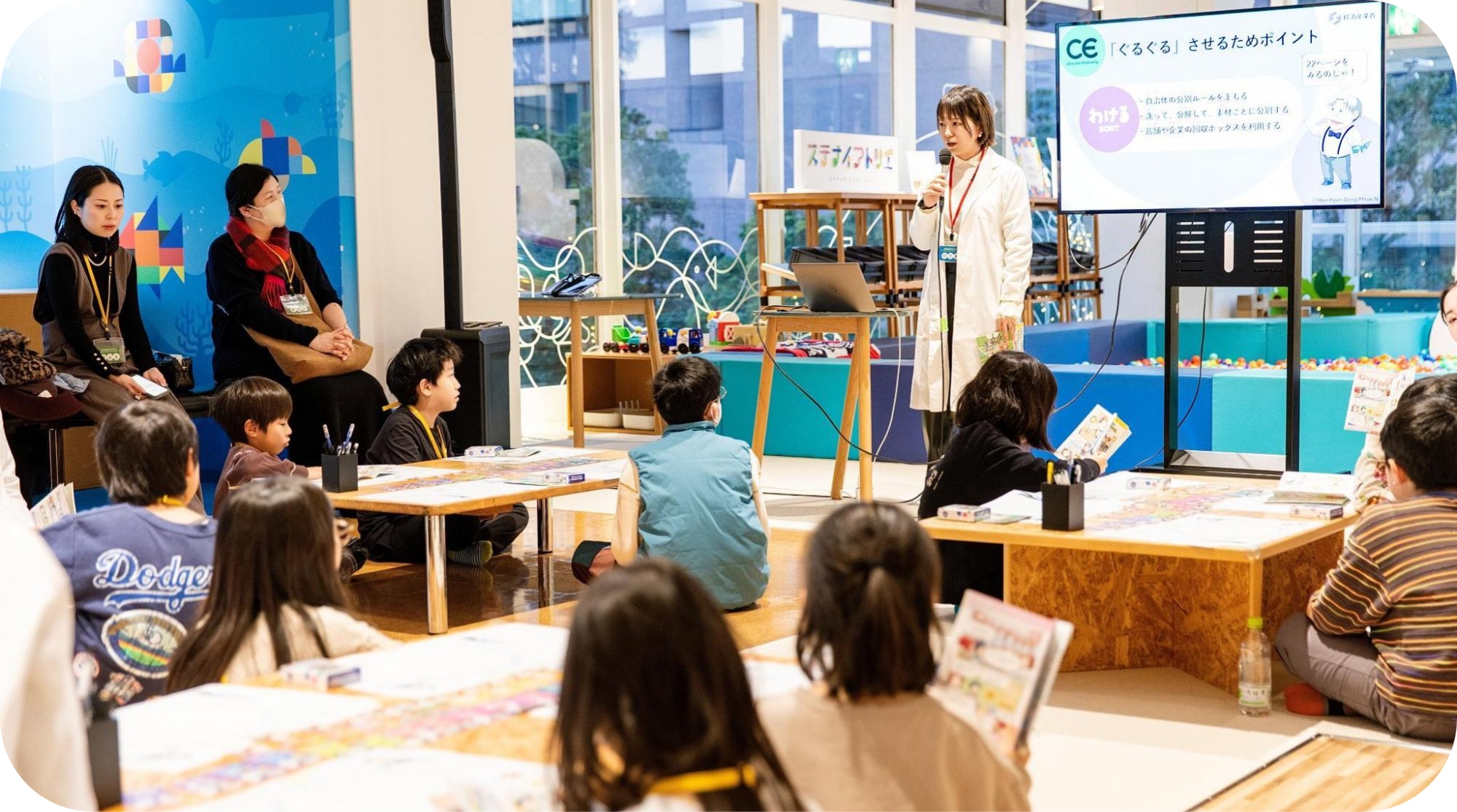
Very few of the children were familiar with the term “circular economy” at the outset. However, when asked multiple-choice questions such as, “What should you do if your bicycle breaks?”, most answered correctly: “Take it to a repair shop instead of throwing it away.”
This showed that while the terminology was new, the children already had a strong sense of what constitutes positive action. Through the quizzes, they began to recognize how these everyday behaviors connect to the concept of the circular economy they were encountering for the first time. In the second half of the session came a much-anticipated activity: the Circular Economy Memory Game. Played in the same way as the classic card-matching game, children paired cards showing the same “action,” reinforcing what they had learned through play.
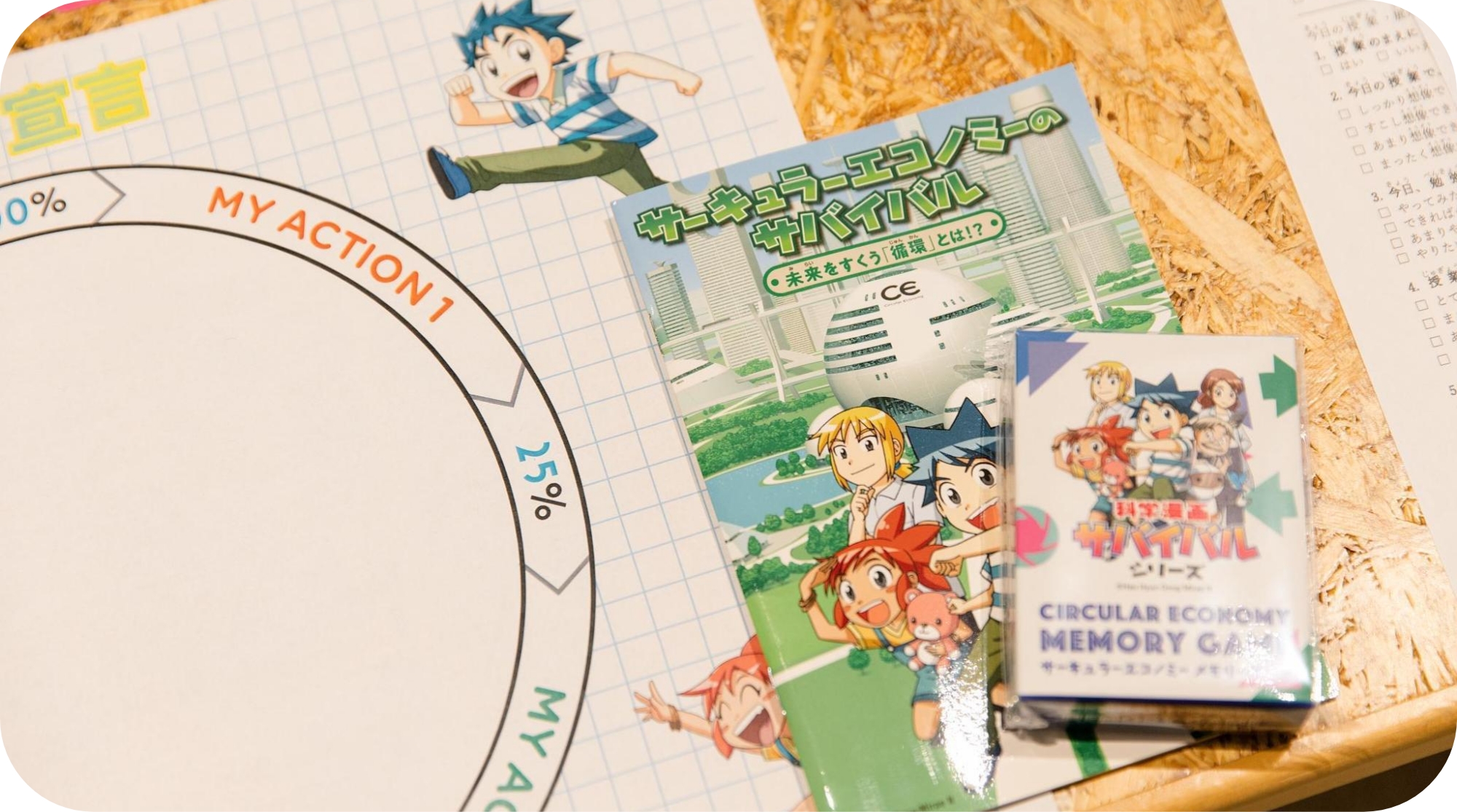
The original, newly created manga and card game.
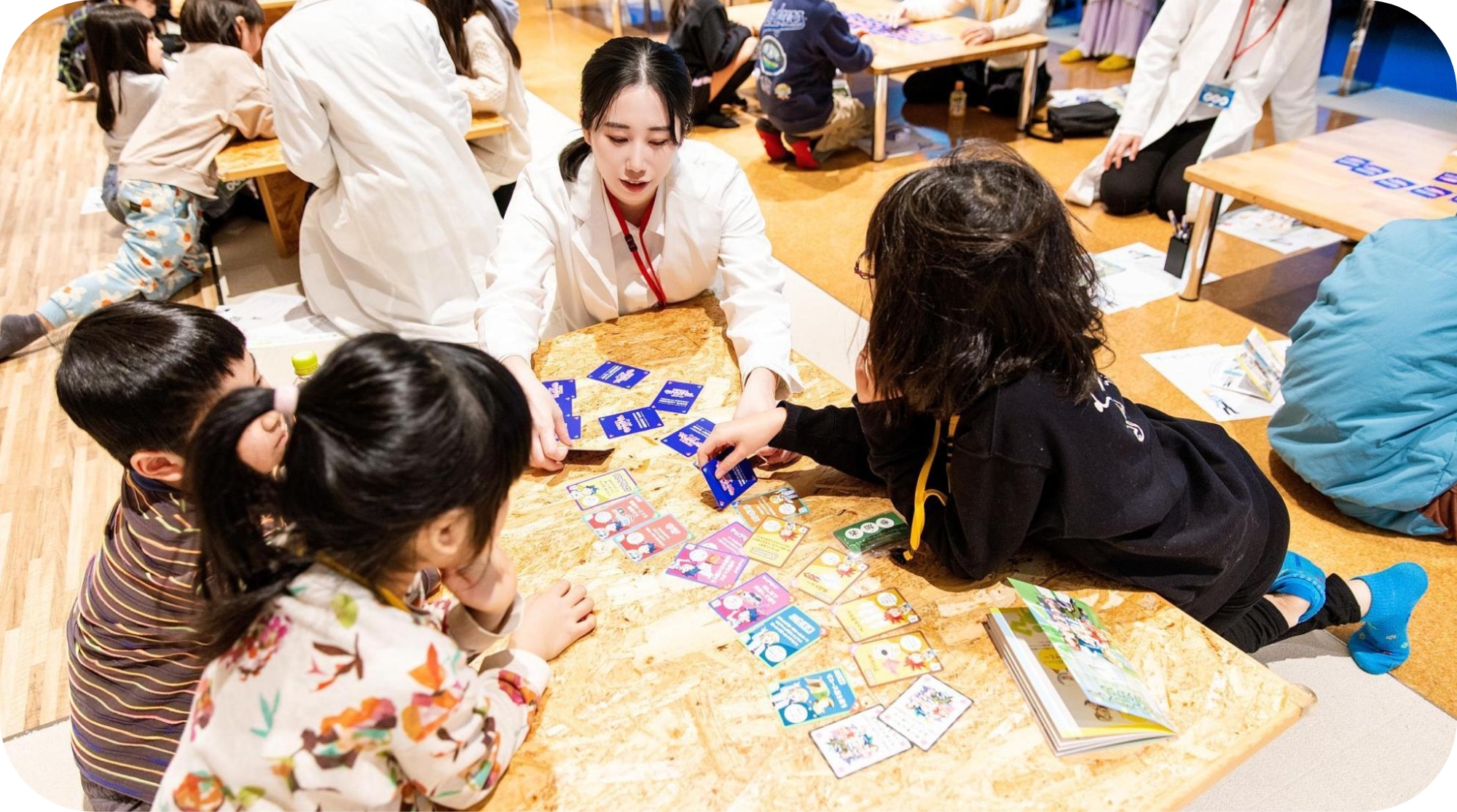
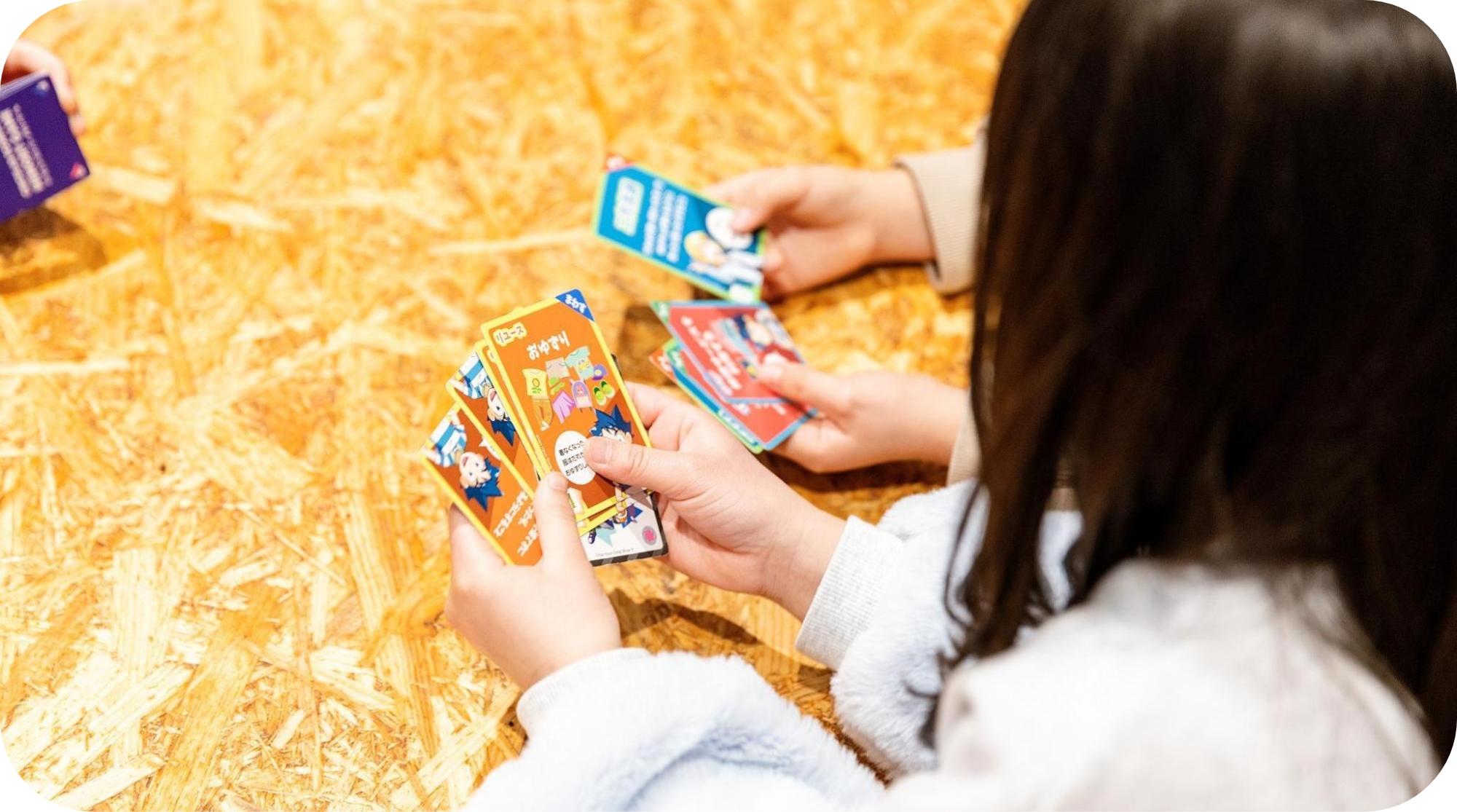
The actions written on the cards were all things that can be put into practice immediately in everyday life.
Buy: Sharing, Secondary markets, Simplified packaging, Local production for local consumption
Use: Multi-use, Long life, Repair, Maintenance
Sort: In-store collection, Waste separation
Pass On: Donation, Composting, Reuse
In particular, many families already practice waste separation and make use of in-store collection programs as part of their daily routines. Through the card game, adults learned alongside the children that even familiar, everyday actions are connected to the circular economy.
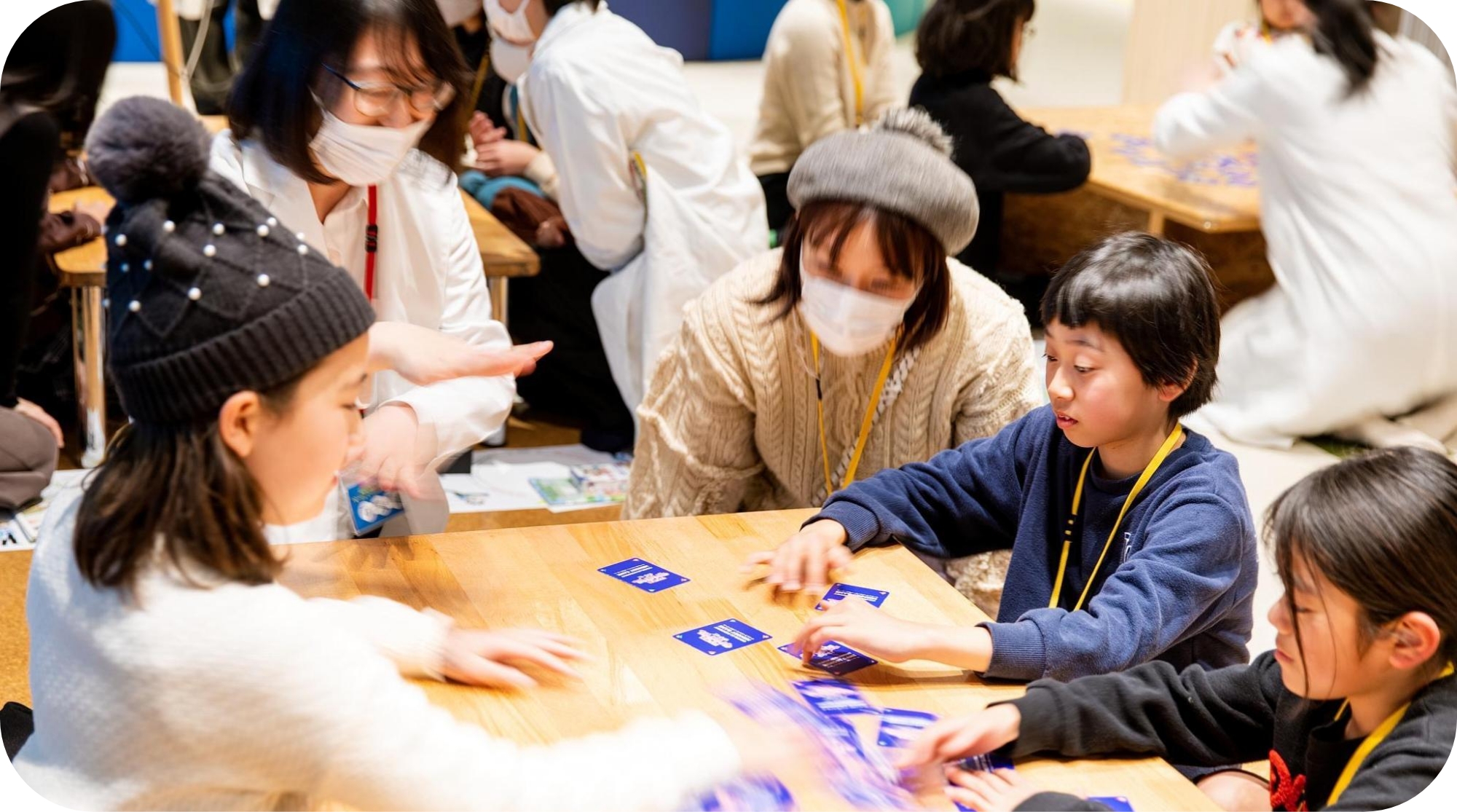
When a “Circular” card appears, the players shuffle the cards while calling out “Circular!”
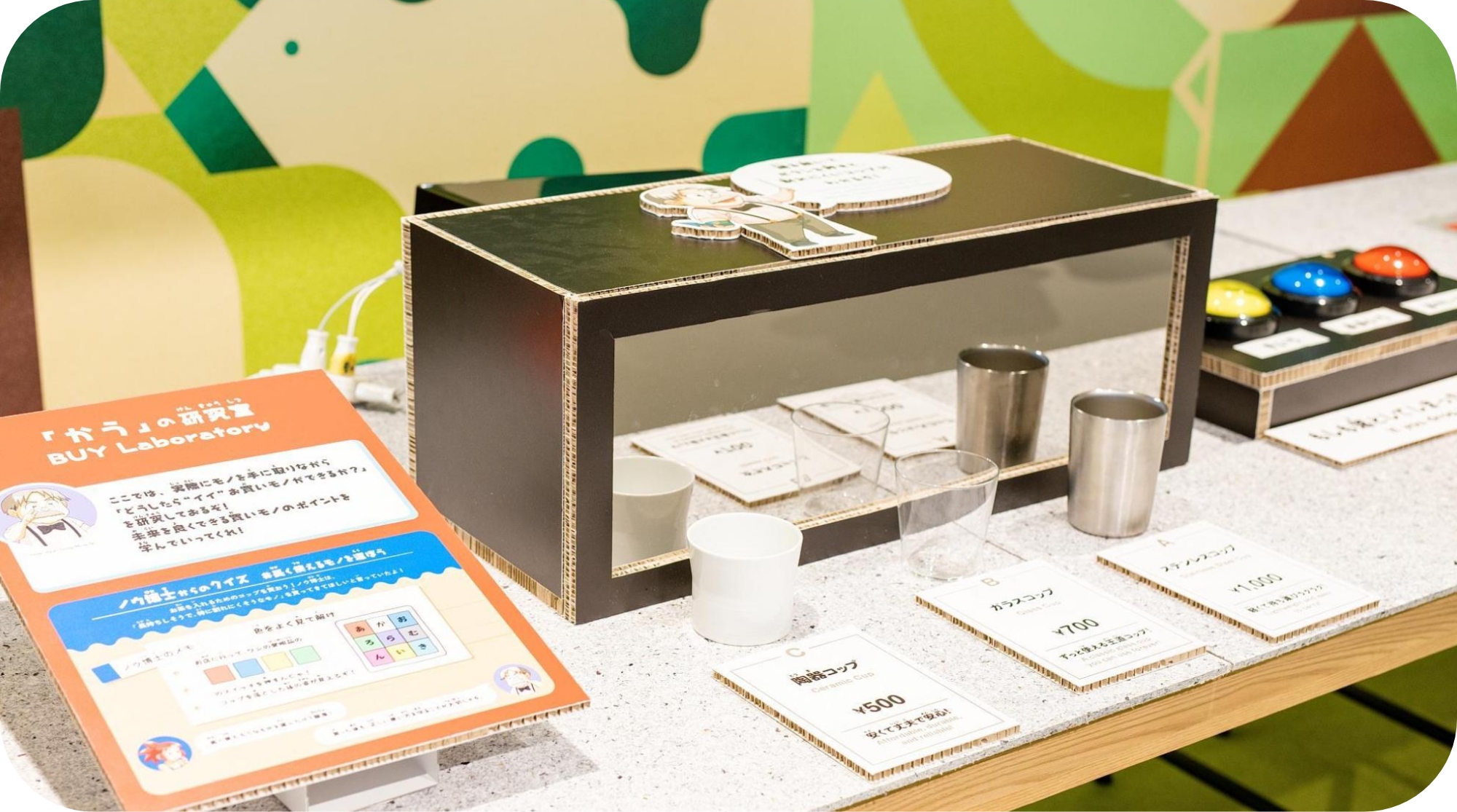
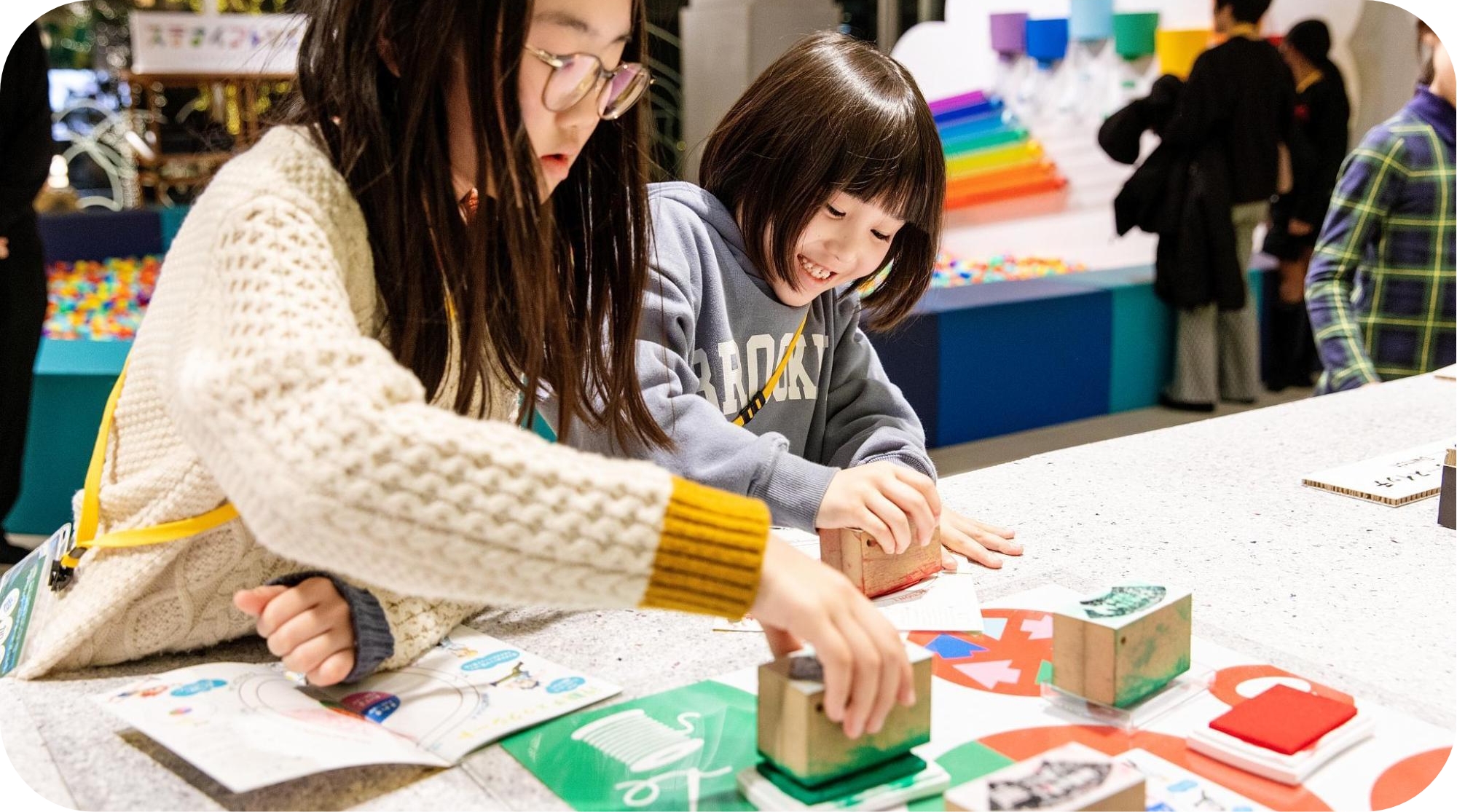
A portion of the exhibition originally presented at the Expo was also showcased at the venue.

So many things
to start today!
Children’s own “realizations”
become the first step
toward changing the future
Through the classes, the children came to understand how the circular economy connects with their everyday lives. To conclude, each child wrote down and shared a Circular Economy Declaration, expressing what they wanted to begin doing from that day onward.
Statements such as “Recycle clothes I no longer wear,” “Try not to waste school lunches,” and “Choose durable products” reflected the many thoughtful and encouraging commitments voiced by the children.
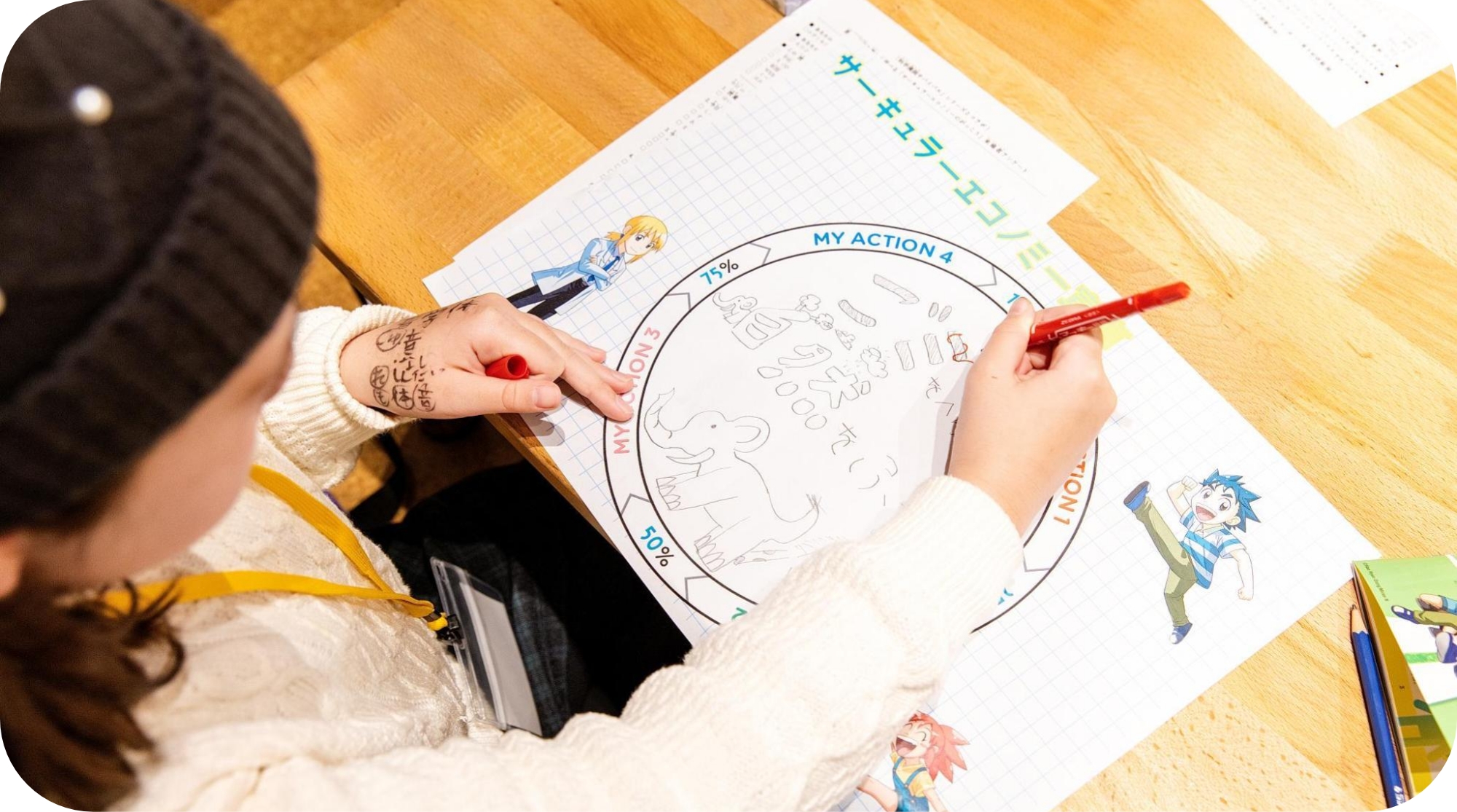
The declarations and aspirations formed through learning and play do not stop with the children themselves. They ripple outward, influencing the adults involved and the people around them. As this next generation grows, it is easy to imagine a future society in which circular practices are so deeply embedded that the term “circular economy” itself no longer needs to be consciously invoked.
The next session of the Circular Economy School will be held in Saitama on February 14. We warmly invite you to join us.